[Eng Sub] Blade Sawing - Blade type, Hub type, Hubless type, Process Parameters
TL;DR
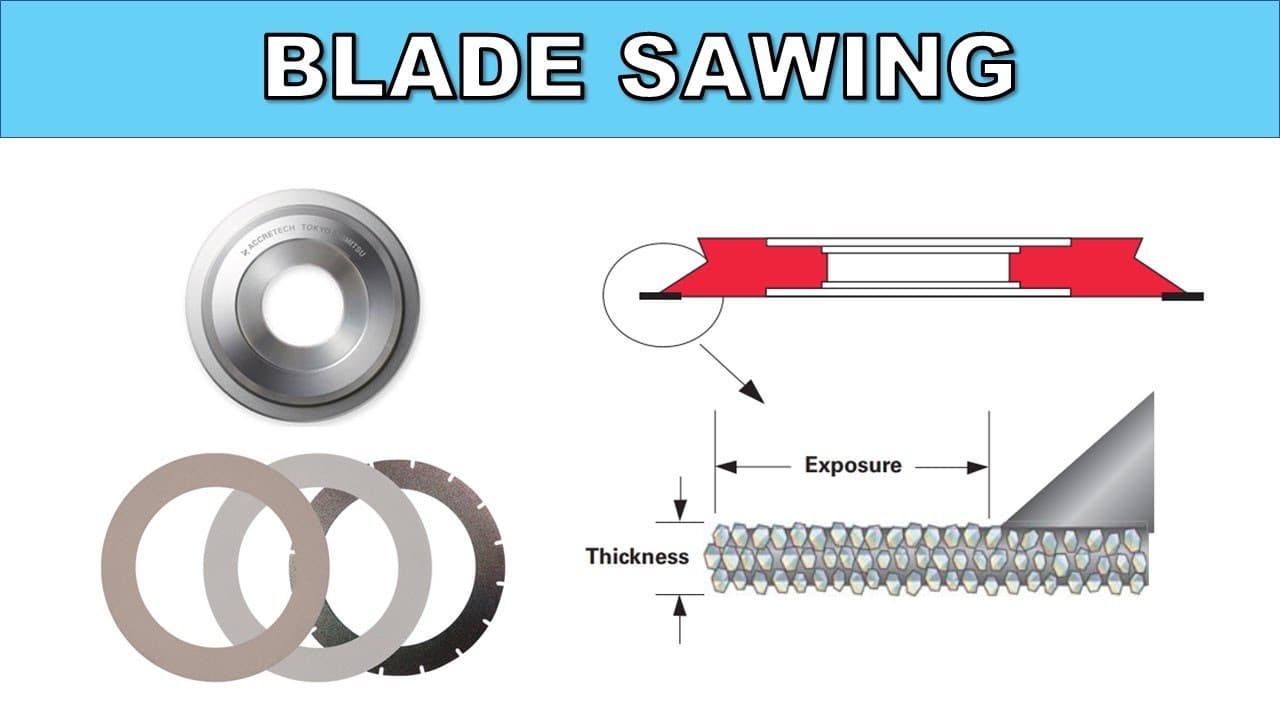
Explains wafer sawing process focusing on blade types and parameters.
Transcript
One of my subscribers asked about wafer saw process so I decided to make this episode for that. Thanks for comments and let’s talk about it. I will explain little more about wafer saw process based on blade saw. Because there are lots of different wafer saw methods and blade saw is the most popular one. Before we start wafer saw process there are... Read More
Key Insights
- The wafer sawing process is crucial for semiconductor manufacturing, focusing on cut quality, productivity, and blade life to minimize production costs.
- Key factors for wafer sawing include chipping size and kerf width, with trends aiming to reduce these to maximize IC production.
- Blade types are categorized into hub and hubless, each with specific applications based on vibration control and cooling needs.
- Hub type blades are easier to handle and provide minimal vibration, while hubless blades offer better cooling performance.
- Blade specifications such as outside diameter, exposure, grit size, and bond hardness are essential for selecting the right blade.
- Bond types include resin, metal, and electroformed, each offering different benefits in terms of cutting ability, blade life, and cost.
- Grit material, typically synthetic diamond, is chosen for its hardness and cutting efficiency, with grit size affecting surface finish and cutting speed.
- Process parameters like spindle speed, feed rate, and cut depth are critical in determining the efficiency and quality of the sawing process.
Install to Summarize YouTube Videos and Get Transcripts
Explore YouTube Video Summarizer or Get YouTube Transcript Extractor
Questions & Answers
Q: What are the key considerations in the wafer sawing process?
The key considerations in the wafer sawing process include cut quality, productivity, and blade life. Cut quality focuses on minimizing chipping size and kerf width, productivity involves maximizing the number of units sawn per hour, and blade life pertains to the duration a blade can be used before replacement.
Q: How do blade types differ in the sawing process?
Blade types differ primarily in their structure and application. Hub type blades have a central hub, offering minimal vibration and ease of handling. In contrast, hubless blades lack a central hub, providing better cooling performance. Each type is suited for specific applications based on these characteristics.
Q: What factors influence the selection of a saw blade?
The selection of a saw blade is influenced by several factors, including blade specifications such as outside diameter, exposure, grit size, grit concentration, and bond hardness. These factors determine the blade's suitability for different materials and cutting conditions, impacting the overall efficiency and quality of the sawing process.
Q: What are the different bond types used in saw blades?
Saw blades use different bond types, including resin, metal, and electroformed bonds. Resin bonds provide excellent cutting ability but wear out quickly. Metal bonds offer longer life and consistent cut quality, while electroformed bonds deliver high accuracy and low wear but are more costly and time-consuming to dress.
Q: How does grit material affect the sawing process?
Grit material, typically synthetic diamond, is crucial for its hardness and cutting efficiency. It ensures fast cutting with a smooth finish and consistent performance. The choice of grit material affects the blade's wear resistance and its ability to handle various materials, impacting the overall efficiency and quality of the sawing process.
Q: What role does grit size play in the sawing process?
Grit size plays a significant role in determining the surface finish and cutting speed of the sawing process. Finer grits result in smoother finishes with minimal chipping, while coarser grits enable faster cutting speeds, suitable for materials that do not require fine surface finishes. This choice impacts the efficiency and quality of the sawing process.
Q: Why is grit concentration important in blade selection?
Grit concentration is important because it affects the blade's hardness and wear rate. High grit concentration results in a harder blade that wears slower, suitable for softer materials. Conversely, low concentration blades wear faster but provide better cut quality and surface finish, ideal for ultra-hard and brittle materials.
Q: What are the critical process parameters in wafer sawing?
The critical process parameters in wafer sawing include spindle speed, feed rate, and cut depth. Spindle speed determines the blade's rotation speed, affecting the cutting efficiency. Feed rate impacts productivity and cut quality, while cut depth ensures complete wafer cutting without damaging the sawing machine.
Summary & Key Takeaways
-
The wafer sawing process is integral to semiconductor manufacturing, focusing on optimizing cut quality, productivity, and blade life to reduce costs. Key considerations include minimizing chipping size and kerf width to maximize IC production and profits.
-
Blade types, categorized into hub and hubless, are selected based on their applications. Hub type blades offer minimal vibration and ease of handling, while hubless blades provide superior cooling, making them suitable for different sawing needs.
-
Selecting the right blade involves evaluating specifications such as diameter, grit size, and bond hardness. Process parameters like spindle speed, feed rate, and cut depth significantly impact the sawing process's efficiency and quality.
Read in Other Languages (beta)
Share This Summary 📚
Summarize YouTube Videos and Get Video Transcripts with 1-Click
Try YouTube Summary with ChatGPT & Claude or YouTube Transcript Generator
Explore More Summaries from Semicon Talk 📚
![[Eng Sub] Wafer Level Chip Scale Package (WLCSP) thumbnail](/_next/image?url=https%3A%2F%2Fi.ytimg.com%2Fvi%2FF0WLyZZDyeo%2Fhqdefault.jpg&w=750&q=75)
![[Eng Sub] Substrate - Flipchip Substrate Manufacturing Process, Core, Build-up, ABF thumbnail](/_next/image?url=https%3A%2F%2Fi.ytimg.com%2Fvi%2FHiJHMBPcOyg%2Fhqdefault.jpg&w=750&q=75)
![[Eng Sub] Stealth Dicing thumbnail](/_next/image?url=https%3A%2F%2Fi.ytimg.com%2Fvi%2FMhY8RPREI_c%2Fhqdefault.jpg&w=750&q=75)
![[Eng Sub] HBM Memory Module: Samsung, SK Hynix thumbnail](/_next/image?url=https%3A%2F%2Fi.ytimg.com%2Fvi%2FKyKwiziPmD4%2Fhqdefault.jpg&w=750&q=75)
![[Eng Sub] PoP(Package on Package): Qualcomm, Apple, Samsung - MCeP, InFO, iPoP thumbnail](/_next/image?url=https%3A%2F%2Fi.ytimg.com%2Fvi%2FFU62n4S9VEk%2Fhqdefault.jpg&w=750&q=75)
Summarize YouTube Videos and Get Video Transcripts with 1-Click
Try YouTube Summary with ChatGPT & Claude or YouTube Transcript Generator