How YouTube Monetization Changes Help Businesses
TL;DR
Business channels can benefit from YouTube’s higher monetization threshold because they earn through clients or offers rather than depending on ad revenue. Requiring new creators to reach 8,000 watch hours within a year may discourage low-effort and ad-dependent channels, potentially reducing competition for homepage attention while leaving already monetized channels unaffected.
Transcript
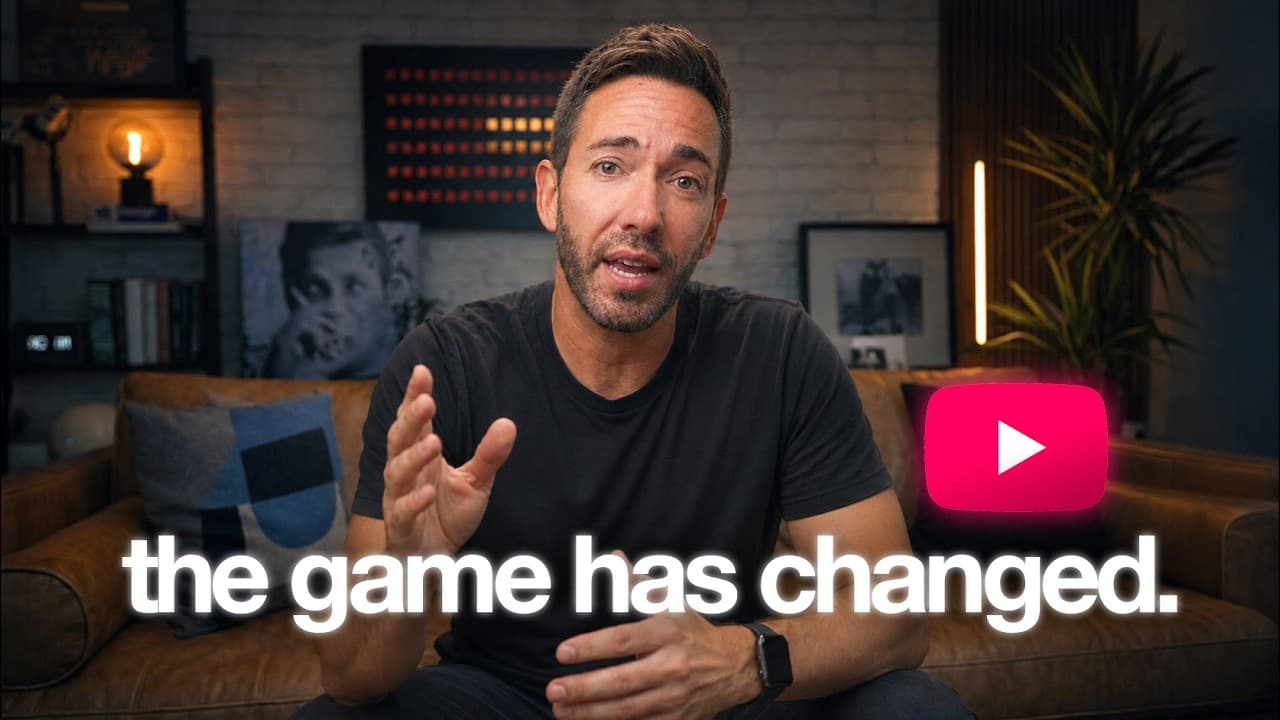
YouTube just made the boldest change to how creators get paid that I've ever seen in my 8 years on here. A lot of people are freaking out about it and almost every video I've seen about it basically says if you're running a business channel, this doesn't really affect you. But I think that actually misses the bigger thing here. It does affect you i... Read More
Key Insights
- YouTube’s new monetization threshold is 8,000 watch hours within one year, double the previous requirement of 4,000 hours. The change is described as taking effect in February 2027, while channels that are already monetized will retain their existing monetization.
- YouTube’s policy direction is aimed at inauthentic content, including mass-produced videos, template-based production, scripts read over stock footage, repeated slideshows, and AI personas. The creator argues that the platform is judging whether meaningful human thought contributed to a video rather than banning AI outright.
- The higher threshold most directly harms channels that treat advertising revenue as their primary business model. Because the required watch time must be achieved within a year, struggling creators cannot simply take an unlimited amount of time to reach the new requirement.
- Search interest suggests that monetization and low-effort channel models strongly motivate aspiring creators. The transcript cites almost 7 million monthly searches related to YouTube automation, about 3 million for faceless or cash-cow channels, and another 3 million for YouTube monetization.
- Existing monetized channels are not expected to lose their status under the described change. The policy instead shapes future competition by making entry less attractive to prospective creators and increasing the likelihood that ad-focused newcomers will stop before qualifying.
- Platform cleanups can create more room for original creators, according to the comparisons presented. Google’s 2011 Panda update reportedly affected about 12% of internet searches, while YouTube’s 2018 threshold increase removed channels of which 99% were earning less than $100 per year.
- YouTube homepage exposure is scarce because many videos compete for a fixed amount of visible space. If fewer low-quality channels continue publishing, expert-led business channels may have more opportunities to appear before potential customers, even though they are not directly competing for the same revenue source.
- Expert business channels are insulated from the stricter advertising threshold because their goal is to attract clients or support an existing offer. The requirement that became harder is one they do not need, while the how-to category already aligns with the practical expertise such channels can provide.
Install to Summarize YouTube Videos and Get Transcripts
Explore YouTube Video Summarizer or Get YouTube Transcript Extractor
Questions & Answers
Q: How is YouTube changing its monetization requirement?
YouTube is described as increasing the annual watch-time requirement for new channels from 4,000 hours to 8,000 hours. The new threshold is scheduled to begin in February 2027. Creators must reach those hours within a single year, so the change does not merely extend the journey. It requires channels to generate twice as much qualifying watch time during the same period.
Q: Why could the new YouTube threshold help business channels?
Business channels can benefit because they may use YouTube to attract clients rather than rely on advertising revenue. Their core objective remains achievable even if they never qualify for YouTube payments. Meanwhile, a harder advertising threshold may discourage low-effort and ad-dependent creators, potentially leaving more homepage space and viewer attention available for experts publishing useful content.
Q: Which YouTube channels are most affected by the change?
Channels that depend on advertising as their main business model are the most directly affected. The transcript identifies AI-generated, faceless, automation, cash-cow, and entertainment channels among those facing greater difficulty. New entertainment creators may be producing genuine work, but they still need to reach 8,000 watch hours within one year before receiving advertising revenue.
Q: Will already monetized YouTube channels lose monetization?
Already monetized channels will keep their existing monetization, according to the transcript. The policy does not remove a benefit those channels have already earned. Its main effect is on what happens next: new channels must meet the higher threshold, which may reduce how many aspiring creators begin, persist long enough to qualify, or build businesses around advertising revenue.
Q: Why does YouTube not simply ban AI-generated videos?
YouTube does not want to ban AI outright because it supports AI tools and has built some of them, according to the creator’s explanation. The intended distinction concerns whether a real person contributed meaningful thought. Because no clear definition establishes how much AI is excessive, the creator argues that YouTube is raising the eligibility bar for everyone instead.
Q: What types of content does YouTube consider inauthentic?
The transcript describes inauthentic content as mass-produced videos, template-based videos, scripts read over stock footage, repeated slideshows using the same voice, and AI personas. These formats are associated with production systems that prioritize scale and minimal effort. The underlying concern is not simply the presence of AI, but the apparent absence of meaningful original human input.
Q: How could fewer low-quality channels improve YouTube visibility?
Every YouTube channel competes for viewer attention, especially on the homepage, where display space is limited and many videos could be recommended. If stricter monetization requirements cause low-quality or ad-focused creators to publish less, more recommendation opportunities may become available. Expert channels could then have a better chance of reaching prospective clients through useful, original videos.
Q: What strategy should expert businesses use on YouTube?
Expert businesses should treat YouTube as a client-attraction channel rather than making advertising eligibility the primary finish line. They can publish practical how-to content that demonstrates expertise and connects viewers with an existing service or offer. This model remains viable under the higher threshold because revenue comes from the business behind the channel, not necessarily from YouTube advertisements.
Summary & Key Takeaways
-
YouTube is raising the annual watch-time requirement for ad-revenue eligibility from 4,000 hours to 8,000 hours, with the change scheduled for February 2027. The creator interprets this as part of YouTube’s broader effort to discourage mass-produced, template-based, faceless, and minimally original content without banning AI tools outright.
-
The higher threshold primarily disadvantages channels whose business model depends on YouTube advertising. New entertainment creators and low-effort automation channels must now accumulate twice as many watch hours within the same one-year window. The creator predicts that many will quit earlier, delay starting, or abandon channels when ad revenue feels too distant.
-
Expert-led business channels are positioned differently because YouTube ad payments are not their main objective. They can use helpful videos to attract clients for an existing business, regardless of monetization eligibility. If fewer low-quality or ad-dependent channels publish videos, business creators may face less competition for limited homepage exposure and viewer attention.
Read in Other Languages (beta)
Share This Summary 📚
Summarize YouTube Videos and Get Video Transcripts with 1-Click
Try YouTube Summary with ChatGPT & Claude or YouTube Transcript Generator
Explore More Summaries from Wes McDowell 📚

Summarize YouTube Videos and Get Video Transcripts with 1-Click
Try YouTube Summary with ChatGPT & Claude or YouTube Transcript Generator