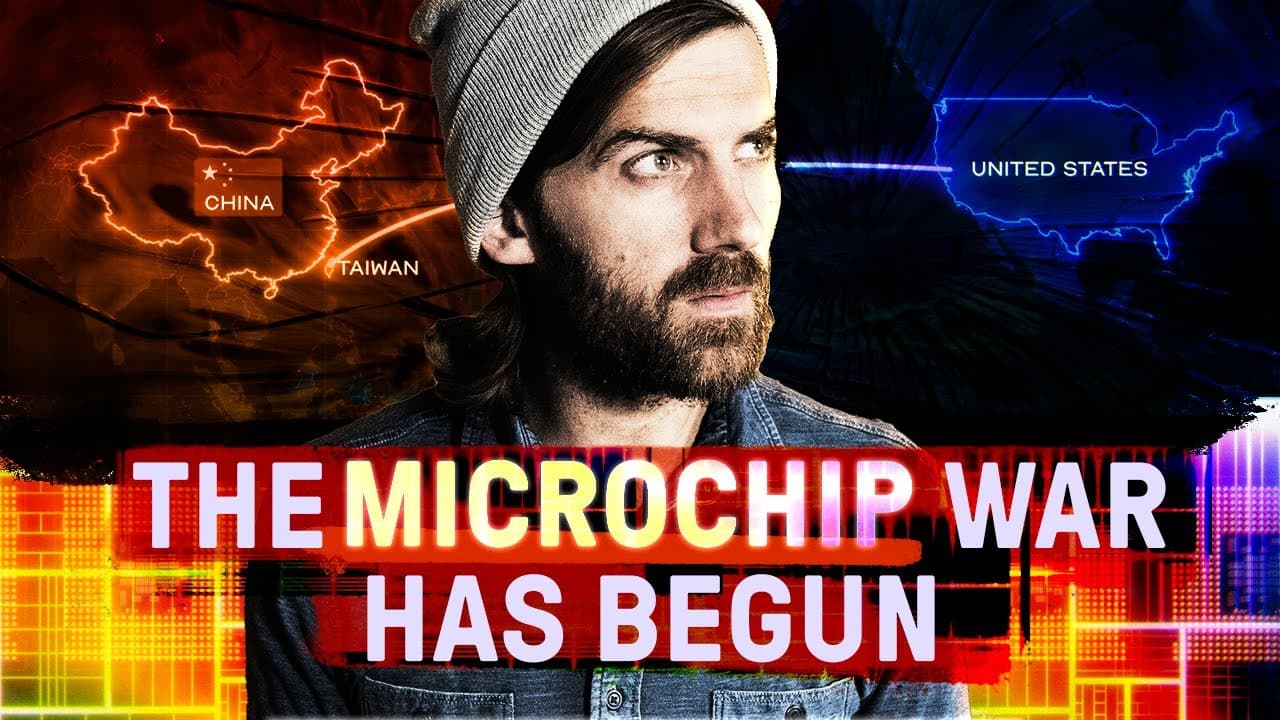
Why Are Microchips Central to the US-China Conflict?
TL;DR
Microchips are vital for both civilian and military technologies, making control over their production a key geopolitical advantage. The US has imposed restrictions on chip sales to China, while China is investing heavily to achieve self-sufficiency in microchip manufacturing, escalating tensions between the two nations. Taiwan plays a crucial role as a major chip producer, further complicating the dynamics.
Transcript
(bass noise) - The US and China are fighting a war. It's not a war that you can really see and it's not a traditional battlefield war with soldiers, at least not yet. This is a war that's being fought in government offices and company boardrooms. It's a war that's being fought with rules and regulations and it's meant to stop rivals from getting th... Read More
Key Insights
- 🥺 Microchips have become a vital resource, with immense economic and military implications, leading to an escalating conflict between the US and China.
- 🐿️ The US is taking steps to protect its technological edge by cutting off chip sales to China and investing in domestic chip production.
- 🐿️ China is investing heavily in its own chip industry and leveraging US technology to catch up, with a focus on military applications.
- 😚 Taiwan's role as a major chip producer and its close ties with the US make it a crucial factor in the conflict.
- 🌍 The battle for microchips highlights a shift in international relations, with economic interdependence being weaponized.
Install to Summarize YouTube Videos and Get Transcripts
Explore YouTube Video Summarizer or Get YouTube Transcript Extractor
Questions & Answers
Q: Why are microchips so important in the US-China conflict?
Microchips are crucial for both civilian and military applications, and control over the production and supply of advanced microchips can provide a significant geopolitical advantage.
Q: How is China catching up in microchip production?
China is investing heavily in its chip industry and leveraging US technology and expertise to build its own capabilities. It is also focusing on military applications and acquiring advanced chip technologies through various means.
Q: How is the US responding to China's rise in chip production?
The US has implemented export controls and restrictions on semiconductor sales to China to protect its technological edge. Additionally, the US government is providing billions of dollars in funding to American chip makers to support domestic chip production.
Q: What role does Taiwan play in the US-China conflict?
Taiwan is a major player in microchip production, with TSMC being one of the world's leading chip manufacturers. Its role in the global supply chain and close relationship with the US make it a key component of the conflict.
Key Insights:
- Microchips have become a vital resource, with immense economic and military implications, leading to an escalating conflict between the US and China.
- The US is taking steps to protect its technological edge by cutting off chip sales to China and investing in domestic chip production.
- China is investing heavily in its own chip industry and leveraging US technology to catch up, with a focus on military applications.
- Taiwan's role as a major chip producer and its close ties with the US make it a crucial factor in the conflict.
- The battle for microchips highlights a shift in international relations, with economic interdependence being weaponized.
- The conflict between the US and China over microchips resembles Cold War dynamics, with two nuclear powers competing for technological supremacy.
Summary & Key Takeaways
-
Microchips, also known as semiconductors, are at the center of a geopolitical conflict between the US and China.
-
The US, Taiwan, and Japan have been leading in microchip production, but China is rapidly catching up and investing heavily in its own chip industry.
-
The US has implemented export controls and restrictions on semiconductor sales to China in an effort to protect its own technological edge.
-
China, on the other hand, is working towards self-sufficiency in microchip production and is leveraging US technology to do so.
Read in Other Languages (beta)
Share This Summary 📚
Summarize YouTube Videos and Get Video Transcripts with 1-Click
Try YouTube Summary with ChatGPT & Claude or YouTube Transcript Generator
Explore More Summaries from Johnny Harris 📚





Summarize YouTube Videos and Get Video Transcripts with 1-Click
Try YouTube Summary with ChatGPT & Claude or YouTube Transcript Generator