Does Taking 100% Personal Responsibility Actually Work?

TL;DR
Taking full personal responsibility can be freeing and motivating because it stops you from waiting for permission or motivation and pushes you to fix what you can control. But the extreme version, that everything is your fault, ignores luck, circumstances, and unfair environments, and can turn empowerment into guilt.
Transcript
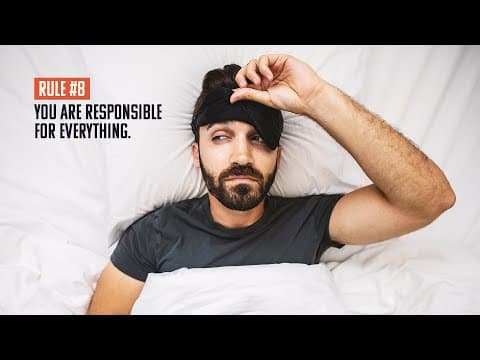
In my early 20s, I came across possibly the best self-development advice I've ever heard. You are responsible for everything. You probably heard some version of this before. Everything that happens to you is your fault. The number one way to get happier is to take on 100% full accountability. >> Your life is your responsibility. Your happiness is y... Read More
Key Insights
- Taking 100% ownership works as a correction for the victim mindset. It helps you stop identifying as a victim, even if you were victimized in the past, and start taking accountability for what you can do to change your circumstances.
- The advice resonates with millions because it is often easier to blame external factors, luck, or circumstances for our failures than to look honestly at ourselves, which requires humility and courage.
- Mark Manson framed this in a 2012 blog post as the realization from which all personal growth emerges: that you are responsible for everything you do, no matter the external circumstances.
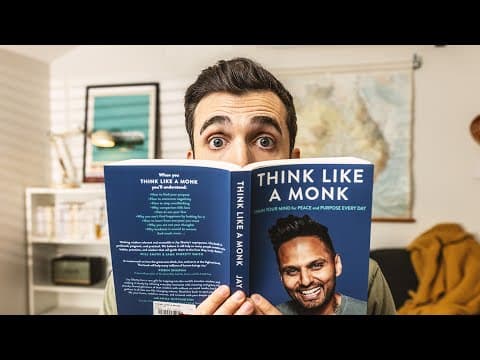
- Jocko Willink's book Extreme Ownership argues that taking full ownership of everything is the foundation of effective leadership, and these principles can extend beyond leadership to the individual.
- The advice worked for the creator personally. After embodying it over years, he put on over 20 pounds of muscle, resolved his dating anxiety, found love, built a filmmaking business, and got out of debt.
- People wrongly interchange responsibility, fault, blame, and accountability as if they mean the same thing, which causes misunderstanding and makes the message easy to reject.
- The claim that everything is your fault is the most problematic version because it is extreme, more marketing than truth, and treats all outcomes as fully within your control.
- What makes humans human hasn't changed. Rising obesity, phone use, depression, and loneliness stem from shifts in environment and circumstances, not a fundamental change in willpower or brains.
Install to Summarize YouTube Videos and Get Transcripts
Explore YouTube Video Summarizer or Get YouTube Transcript Extractor
Questions & Answers
Q: What is the core self-development advice discussed in the video?
The core advice is that you are responsible for everything in your life. Your job, health, love life, happiness, and success are all your responsibility, and no one is coming to save you. The video describes this as one of the most widespread ideas in all of self-development, passed down for centuries from ancient philosophy to modern self-help. The promise is that taking responsibility for everything will improve your circumstances, mindset, and life.
Q: How did taking personal responsibility change the creator's life?
In his early 20s the creator struggled with exercise habits, eating well, and crippling dating anxiety, going five years without a date. After hearing this advice, he stopped waiting for permission, support, or a magical hit of motivation and started taking steps toward his goals. Over years of embodying it, he put on over 20 pounds of muscle, resolved his dating anxiety, found love, built a successful filmmaking business, and got out of debt.
Q: What is Extreme Ownership and who wrote it?
Extreme Ownership is a book by Jocko Willink, a former Navy Seal and war commander who is now a podcaster and author. He argues that taking full ownership of everything is the foundation of effective leadership and long-term success, and that these same principles can extend beyond leadership roles to apply to the individual. He writes that total responsibility for failure is difficult to accept and requires extraordinary humility and courage.
Q: Why does the message of accountability resonate with so many people?
According to the video, this message resonates with millions who read authors like Jocko Willink, David Goggins, or Gary Vee because it is often easier to blame external factors for our failures than to look at ourselves. As individuals we tend to attribute others' success to luck while making excuses for our own failures. Taking ownership forces us to recognize uncomfortable truths and stop making excuses for why we can't change.
Q: How does 100% ownership relate to the victim mindset?
The video says 100% ownership is a correction for the rise of the victim mindset. It helps you stop identifying yourself as a victim, even if you have been victimized in the past, and start taking accountability for what you can do to change your circumstances. As one quote in the video puts it, until you callous over the victim's mentality that the world is out to get you, you will stay in the same exact spot you are in.
Q: Why is saying 'everything is your fault' problematic?
The video argues this version is the most problematic because it is extreme, more marketing than truth. It treats all outcomes as if they were fully within your control, ignoring luck, circumstances, and the actions of others. While it can sound empowering, it often turns into guilt, pushing people to blame themselves for things outside their control. The example given is being randomly punched in the face by a stranger, which is clearly not your fault.
Q: What role do environment and circumstances play according to the video?
The video argues we live in a clearly unfair society where the gap between the 1% and everyone else is growing while wealth among the 99% shrinks. It notes rising obesity, more hours spent scrolling on phones, and increasing depression, anxiety, suicide, and loneliness among young people. It concludes that what makes humans human hasn't changed. It is our environment and circumstances that have, so blaming individuals entirely is not fair.
Q: What confusion around key terms does the video point out?
The video points out that many people interchange words like responsibility, fault, blame, and accountability as if they all mean the same exact thing. This blurring is described as a subtle but clear problem with how the advice is shared, and it leaves people either misunderstanding the message or rightly being upset by how it is presented. The creator suggests finding a middle ground rather than treating the advice as either perfect or useless.
Summary & Key Takeaways
-
The idea that you are responsible for everything is one of the most widespread ideas in self-development, passed down from ancient philosophy to modern self-help, from Holocaust survivors to Navy Seals. Its promise is that taking responsibility for everything will improve your circumstances, mindset, and life.
-
Jocko Willink's Extreme Ownership pushes this further, arguing full ownership is the foundation of leadership and success. This message resonates because blaming external factors is easier than self-examination, and it counters the victim mindset by shifting focus to what you can change.
-
The creator credits this advice for real gains: 20-plus pounds of muscle, resolving dating anxiety, finding love, building a business, and escaping debt. But he admits other factors contributed and it wasn't all on him.
-
The extreme version, that everything is your fault, is problematic because it ignores luck, circumstances, and others' actions in an unfair society. It treats all outcomes as controllable and can turn empowerment into self-blame and guilt.
Read in Other Languages (beta)
Share This Summary 📚
Summarize YouTube Videos and Get Video Transcripts with 1-Click
Try YouTube Summary with ChatGPT & Claude or YouTube Transcript Generator
Explore More Summaries from Matt D'Avella 📚



Summarize YouTube Videos and Get Video Transcripts with 1-Click
Try YouTube Summary with ChatGPT & Claude or YouTube Transcript Generator