Wareen Buffett | Nightline Interview | 1999
TL;DR
Warren Buffett lives simply and invests patiently because he values enjoyable work and understandable businesses more than possessions or constant trading. In this 1999 Nightline interview, he advises investors never to buy with borrowed money and says a real investor can wait months or years for the right opportunity. Read on for his principles on allocating capital, choosing businesses, evaluating managers, and finding satisfaction in work.
Transcript
mr buffett i presume i call you warren i mean you and me a little together a warren warren you are my destiny he's a man of simple tastes not always comfortable with the finer things in life he met a lobster for the first time in his life and he was attacking the back of the lobster which of course was totally resistant and i said warren if you tur... Read More
Key Insights
- The single most important rule for investors is to never buy stocks on borrowed money, because leverage forces impatience when the whole advantage of investing is the freedom to wait indefinitely for the right price.
- A real investor loses nothing when the stock exchange stays closed, because value comes from owning good businesses over time, not from constant trading or the urgency to act by sundown.
- Buffett refuses to invest in any business he cannot understand, avoiding high-tech companies entirely, because he sees no reason to expect profit from something whose economics he does not genuinely grasp.
- Buying a business is like a marriage you intend to keep, so Buffett will not partner with managers who make his stomach churn, no matter how much money the deal might add to his net worth.
- Wealth beyond a certain point buys mostly extra possessions to track rather than a better life, which is why owning several cars or a grander home holds no appeal for someone content with his daily routine.
- Refusing to split the stock deliberately filters the shareholder base, attracting long-term owners who share Buffett's expectations while screening out those who mistake a split for added value.
- A stock split changes nothing about a company's worth, just as cutting a pizza into more slices leaves the same amount to eat or collecting two hat checks yields no extra coat.
- The foundation of a happy working life is a job you love alongside people you like, admire, and trust, which Buffett says puts you most of the way toward everything worth having.
Install to Summarize YouTube Videos and Get Transcripts
Explore YouTube Video Summarizer or Get YouTube Transcript Extractor
Questions & Answers
Q: What is Warren Buffett’s most important advice for investors?
Buffett’s central advice is never to invest with borrowed money. He says investors do not need to buy a good idea by sundown because they can wait months or years for the right opportunity.
Q: Why does Warren Buffett live simply despite his wealth?
Buffett says his lifestyle reflects what he genuinely enjoys, from the books he reads and television he watches to playing bridge. He believes owning five cars instead of one would mainly give him more possessions to track, not a better time.
Q: What does Warren Buffett mean by allocating capital?
Berkshire Hathaway’s businesses cover their own needs and then send surplus earnings to Omaha. Buffett’s job is to deploy that money in the most intelligent way he can for shareholders.
Q: How does Warren Buffett decide which businesses to own?
Buffett looks for businesses with very good economics that are run by honest and talented people. He also prefers businesses he can understand and intends to remain an owner through their inevitable ups and downs.
Q: Why can Warren Buffett wait so long before investing?
Buffett rejects the idea that an investor must act immediately whenever a promising opportunity appears. He says a real investor can wait months or years, and even a stock-exchange closure lasting a year or two would make no difference.
Q: What kinds of businesses and investments does Berkshire Hathaway hold?
Buffett describes Berkshire Hathaway as owning businesses ranging from candy and insurance operations to a newspaper. It also holds stakes in companies such as Gillette, Coca-Cola, and the Washington Post.
Q: Why did Warren Buffett buy Dairy Queen?
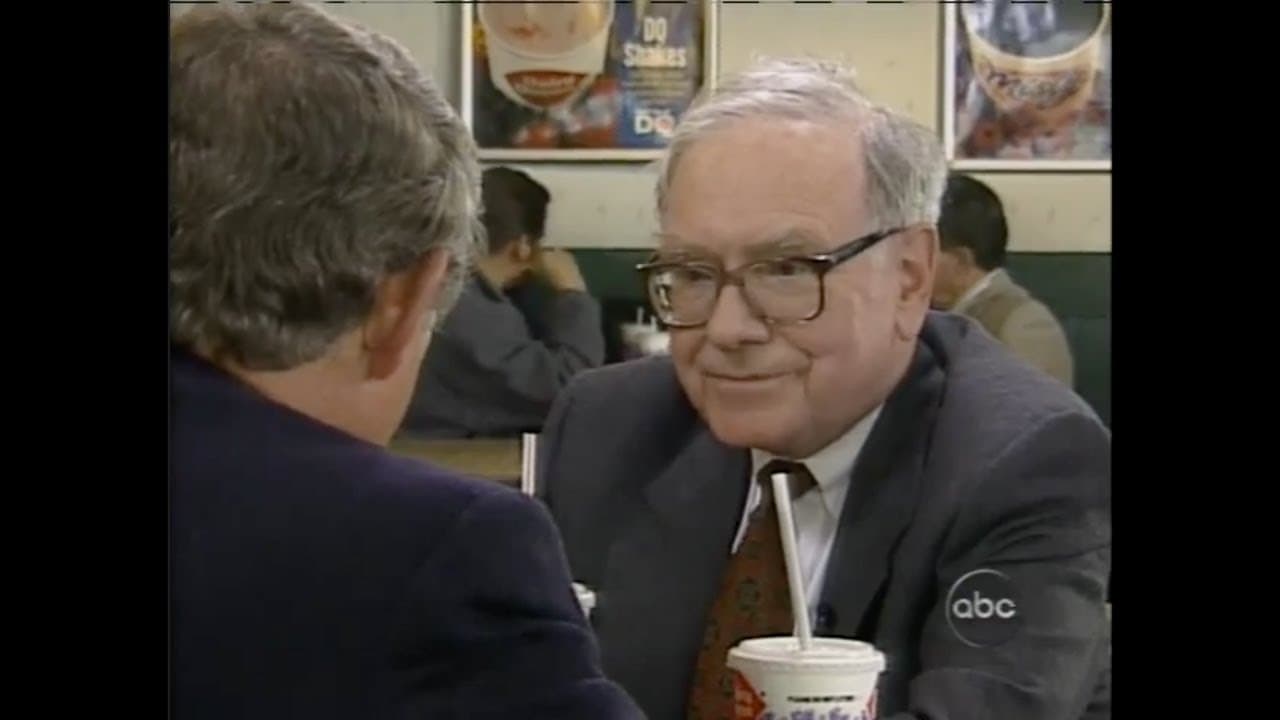
Buffett says Dairy Queen is a business he can understand, and the interview notes that he liked the company enough to buy it. The restaurant was also presented as his favorite place for lunch in Omaha.
Q: What does Warren Buffett say makes working life satisfying?
Buffett says the important thing is to enjoy every day by having a job you love and working with people you like, admire, and trust. He describes himself as doing exactly what he loves every day: allocating capital and keeping talented managers excited about working.
Summary
Warren Buffett, the second richest man in America, is known for his down-to-earth lifestyle and his success in the stock market. In this interview, he discusses his simple tastes, his investment strategy, and his philanthropic goals.
Questions & Answers
Q: What is Warren Buffett's lifestyle like?
Warren Buffett leads a modest lifestyle, living in the same home he has lived in for 40 years. He enjoys simple pleasures, such as eating at his favorite restaurant, the Dairy Queen. Although he has amassed great wealth, he does not let it change his way of life. He believes that material possessions do not bring happiness.
Q: What is Warren Buffett's investment strategy?
Warren Buffett takes a long-term approach to investing. He looks at each share of stock as a part of a business and considers the value of the entire business when deciding whether to invest. He focuses on businesses with good economics and honest, talented management. He does not engage in day trading or follow short-term market trends. He advises against investing on borrowed money and encourages individuals to invest in businesses they understand.
Q: Why does Warren Buffett prefer not to split his company's stock?
Warren Buffett believes that splitting a stock only attracts a certain type of investor who sees a lower stock price as more affordable. He wants his shareholders to understand the value of the underlying business rather than focusing on the stock price. By not splitting the stock, he filters out investors who are primarily interested in stock splits and ensures that his shareholders have similar ideas and expectations.
Q: How does Warren Buffett view the current state of the stock market?
Warren Buffett acknowledges that the stock market has been on a long and strong upward trend in recent years. However, he also believes that valuations are high compared to historic standards and that speculation is prevalent. He advises against investing in stocks solely based on their price action or short-term expectations. He cautions against using borrowed money for investing and recommends approaching investing with a long-term perspective.
Q: What are Warren Buffett's philanthropic goals?
Warren Buffett plans to donate a large portion of his wealth to society through his foundation. He believes in a meritocracy and wants the resources of society to be handled by those who have accomplished things that deserve those resources. He aims to address big and intractable problems that are not being tackled by other philanthropic efforts. Some areas he is particularly interested in are the spread of nuclear knowledge and finding solutions to problems that lack a funding constituency.
Q: What does Warren Buffett think about leaving money to his children?
Warren Buffett does not believe in leaving vast sums of money to his children. He believes in a meritocracy and does not think that someone should be entitled to wealth simply by being born into the right family. While his children will receive a better education and environment, he believes that the people handling society's resources should be those who have earned it through their own accomplishments.
Q: Is Warren Buffett involved in any charitable endeavors currently?
Warren Buffett is actively involved in philanthropy. He has chosen six highly capable individuals to manage his foundation and has given them the freedom to tackle big problems that do not have a funding constituency. One area he is specifically focused on is the spread of nuclear knowledge. He wants to make a significant impact and is willing to take on high failure rates to address important issues.
Q: Does Warren Buffett enjoy performing and being in the public eye?
Warren Buffett has a bit of a ham side to him and enjoys performing in certain situations. In the interview, a clip is shown of him participating in a charity event where he played the role of Daddy Warbucks from the musical "Annie." While he is generally a quiet guy, he appreciates opportunities to have fun and make a positive impact.
Q: Did Warren Buffett invest in Microsoft?
Warren Buffett did not invest a large amount in Microsoft. Although he spent nine hours with Bill Gates, who explained the company to him, he only bought 100 shares. This shows that even someone like Warren Buffett can make mistakes when it comes to investing.
Q: What is Warren Buffett's future plan regarding interviews?
Warren Buffett promises to do interviews again in the future, although there is no specific timeline. He has kept his word before and will likely honor his commitment at some point.
Takeaways
Warren Buffett's down-to-earth lifestyle, long-term investment strategy, and philanthropic goals make him a unique and admired figure in the business world. He emphasizes the importance of understanding the businesses one invests in, being patient, and avoiding speculative behavior. His approach to wealth and inheritance challenges the idea of entitlement and promotes a meritocracy. Through his philanthropic efforts, he seeks to address major societal issues and make a lasting impact. Overall, Warren Buffett serves as a role model for those looking to achieve financial success while also prioritizing ethics and social responsibility.
Summary & Key Takeaways
-
Warren Buffett, described as America's second richest man, almost never grants interviews but agreed to speak with Ted Koppel in Omaha, hosting lunch at his favorite restaurant, Dairy Queen, a company he liked so much that he bought it. He still lives in the same home he has occupied for decades.
-
Buffett describes his job as allocating capital: the businesses he owns send their surplus earnings to Omaha, and he reinvests that cash intelligently for shareholders. Berkshire Hathaway owns varied businesses, from candy and insurance to a newspaper, plus stakes in companies like Coca-Cola, Gillette, and the Washington Post.
-
He buys only businesses he understands, run by honest, talented people he genuinely likes, and he intends to hold them permanently. His core advice for investors is patience and avoiding borrowed money, since a true investor can wait as long as it takes for the right opportunity to appear.
Read in Other Languages (beta)
Share This Summary 📚
Summarize YouTube Videos and Get Video Transcripts with 1-Click
Try YouTube Summary with ChatGPT & Claude or YouTube Transcript Generator
Explore More Summaries from Investor Archive 📚
Summarize YouTube Videos and Get Video Transcripts with 1-Click
Try YouTube Summary with ChatGPT & Claude or YouTube Transcript Generator