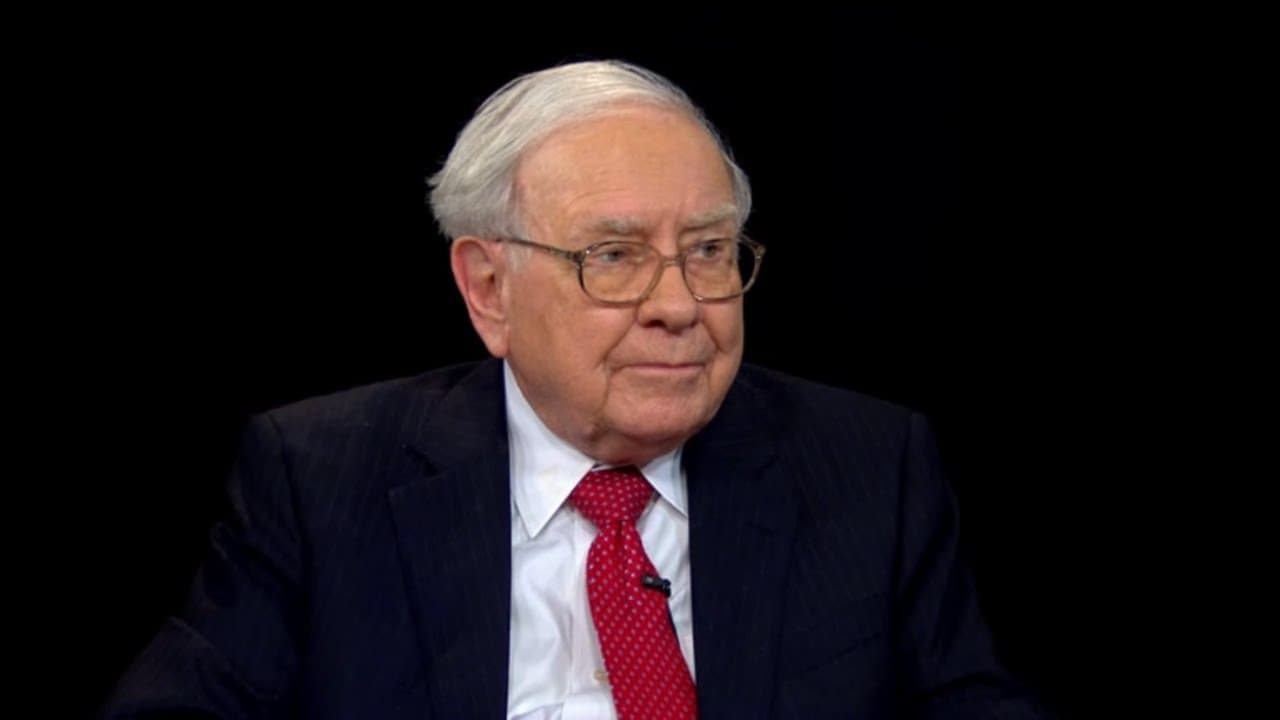
Warren Buffett | Charlie Rose | January 27, 2017
TL;DR
Effective philanthropy starts by treating every life as equally valuable and finding capable people who can turn resources into measurable benefits. Buffett and Gates argue that shared values, complementary partners, continuous learning, and respect for personal limits are essential in charity and business, while artificial intelligence could improve productivity by assisting intellectual work and eventually performing tasks such as driving and warehouse work.
Transcript
bill gates and warren buffett are here gates is the co-chair of the bill and melinda gates foundation the philanthropy focuses on education poverty and global health warren buffett is chairman and ceo berkshire hathaway the company is one of the most successful companies of the last five decades the two have famously been friends for more than 25 y... Read More
Key Insights
- The Giving Pledge is an initiative started by Buffett and Gates in 2010 to encourage the world’s richest people to donate most of their wealth. Buffett says its membership grew to about 156 people and expanded beyond the borders of the United States.
- Effective philanthropy is a learned discipline, according to Gates, who did not initially understand where charitable resources could produce large benefits. With encouragement from Melinda, he began studying philanthropy in his late 30s and accelerated his giving after identifying promising opportunities.
- Equal human value is the central principle behind the philanthropic goals described by both men. Gates connects that principle to saving lives and helping children grow up healthy, while Buffett identifies it as a fundamental reason for supporting the Gates Foundation.
- Buffett’s decision to delegate philanthropy is based on matching capital with people who possess suitable values, skill, energy, and experience. He selected five foundations in 2006, with the Bill and Melinda Gates Foundation receiving the largest commitment.
- Strong partnerships are built on shared goals and complementary strengths. Buffett credits Susie with helping him mature emotionally and describes Charlie Munger as a wise, strong-minded partner whose disagreements never became arguments, while Gates gives similar credit to Melinda.
- Artificial intelligence is intended first to become a far more capable assistant that can examine information, identify priorities between meetings, and help organize plans. Gates also expects it to magnify creativity and make time more valuable for people performing intellectual work.
- Some mechanical work could eventually be performed by artificial intelligence, with Gates specifically naming warehouse work and driving. His broader expectation is that advances in reading, speech, vision, and learning will support both automation and greater productivity in information-based work.
- A circle of competence is Buffett’s boundary for choosing businesses he can understand. He avoids areas where he lacks a natural advantage or could not catch up with experienced specialists, while recognizing that other people can possess different, partly overlapping areas of competence.
Install to Summarize YouTube Videos and Get Transcripts
Explore YouTube Video Summarizer or Get YouTube Transcript Extractor
Questions & Answers
Q: What is the Giving Pledge and why was it created?
The Giving Pledge is an initiative started by Warren Buffett and Bill Gates in 2010. It encourages the world’s richest people to donate the majority of their wealth to philanthropic causes. Buffett says it also gives members opportunities to learn about effective plans, approaches that failed, and the ways wealthy families handle giving and family relationships. Its membership reached about 156 people and expanded beyond the United States.
Q: Why did Warren Buffett give most of his wealth to the Gates Foundation?
Buffett chose the Bill and Melinda Gates Foundation because its leaders shared his belief that every life has equal value. He regarded Bill and Melinda Gates as younger, bright, hardworking people who were already committing their own money and energy. After Susie Buffett died in 2004, he reconsidered his original plan and selected five foundations in 2006, making the Gates Foundation the largest recipient.
Q: How did Bill Gates decide to begin major philanthropic work?
Gates says he initially focused intensely on Microsoft and had not taken time to understand where philanthropy could produce large benefits. In his late 30s, encouragement from Melinda led him to study charitable opportunities more seriously. Although they expected to pursue giving by the time he was 60, their research revealed promising ways to have a strong impact, so they decided to accelerate their work.
Q: What principle guides Buffett and Gates in philanthropy?
The guiding principle is that all lives have equal value. Gates says this mission directed substantial work outside the United States toward saving lives and helping children grow up healthy. Buffett calls the same idea fundamental to him and says it helped make the Gates Foundation compatible with his own goals. Their philanthropic partnership rests on this shared value rather than on wealth alone.
Q: How did Susie Buffett influence Warren Buffett’s life and giving?
Susie Buffett helped shape both Buffett’s personal development and his original philanthropic plan. He describes himself as emotionally immature and poorly adjusted when they married, while crediting her patience and maturity with gradually changing his life. They established a foundation more than 50 years before the interview, and Buffett expected to compound the money while Susie, who was more empathetic and personally engaged, would eventually distribute it.
Q: How did Charlie Munger and Warren Buffett handle disagreements?
Buffett says he and Charlie Munger were business partners for 57 or 58 years and were both strong-minded people. They disagreed at times but never had an argument. Buffett respected Munger’s judgment and acknowledged that Munger was often right, while also believing he himself was often right. Their relationship demonstrates that serious disagreement can coexist with friendship, mutual respect, humor, and enduring cooperation.
Q: How could artificial intelligence change intellectual and mechanical work?
Gates expects artificial intelligence initially to function as a much better assistant. It could review a person’s information, identify what deserves attention between meetings, organize plans, and help people use time more effectively. For intellectual work, he expects it to magnify creativity and increase the value of time. He also says certain mechanical tasks, including warehouse work and driving, could eventually be taken over.
Q: Why does Warren Buffett invest within his circle of competence?
Buffett says he must understand a business before treating it as an appropriate opportunity. Many businesses fall outside his sphere of competence, including technologies where he lacks a natural aptitude and could not catch up with people who have worked in the field for years. He also works with two people who have their own partly overlapping circles of competence, allowing different expertise without abandoning disciplined boundaries.
Summary
In this video, Bill Gates and Warren Buffett discuss their friendship, philanthropy, and various global issues. They talk about the importance of education, the impact of technology and artificial intelligence, the role of philanthropy in society, the challenges of trade and inequality, and the potential risks of nuclear weapons and bioterrorism. They also share their thoughts on the future of the economy, the role of government, and the need for collaboration and innovation.
Questions & Answers
Q: How did Bill Gates and Warren Buffett become friends?
Bill and Warren met on July 5th, 1991, and immediately hit it off. Warren initially had to persuade Bill to become friends, but they have since enjoyed a strong friendship that has lasted over 25 years.
Q: What is the Giving Pledge and how did it come about?
The Giving Pledge is an initiative started by Bill Gates and Warren Buffett in 2010. It encourages the world's richest individuals to pledge the majority of their wealth to philanthropic causes. Warren had already pledged the bulk of his wealth to the Gates Foundation in 2006, and they decided to expand that idea to other billionaires.
Q: How has the Giving Pledge evolved over the years?
Initially, Bill and Warren thought the Giving Pledge would attract around 30 to 40 people, but it now has over 156 members. They are delighted with the response it has received and the impact it is having. Members are learning from each other about effective philanthropy and how to handle wealth within their families.
Q: Why are many young technology entrepreneurs giving away their wealth at a young age?
Many young technology entrepreneurs are achieving financial success at a young age, which allows them to make significant philanthropic contributions. Unlike Bill Gates, who started giving later in life, these entrepreneurs have a better understanding of where the real impact and payoffs are in terms of philanthropy.
Q: Why did Bill Gates decide to give his wealth to the Gates Foundation instead of creating his own foundation?
Bill and his first wife, Susie, actually started a foundation over 50 years ago. They both believed that larger sums of wealth would be available later on if Bill focused on making money first and Susie focused on giving it away. Bill also believed that Susie was better equipped to empathize with people's needs and put personal energy into philanthropy. After Susie passed away, Bill decided to consolidate his charitable efforts into five foundations, with the Gates Foundation being the largest.
Q: What convinced Warren Buffett to give his wealth to the Gates Foundation?
Warren had always planned on giving away a large portion of his wealth, but he initially planned on establishing his own foundation. After meeting Bill and observing his philanthropic efforts, Warren realized that the Gates Foundation had a similar mission to what he envisioned. He also saw that Bill was committed to putting his own money into the foundation, which further convinced him to give his wealth to the Gates Foundation.
Q: Why did Warren Buffett consider his late wife, Susie, to be a significant influence in his life?
Warren admits that he was not well-adjusted and lacked emotional maturity before meeting Susie. She helped him overcome his personal shortcomings and put his life together. While it took time, Susie had a significant impact on his life, and without her, Warren believes he would not have had the successful life he has had.
Q: How do Bill Gates and Warren Buffett work together as partners?
Bill and Warren have been partners for over 57 years and have never had an argument during that time. They have a strong partnership built on mutual respect and trust. While they have different opinions at times, they always find a way to work together and reach a common understanding. Warren often sees himself as the one who is right, but he acknowledges that Bill is smart and will eventually come to the same conclusion.
Q: Do Bill Gates and Warren Buffett agree on everything politically?
While they do not agree on everything politically, Bill and Warren share a general sense that the economy needs to keep growing and resources need to be allocated in a fair way. They both believe in the importance of trade, clean energy, and the advancement of technology. They see the US-China relationship as the most important in the world, given that both countries are the leading economic powers.
Q: What are some of the challenges and risks of the future, according to Bill Gates and Warren Buffett?
One of the main challenges is the growing inequality caused by the market system and the increasing specialization of the economy. While the market system rewards those who make life better for millions of people, it also leaves behind those who don't have specialized skills that are in demand. The responsibility falls on the government to take care of those who are left behind and ensure that society as a whole benefits from the market system. Additionally, they highlight potential risks such as the misuse of artificial intelligence, the spread of nuclear weapons, bioterrorism, and cyber warfare.
Takeaways
Bill Gates and Warren Buffett, through their friendship, philanthropy, and business success, have become influential figures who advocate for positive change in the world. They emphasize the importance of education, technology, and innovation in improving lives, while also acknowledging the challenges of inequality and the need for government intervention. They believe in the power of philanthropy and the responsibility of the rich to contribute to society. They recognize the potential risks of various global issues and the importance of collaboration and forward-thinking to address them. Overall, their discussions shed light on the complexity of social, economic, and technological issues, as well as the potential for positive impact and progress.
Summary & Key Takeaways
-
Buffett and Gates describe a friendship that began on July 5, 1991, and later produced the Giving Pledge. Launched in 2010, the initiative encourages the world’s richest people to donate most of their wealth, while helping participating families discuss effective plans, unsuccessful approaches, and the challenges of managing wealth across generations.
-
Buffett explains why he directed most of his fortune toward the Bill and Melinda Gates Foundation and four other foundations in 2006. After his first wife, Susie, died in 2004, he sought younger, hardworking leaders who shared his conviction that every life has equal value and had already committed their own resources.
-
Gates discusses his continuing involvement with Microsoft, where he spends about 15 percent of his time working on research and development. He sees artificial intelligence as a better personal assistant, a tool for raising worker productivity, and eventually a way to perform some mechanical tasks, while Buffett emphasizes investing within understood businesses.
Read in Other Languages (beta)
Share This Summary 📚
Summarize YouTube Videos and Get Video Transcripts with 1-Click
Try YouTube Summary with ChatGPT & Claude or YouTube Transcript Generator
Explore More Summaries from Investor Archive 📚
Summarize YouTube Videos and Get Video Transcripts with 1-Click
Try YouTube Summary with ChatGPT & Claude or YouTube Transcript Generator