How to Create a Yearly Linear Calendar for Clarity
TL;DR
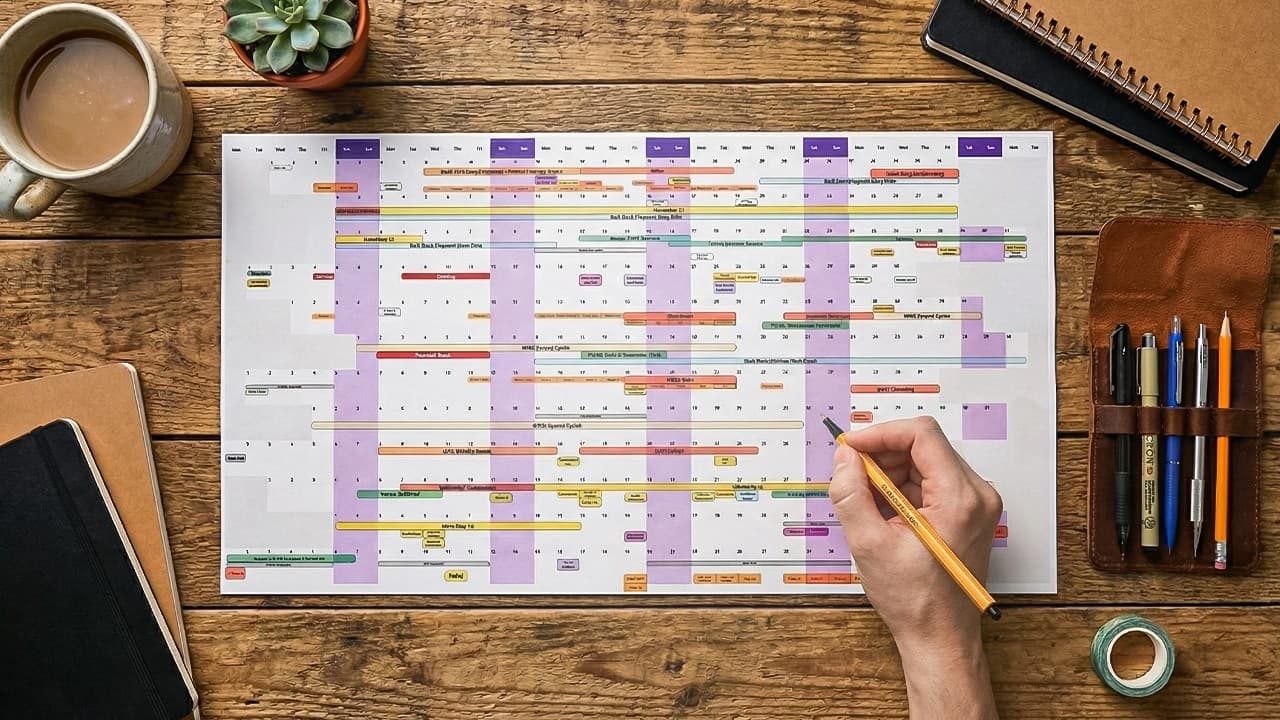
A linear calendar shows your entire year on one view, giving context, better energy management, and a lasting record of experiences. Start by adding life events and obligations, then color code categories, watch for clustering to avoid burnout, and choose a digital, physical, or app based format that fits your team or personal use.
Transcript
What if you could see your entire year in one document, physical or digital, solo or collaborative, so that you never felt overwhelmed or overscheduled again? This is the linear calendar, a system I've used to map my life [music] for the past 13 years. It gives me clarity, confidence, and a bird's eyee view of my priorities and commitments every ye... Read More
Key Insights
- A linear calendar displays the entire year on one page, revealing patterns and flows that are hidden in daily or weekly views.
- Color coding by category makes thematic trends across the year instantly visible, helping with balancing work, personal time, and travel.
- Watching for clusters of commitments acts as an early warning system for burnout, allowing pre emptive adjustments to workloads.
- The calendar should include life events, personal milestones, and ranges for extended periods, not just single days, to reflect real time usage and priority shifts.
- Obligations like workshops, deadlines, and launches are plotted to understand bandwidth and avoid overloading any given month.
- Recovery time matters; horizontal chains of activity without breaks can signal burnout, so planning sabbaticals helps preserve energy.
- The linear calendar reveals anti patterns by showing whether stated priorities align with actual time use, enabling re alignment to core values.
- Digital, physical, and app based formats each offer benefits: collaboration, durability, and portability respectively, so choose based on team needs and personal preference.
Install to Summarize YouTube Videos and Get Transcripts
Explore YouTube Video Summarizer or Get YouTube Transcript Extractor
Questions & Answers
Q: What is a linear calendar and what problem does it solve?
A linear calendar is a single view of the entire year laid out as months and days or ranges so you can see how time flows across the year. It solves the problem of feeling overwhelmed by a traditional calendar by exposing patterns, clusters, and the overall shape of your year, which helps with planning and prioritization.
Q: How should you start building a linear calendar for the year?
Begin by adding life events and personal milestones such as anniversaries, travel, vacations, and birthdays, including ranges for extended periods. Next, add work obligations like deadlines and major projects. Finally, include ongoing efforts that require sustained attention even without hard deadlines to capture true bandwidth.
Q: What are the benefits of color coding on a linear calendar?
Color coding makes it easy to scan the calendar and identify different kinds of activities at a glance. By assigning colors to work, personal use, and travel, you can quickly assess how time is allocated across categories and spot imbalances that may require adjustments for balance and priorities.
Q: How can you avoid burnout when using a linear calendar?
Look for clusters of commitments that form dense periods and use that awareness to re allocate tasks or schedule breaks. Scheduling week long sabbaticals after intense stretches provides rest, and recognizing these clusters early helps you prioritize the most important tasks while reducing overload.
Q: Why is it important to track recovery time in the calendar?
Recovery time is essential because continuous activity without breaks can lead to burnout. By planning for rest periods and ensuring there are gaps between intense periods, you maintain energy, preserve creativity, and improve long term performance rather than burning out from back to back efforts.
Q: What formats can you use for a linear calendar and what are their pros?
You can use a digital version like a Miro board for easy collaboration, a physical 11 by 17 or 8.5 by 11 calendar on your desk for tactile interaction and reflection, or a specialized app like Annukal for easy manipulation and additional notes. Each format offers different trade offs between collaboration, portability, and clarity.
Q: What is the role of the You in Review offering mentioned in the video?
You in Review is a two hour reflection session plus course and notes to guide yearly review and preview. It complements the linear calendar by helping you process the last 12 months and plan the next 12, ensuring your calendar reflects meaningful progress and alignment with your values.
Q: How should you use the calendar to align time with personal priorities?
The calendar should reflect your stated priorities, such as family time or creative work. When the calendar shows little or no time allocated to a value, you should adjust by re allocating or re balancing commitments to ensure what you value most actually appears on the calendar and in your year.
Summary & Key Takeaways
-
The linear calendar presents the whole year in a single layout, enabling you to see patterns, clusters, and the flow of events that would be missed in traditional views.
-
Color coding across the year helps you spot imbalances at a glance and makes it easier to prioritize what truly matters, such as family time or important launches.
-
Using a mix of physical, digital, or app based tools lets you tailor the experience to collaboration needs, recovery time, and long term record keeping while staying flexible and scalable for personal use.
Read in Other Languages (beta)
Share This Summary 📚
Summarize YouTube Videos and Get Video Transcripts with 1-Click
Try YouTube Summary with ChatGPT & Claude or YouTube Transcript Generator
Explore More Summaries from Linking Your Thinking with Nick Milo 📚




Summarize YouTube Videos and Get Video Transcripts with 1-Click
Try YouTube Summary with ChatGPT & Claude or YouTube Transcript Generator