How Does the YouTube Algorithm Grow Channels?
TL;DR
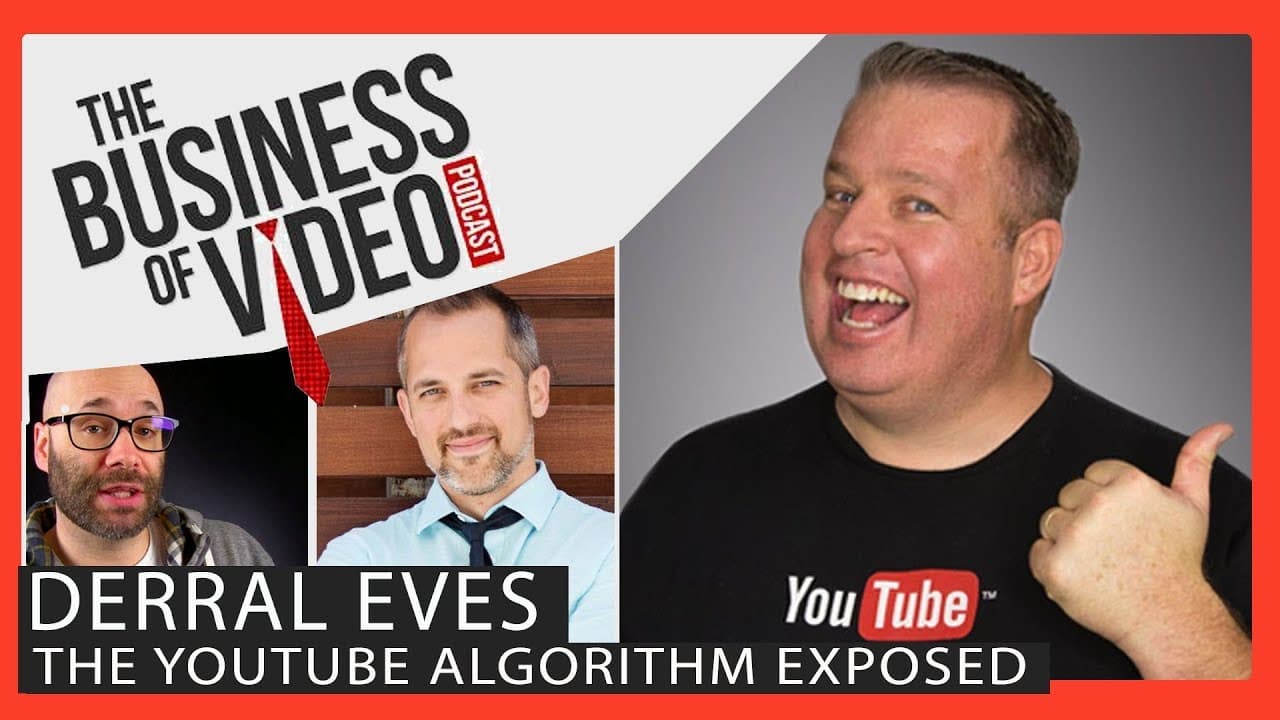
YouTube channel growth starts with understanding a specific audience, creating content they want to watch and share, and building discoverability until suggested videos become the primary traffic source. Derral Eves says consistent execution of an audience-focused strategy for 100 days can help a channel enter recommendations, where substantially greater growth becomes possible.
Transcript
If you wanna make videos that get thousands of views, then today's episode is for you. We'll be talking with Derral Eves, who's the master of YouTube, on how to make a channel that actually impacts lives. It's an amazing show today, so stick around. You're listening to The Business of Video Podcast, where the world's top YouTubers and marketers tal... Read More
Key Insights
- Audience development is more important than merely ranking individual videos because sustainable growth depends on understanding, reaching, and retaining people who repeatedly connect with the content.
- Successful YouTube channels can exist in every major vertical because Eves reports building an audience of at least one million subscribers within each of nine solid verticals on the platform.
- Effective content is designed around a defined target viewer because a deeper understanding of what that audience watches allows creators to recognize and capitalize on available opportunities faster.
- Channel planning is a months-ahead process that asks how people will discover the content, why they will continue watching, and what will motivate them to share it with others.
- Sharing is the most important audience action in the strategy described because it can produce an organic movement that expands distribution beyond the creator's direct promotional efforts.
- Suggested videos are YouTube's largest traffic source because the platform recommends what it predicts is the best video for an individual viewer to watch next on mobile or desktop.
- YouTube's algorithm is a learning engine that uses accumulated viewing data to improve its prediction of which content is most likely to interest each person next.
- One hundred days of consistency and strategy can help suggested videos become a channel's leading traffic source, according to the growth pattern Eves says his team identified.
Install to Summarize YouTube Videos and Get Transcripts
Explore YouTube Video Summarizer or Get YouTube Transcript Extractor
Questions & Answers
Q: How do you trigger the YouTube algorithm?
Triggering the YouTube algorithm begins with making a video discoverable through search, paid advertising, or another source that can create initial viewing activity. The larger objective is to give YouTube enough useful audience data to recognize who wants the content and recommend it as a suggested video. Eves connects this process with consistent publishing, deliberate strategy, and content designed for a clearly understood audience.
Q: What is the most important YouTube traffic source?
Suggested videos are identified as the number one traffic source on YouTube. When someone watches a video on mobile or desktop, YouTube attempts to predict the best video for that person to watch next. A channel can experience substantial growth when its content regularly appears in those suggestions, so Eves treats becoming recommended as a central objective of channel strategy.
Q: How long does it take to get videos suggested on YouTube?
Eves says his team found that it takes 100 days of consistency and strategy to reach the point where suggested videos can become a channel's number one traffic source. The statement is presented as a pattern from their work, not as a promise that every channel will grow identically. The period must combine consistent execution with a strategy built around audience behavior and discoverability.
Q: How should creators plan a successful YouTube channel?
Creators should begin by defining the audience they want to develop and studying the types of content those people already watch. The plan should determine how viewers will discover each video, why they will watch it, and what will encourage them to share it. Eves says this planning can begin months in advance and should account for the way viewers engage on the chosen platform.
Q: Why are video shares important for channel growth?
Shares matter because they allow viewers to distribute a creator's content and help generate an organic swell of attention. Eves describes sharing as the most important action a strategy should encourage after attracting someone to watch. A successful plan therefore considers both the video's appeal to its intended audience and the reasons those viewers would want to pass it to other people.
Q: Can any type of YouTube channel become successful?
Eves argues that an audience can be built in every major YouTube vertical. He says his goal was to reach one million subscribers in each of nine solid verticals and that the goal was achieved. He cites vloggers, musicians, gamers, and DIY creators as examples, while emphasizing that success depends on audience understanding, engaging or entertaining content, and a workable development plan.
Q: Why is audience development better than ranking videos?
Audience development focuses on building an ongoing relationship with people rather than treating search position as the sole objective. Eves says his perspective changed after a small piano store grew to millions of subscribers and hundreds of millions of views. That result showed him the value of leveraging audiences, leading him to stop concentrating mainly on rankings and prioritize sustainable audience growth.
Q: How does YouTube decide which video to recommend next?
YouTube functions as an artificial intelligence and learning engine that attempts to predict the best video for each viewer to watch next. Eves says its recommendations improve as it consumes more information and accumulates more data. Creators can support that discovery process by attracting initial viewers through search, advertising, or other methods, then executing a consistent strategy that helps the platform identify the appropriate audience.
Summary & Key Takeaways
-
Derral Eves shifted from ranking websites and videos toward audience development after seeing a small piano store grow to millions of subscribers and hundreds of millions of views. His agency applied that audience-centered approach across nine YouTube verticals, helping 14 channels grow from zero to more than one million subscribers.
-
Successful channel planning begins months before publishing. Creators should identify the target audience, understand the content that audience watches, and decide how each release will encourage both viewing and sharing. The strategy must also account for how people engage with video on each platform because audience behavior and effective content vary by platform.
-
YouTube operates as a learning engine that predicts the most suitable video for each viewer to watch next. Search, paid advertising, and other discovery methods can create initial momentum, but suggested videos offer the greatest growth opportunity. Eves says reaching that stage can require 100 days of consistent publishing and deliberate strategy.
Read in Other Languages (beta)
Share This Summary 📚
Summarize YouTube Videos and Get Video Transcripts with 1-Click
Try YouTube Summary with ChatGPT & Claude or YouTube Transcript Generator
Explore More Summaries from Owen Video 📚




Summarize YouTube Videos and Get Video Transcripts with 1-Click
Try YouTube Summary with ChatGPT & Claude or YouTube Transcript Generator