What I Learned From 17 Startups Before My First Million
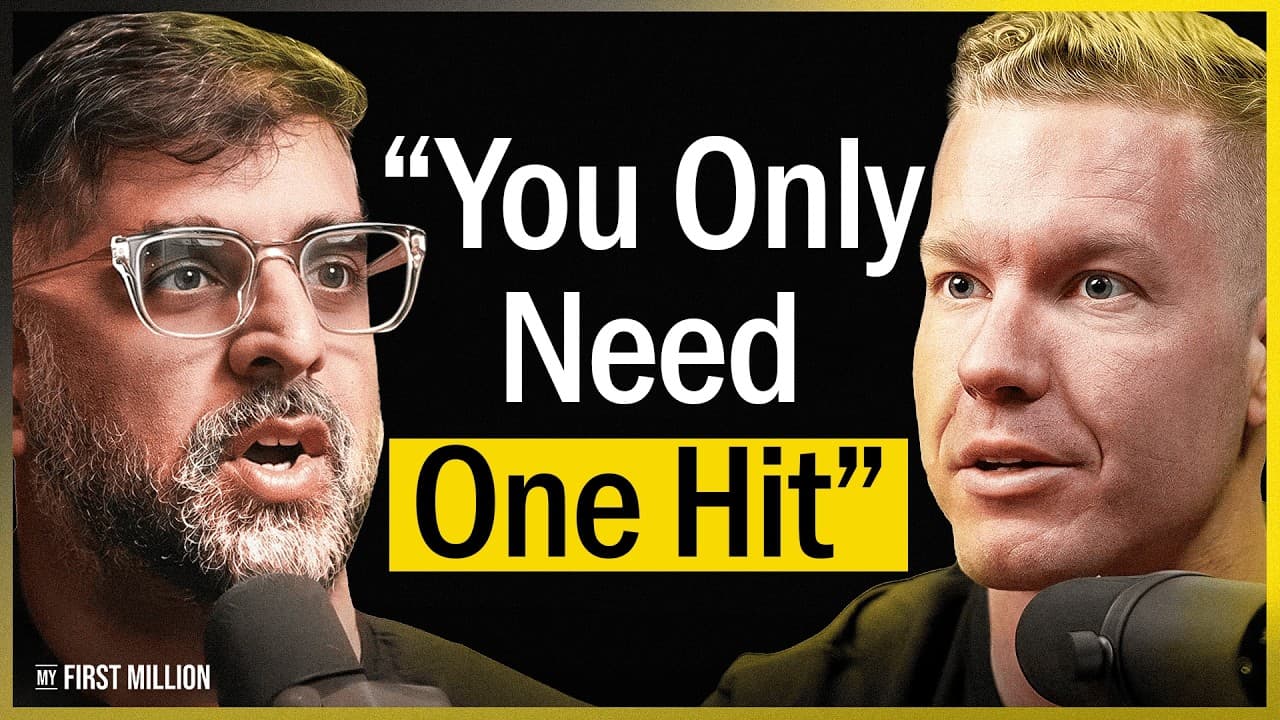
TL;DR
The speaker explains that almost every early business failed before reaching a million, highlighting flips of sports gear, a college hot dog stand, and early online ventures. The main lessons are to pursue ideas ethically, learn from failures, and leverage internet marketing to scale ideas efficiently. The path to first million came after refining strategies and embracing lessons from mistakes.
Transcript
All right, everyone. On this podcast, we talk a lot about the successes, but I want to talk about the failures. So, here's about 10 different companies that I started before I made my first million. Almost all of them, they sucked. It didn't work. But I'm going to explain how much I made for each idea and the lesson that I learned. All right. What'... Read More
Key Insights
- Sam describes his first income as flipping sports equipment in high school, turning undervalued items into cash through simple online marketplaces.
- The hot dog stand venture taught hard lessons in timing, location, and customer psychology, revealing the value of direct selling experience and sales craft.
- Online liquor and other quick turn ventures showed how early internet marketing could generate rapid revenue when aligning product and audience.
- Gray hat phase is identified as a risky but instructive period where quick cash ideas test market reaction and personal tolerance for risk.
- A major turning point was realizing scalable, repeatable systems could replace constant selling and heat exposure.
- The hosts advise using free or low cost resources like university or mentorship programs to validate ideas and ensure legal compliance.
- The Side Hustle Idea Database is pitched as a structured resource to brainstorm and implement new projects with guidance on growth.
- The discussion links personal values to business decisions, emphasizing ethics and legality as foundations for long term success.
Install to Summarize YouTube Videos and Get Transcripts
Explore YouTube Video Summarizer or Get YouTube Transcript Extractor
Questions & Answers
Q: What was Sam Parr's first money making idea and how did he execute it
Sam earned money in high school by flipping graduating seniors old sports equipment on eBay. He would buy items like track spikes or other gear and resell them for a profit, often receiving items for free or at very low cost before listing them online. This early example shows the power of spotting undervalued assets and turning them into cash quickly through simple online channels.
Q: How did the hot dog stand influence Sam's later approach to business
The hot dog stand taught Sam hard earned sales skills and the importance of location and timing. He operated with limited upfront investment and sometimes earned as little as fifty dollars on slow days, while other events yielded around a thousand dollars. The experience reinforced the value of direct selling, hustle, and learning to read customer demand.
Q: What lessons did he draw from the online liquor venture
The online liquor venture illustrated that early internet market fit can drive rapid revenue but only if the venture adheres to legal and ethical standards. Sam learned that projects framed as novelty items must still comply with laws, and counsel from a university program made him realize the importance of aligning ventures with his values.
Q: What is the role of “gray hat” experiments in his entrepreneurial journey
Gray hat experiments provided quick cash tests that helped identify what markets could respond to aggressive online tactics. Sam notes this phase was risky but valuable for understanding customer behavior, feasibility, and the boundary between legitimate growth and questionable practices, ultimately guiding him toward more scalable and ethical methods.
Q: How did Sam transition from quick cash ideas to scalable online growth
The shift came from recognizing that one time sales could be replaced by systems that reach many customers repeatedly. By leveraging online marketing and forums, he built a mindset around scalable distribution rather than constant selling, enabling faster growth without proportional increases in operational effort.
Q: What practical advice does the episode offer for people with full time jobs starting side projects
The episode suggests evaluating side project ideas with a focus on low upfront risk, clear value to a defined audience, and potential for repeatable growth. Attending programs or using databases like the Side Hustle Idea Database can provide structure, while prioritizing legal compliance and personal values helps sustain long term effort.
Q: How important are personal values in choosing a business idea according to the discussion
Values matter because they shape risk tolerance, legal compliance, and long term alignment with customers. Sam emphasizes selecting ventures that you can stand behind, even if they offer quick profits, as this builds trust with customers and reduces the likelihood of pursuing ideas that conflict with personal ethics.
Q: What was the turning point that led to Sam and Shaan starting to talk about multiple ventures
The turning point was realizing that many failed attempts still yielded lessons that could be transformed into a cohesive strategy. This encouraged them to share experiences publicly, talk through failures and successes, and curate resources like the side hustle database, helping others learn from the same patterns and accelerate their own journeys.
Summary & Key Takeaways
-
A broad tour of early failures shows how rapidly ideas can flop without market fit, funding, or timing, yet each misstep teaches a repeatable approach for future ventures. The speaker blends practical experiments with lessons on scaling and branding to reveal a sustainable entrepreneurial mindset.
-
The narrative emphasizes value alignment and practical legality when pursuing quick cash, while highlighting how online channels can amplify reach without traditional brick and mortar constraints.
-
Ultimately, the journey underscores persistence, continual learning, and the willingness to pivot toward more scalable, internet based opportunities as the route to the first million.
Read in Other Languages (beta)
Share This Summary 📚
Summarize YouTube Videos and Get Video Transcripts with 1-Click
Try YouTube Summary with ChatGPT & Claude or YouTube Transcript Generator
Explore More Summaries from My First Million 📚

Summarize YouTube Videos and Get Video Transcripts with 1-Click
Try YouTube Summary with ChatGPT & Claude or YouTube Transcript Generator