How to Select the Right Cutter and Speeds for Milling
TL;DR
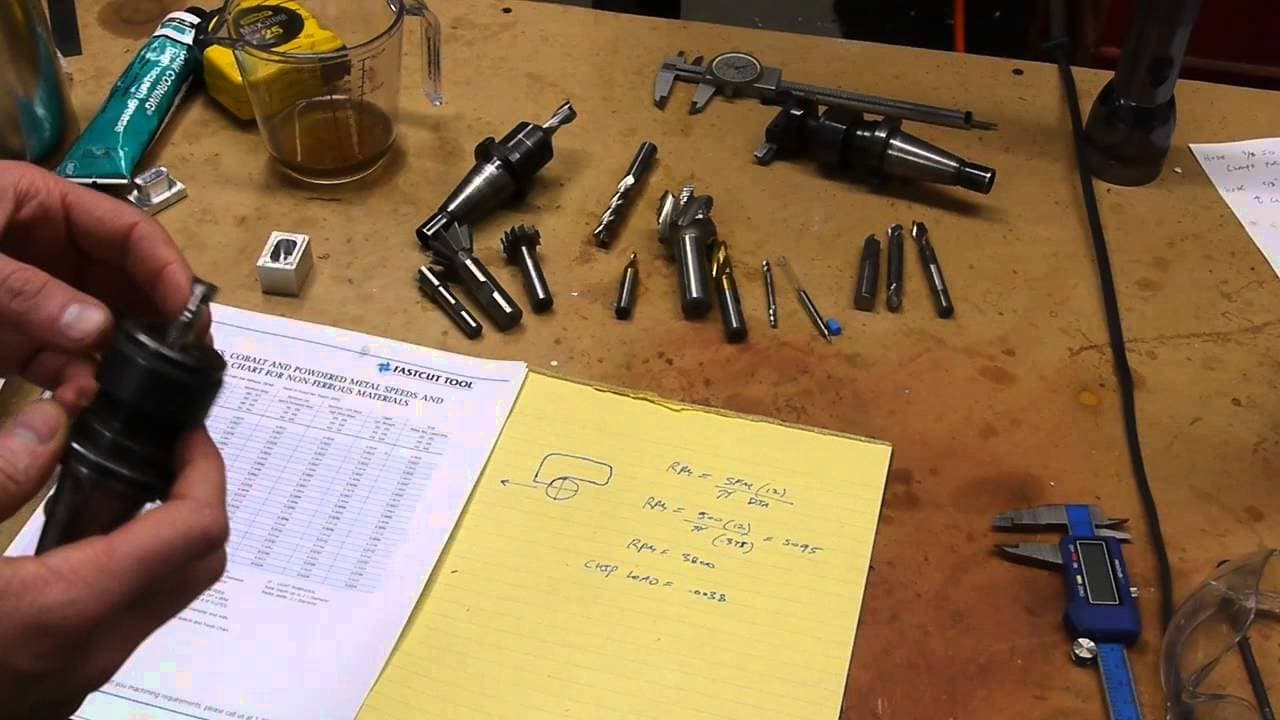
To select the right cutter for milling, choose the largest diameter that fits your part's geometry and use a cutter that's not overly long. Determine speeds and feeds based on cutter material and aluminum properties, aiming for an RPM between 450-650 SFM for high-speed steel. Prioritize setup rigidity to enhance performance and reduce cutter breakage.
Transcript
hey everyone this will be a short tutorial on cutter selection and speeds and feeds for vertical milling machines specifically CNC milling but a lot of this would apply to manual machines as well so today we're going to make this little part it really doesn't matter you know it isn't this doesn't do anything useful I mean it does kind of mate toget... Read More
Key Insights
- 🌥️ The diameter and length of the cutter should match the desired geometry of the part, with larger diameters preferred for accurate results.
- 🚄 The selection of cutter material, such as high-speed steel or carbide, depends on factors like production speed, cost-effectiveness, and rigidity of the setup.
- 💇 Coatings on cutters, while offering increased lifespan, may not be necessary for cutting soft materials like aluminum and plastics.
- 🤱 Speeds and feeds, including RPM, chip load, and depth of cut, should be determined based on the material properties, cutter diameter, and desired surface finish.
- 🎰 Rigidity of the setup and machine is crucial to achieve accurate results and prevent cutter breakage.
- 🚄 High-speed machining techniques involve using faster spindle speeds and deep plunges to improve efficiency and productivity.
- 🧗 The choice between climb milling and conventional milling depends on machine rigidity and desired surface finish.
Install to Summarize YouTube Videos and Get Transcripts
Explore YouTube Video Summarizer or Get YouTube Transcript Extractor
Questions & Answers
Q: How do you choose a cutter for milling machines?
When choosing a cutter, it is important to use the largest diameter cutter that can produce the correct geometry. Smaller cutters are more suitable for sharp internal corners but may be prone to breakage.
Q: What factors should be considered when selecting a cutter material?
The choice between high speed steel and carbide tooling depends on factors like production speed, rigidity of the setup, and the need for cost-effectiveness. High speed steel is generally suitable for hobbyists and prototype shops, while carbide allows for higher speeds in production settings.
Q: What role do coatings play in cutter performance?
Coatings, such as titanium nitride, are intended to increase the life of the cutter by providing a harder surface. However, for cutting soft materials like aluminum and plastics, a sharp, uncoated high-speed steel tool is usually sufficient.
Q: How do you determine the appropriate speeds and feeds for milling operations?
The speeds and feeds depend on factors like cutter material, stock material, and chip load. Using empirical charts and formulas, the cutter speed and feed rate can be calculated to optimize cutting parameters for efficient and precise milling.
Summary & Key Takeaways
-
The video provides a tutorial on cutter selection and speeds/feeds for vertical milling machines, specifically CNC milling, with applications in aluminum milling.
-
The key aspects to consider when choosing a cutter are the diameter, length, material, and coatings.
-
Determining the appropriate speeds and feeds involves selecting the right RPM, chip load, and depth of cut.
Read in Other Languages (beta)
Share This Summary 📚
Summarize YouTube Videos and Get Video Transcripts with 1-Click
Try YouTube Summary with ChatGPT & Claude or YouTube Transcript Generator
Explore More Summaries from Applied Science 📚






Summarize YouTube Videos and Get Video Transcripts with 1-Click
Try YouTube Summary with ChatGPT & Claude or YouTube Transcript Generator