How to Create a Study Plan That You Actually Follow
TL;DR
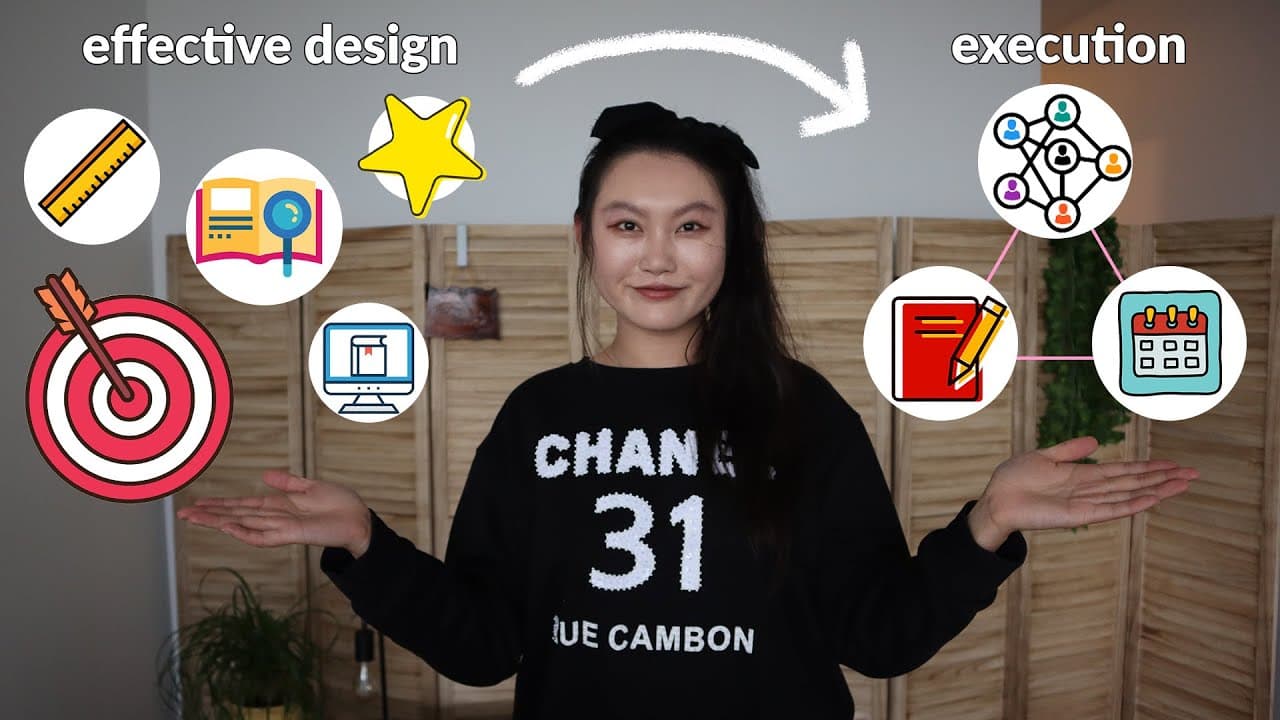
To create an effective study plan, start by establishing a clear purpose for your learning, which helps prioritize relevant information. Incorporate a breadth-first approach, stay flexible with resources, and carve out dedicated time in your schedule to maintain consistency. Additionally, utilize social accountability and keep notes to track progress and motivation.
Transcript
hey everyone how's it going i want you to be really honest with me okay how many times have you designed your own study plan or maybe bought someone study plan or someone's course or something and then just didn't actually do it or maybe you did it for two weeks or three weeks or a month and then you gave up it's okay it's okay i'm not judging you ... Read More
Key Insights
- Having a clearly defined purpose is crucial for effective learning. It helps filter out irrelevant information and aligns learning with specific goals.
- Meta-learning, or learning how to learn, involves researching effective study methods and incorporating them into your plan, enhancing learning efficiency.
- The principle of directness emphasizes learning by doing. Engaging in hands-on practice directly related to your goals is more effective than passive learning.
- Prioritizing breadth over depth initially allows for foundational understanding. Iterating to deepen knowledge over time prevents overwhelm and enhances learning relevance.
- Flexibility with resources prevents dependency on a single course. It allows adaptation to better materials and ensures learning remains aligned with goals.
- Carving out specific, reasonable time blocks for study in your schedule increases consistency and helps form a study habit.
- Social accountability, such as study groups or live streaming, significantly boosts consistency and motivation, helping overcome procrastination.
- Taking notes not only aids focus and retention but also provides a motivational record of progress, helping maintain momentum during challenging times.
Install to Summarize YouTube Videos and Get Transcripts
Explore YouTube Video Summarizer or Get YouTube Transcript Extractor
Questions & Answers
Q: Why is having a clearly defined purpose important in a study plan?
Having a clearly defined purpose is vital because it helps filter out unnecessary information and ensures that your learning activities are directly aligned with your specific goals. It prevents you from falling into the trap of learning random, unrelated content and keeps your study plan focused and efficient.
Q: What is meta-learning and why is it important?
Meta-learning, or learning how to learn, involves understanding the most effective ways to acquire new skills. By researching and adopting proven study methods, you can enhance your learning efficiency and effectiveness, ensuring that you are not just consuming information but doing so in a way that maximizes understanding and retention.
Q: How does the principle of directness apply to study plans?
The principle of directness suggests learning by doing the actual tasks you aim to master. It means engaging in hands-on practice directly related to your goals rather than relying solely on theoretical or passive learning. This approach ensures that your skills are practical and applicable in real-world scenarios, leading to more effective learning outcomes.
Q: Why should a study plan prioritize breadth over depth initially?
Prioritizing breadth over depth initially allows you to build a foundational understanding of the subject without getting overwhelmed by complex details. This approach enables you to identify the most relevant areas to focus on as you gain more knowledge, ensuring that your learning is both comprehensive and efficient.
Q: What is the benefit of having flexibility with study resources?
Flexibility with study resources prevents dependency on a single course or material, allowing you to adapt your study plan as needed. This adaptability ensures that your learning remains aligned with your goals and that you can switch to better resources if your initial choices prove inadequate or irrelevant.
Q: How can scheduling improve study consistency?
Scheduling specific, reasonable time blocks for study helps build a consistent learning habit. By dedicating set times for studying, you ensure that learning becomes a regular part of your routine, reducing the likelihood of procrastination and helping you make steady progress toward your goals.
Q: What role does social accountability play in sticking to a study plan?
Social accountability, such as participating in study groups or live streaming study sessions, significantly boosts motivation and consistency. It creates a sense of obligation to show up and stay committed, helping you overcome procrastination and maintain a steady learning pace.
Q: How do taking notes support the study process?
Taking notes aids focus and retention by allowing you to actively engage with the material. It provides a written record of your progress, which can be revisited to boost motivation and confidence, particularly during challenging periods. Reviewing notes before study sessions also helps refresh your memory and ease you into the learning mindset.
Summary & Key Takeaways
-
The video discusses eight crucial components for creating effective study plans and ensuring adherence. It emphasizes the importance of having a clear purpose, learning how to learn, and applying knowledge directly through practical experience.
-
It suggests a breadth-first approach to learning, advises flexibility with resources, and stresses the importance of carving out dedicated study time in your schedule to build a consistent learning habit.
-
The video also highlights the role of social accountability, like study groups or live streaming, in maintaining motivation and consistency, and recommends taking notes to track progress and reinforce learning.
Read in Other Languages (beta)
Share This Summary 📚
Summarize YouTube Videos and Get Video Transcripts with 1-Click
Try YouTube Summary with ChatGPT & Claude or YouTube Transcript Generator
Explore More Summaries from Tina Huang 📚





Summarize YouTube Videos and Get Video Transcripts with 1-Click
Try YouTube Summary with ChatGPT & Claude or YouTube Transcript Generator