How to avoid 19 Claude Code mistakes pros make
TL;DR
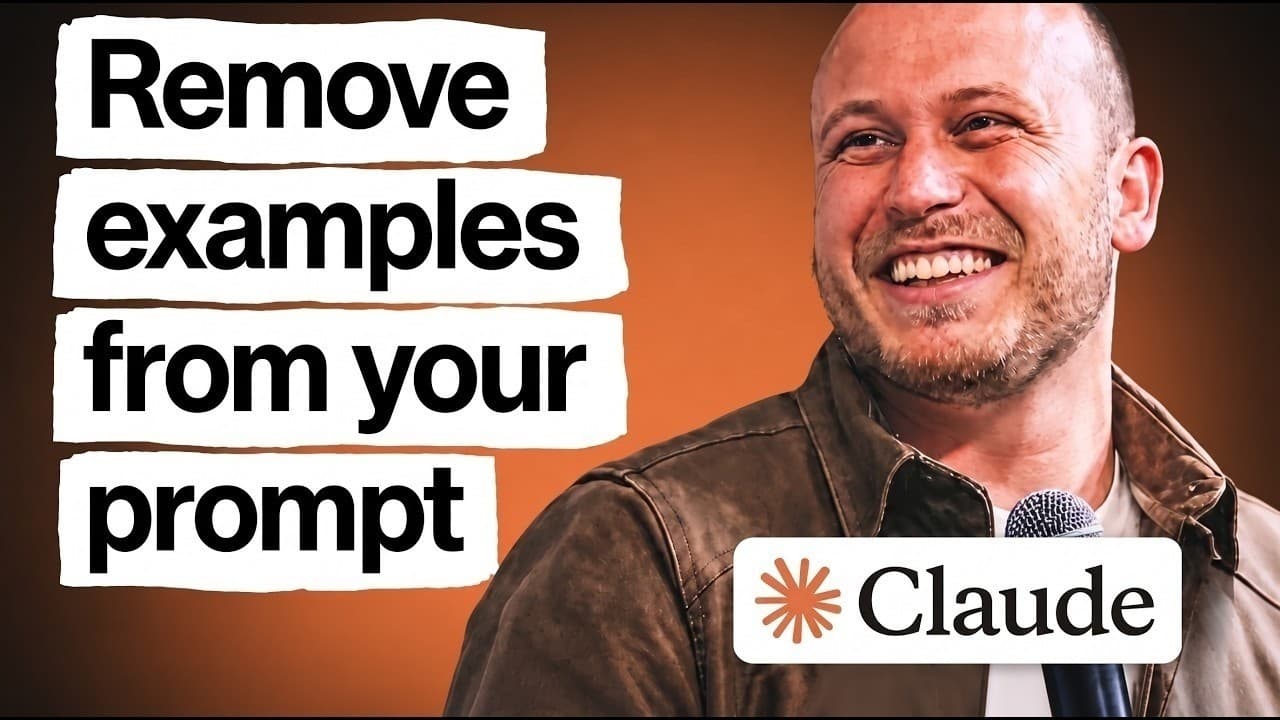
Most prompts with persona lines don’t help Claude Code; instead, specify where to look, the done criteria, and a self-check. The video lists 19 rookie mistakes and practical fixes, such as adjusting routines, tool access, and context management to optimize performance.
Transcript
You've probably got a prompt that starts something like this. You're a senior copywriter with 20 years experience who writes all of my marketing copy. [music] Take a deep breath. This task is very important. I've written openings like that hundreds of times on my prompts. And someone actually went and tested this. If you give Claude a role or a per... Read More
Key Insights
- Persona-based prompts don’t inherently improve Claude Code performance; direct questioning yields the same results.
- Three essential prompt elements are where to look, the done criteria, and a self-check before finishing.
- Disable unnecessary system prompts and examples; use concise, task-focused instructions instead.
- Load tools on demand rather than preloading all connectors to save tokens and speed up responses.
- Tool access and MCP management are dynamic; on-demand loading minimizes context and cost.
- Subagents can dramatically increase costs, roughly seven times, when used for tasks requiring heavy context.
- Editing Claude.md mid session is ineffective; you must restart or compact to apply new rules.
- Fast mode depends on credits and can uncash prior context, leading to higher immediate costs if enabled mid conversation.
Install to Summarize YouTube Videos and Get Transcripts
Explore YouTube Video Summarizer or Get YouTube Transcript Extractor
Questions & Answers
Q: A real search query question about the video (e.g. 'How to...', 'What is...', 'Why does...'). Question 1
What should you change in a Claude Code prompt to improve reliability and reduce token waste? The video recommends removing persona lines and instead directing where Claude should look, defining when the task is done, and adding a self-check. This approach aligns with Anthropic guidance and focuses output on concrete, testable criteria rather than rhetorical flourishes. By doing so, you reduce unnecessary context and ensure the model follows a measurable finish condition.
Q: Question 2
How does tool access management affect Claude Code performance and cost? The guidance is to load tools only when needed rather than auto loading all connectors. This reduces tokens spent on context and avoids paying for unused tool schemas during a session. It also helps prevent unnecessary data from bloating the active context window while still enabling tools when a task requires them.
Q: Question 3
Why is it important to manage MCPs and sub agents in Claude Code usage? The material explains that MCP schemas load on demand now, reducing context load, while sub agents can cost seven times more tokens due to maintaining separate contexts. Therefore, use sub agents for broad searches but keep task-specific work in the main session when high context is needed.
Q: Question 4
What is the recommended approach to routines and connectors in Claude Code? The video advises removing unnecessary connectors, ensuring tool access loads tools only when needed, and avoiding automatic full tool loading. This minimizes token usage and keeps the session lean, reducing the chance of token overrun in long interactions.
Q: Question 5
How should you handle editing Claude.md during a session? The guidance states that Claude.md changes are read at session start and held in memory, so edits mid session won’t apply unless you restart or compact. To apply new rules, you must compact or start a new session so the model reindexes the updated guidelines.
Q: Question 6
What is the risk of enabling fast mode in Claude, and when does it cost more? Fast mode can be 2.5 times quicker but depends on API credits and can uncash previously cached data, increasing immediate costs. If credits are enabled, fast mode may be expensive, and turning it on mid conversation can incur higher charges due to uncached input.
Q: Question 7
Why is context management critical when using subagents, and how should you balance context and performance? Subagents are great for browsing and parallel investigations but require more tokens for higher context tasks. The video suggests reserving subagents for tasks with low context needs and keeping high-context work in the main session to avoid excessive token usage.
Q: Question 8
What practical steps can you take to reduce long-term Claude Code prompts waste? The practices include removing outdated advice like extensive personas, focusing on where to look and done criteria, using on-demand tool loading, managing connectors, restarting sessions to apply new rules, and avoiding unnecessary subagents for context-heavy tasks. This combination improves efficiency and stability.
Summary & Key Takeaways
-
The video argues that persona prompts and long setup blocks are largely ignored by Claude Code, so producers should focus on where to look, when the task is done, and a verification check to ensure accuracy. It also emphasizes that many traditional prompting practices have become outdated as the model and tooling evolve.
-
A core theme is reducing unnecessary context and tool loading by using on demand loading, careful routine configuration, and avoiding overuse of subagents, which can incur higher costs and token usage. The guidance is practical, with concrete steps for managing connectors, MCPs, and code skills across environments.
-
The content closes with reminders to manage session state properly, avoid mid session Claude.md edits, and be mindful of fast mode costs and caching to prevent surprise charges while improving prompt effectiveness.
Read in Other Languages (beta)
Share This Summary 📚
Summarize YouTube Videos and Get Video Transcripts with 1-Click
Try YouTube Summary with ChatGPT & Claude or YouTube Transcript Generator
Explore More Summaries from Simon Scrapes 📚


Summarize YouTube Videos and Get Video Transcripts with 1-Click
Try YouTube Summary with ChatGPT & Claude or YouTube Transcript Generator