How to Build a Profitable B2B Media Network
TL;DR
Build a profitable media network by serving narrow business audiences that advertisers and startups already want to reach. A niche podcast can establish authority, attract valuable guests, and supply material for videos, newsletters, communities, and conferences, while ownership of these distribution channels creates opportunities to sell products, make investments, or co-own additional media properties.
Transcript
there's this big opportunity to build like audience in a box business if you're big on any individual on any platform you'll probably be big on other platforms as well you just haven't gotten around to it yet so if you have a big YouTube channel like Colin Samir do or podcast why wouldn't you also have a big newsletter and if you can have support d... Read More
Key Insights
- Niche B2B media is valuable because startups and advertisers want direct access to specific professional buyers. Audiences composed of finance, sales, HR, or technology leaders may remain relatively small while generating meaningful revenue through highly relevant sponsorships and future product sales.
- A podcast is a foundation for other media because one recorded conversation can supply audio, video, newsletter material, guest relationships, and community development. After interviewing numerous leaders from one profession, a publisher can also organize a focused community or conference around those established relationships.
- Strong niche rankings are easier to achieve when a professional category has few established shows. Turpentine focuses on becoming a leading podcast for a particular role or sector instead of attempting to create another mainstream program comparable to the largest general-interest interview shows.
- Turpentine generates about 350,000 monthly downloads across 13 shows and operates at an approximately 2 million run rate. Its strategy depends on assembling multiple focused shows that can each reach roughly 30,000 to 40,000 dollars in monthly revenue without requiring a single enormous audience.
- Business media works as a customer acquisition channel because it owns relationships with narrowly defined audiences. As products become easier to build and distribution becomes more important, control of trusted podcasts, newsletters, and related media can become increasingly valuable to companies selling into those communities.
- A profitable niche can be identified by asking which people hold enterprise purchasing power and which audiences startups repeatedly try to reach. Finance professionals, sales leaders, CTOs, and HR leaders are examples discussed because companies actively seek opportunities to sell products and services to them.
- Market timing depends partly on competitive density. Turpentine currently avoids crypto and web3 because those categories already contain mature media ecosystems, while treating AI as an earlier opportunity where several newsletters have grown but no similarly mature group of media companies has emerged.
- An audience-in-a-box business can help a creator expand from one successful platform into another. The proposed model involves providing operational support to build a newsletter, podcast, or other property, then charging substantial fees or sharing ownership and revenue with the established creator.
Install to Summarize YouTube Videos and Get Transcripts
Explore YouTube Video Summarizer or Get YouTube Transcript Extractor
Questions & Answers
Q: How do you build a profitable B2B media network?
Build separate media properties for narrowly defined professional audiences rather than relying on one mainstream hit. Choose groups that businesses already want to reach, create authoritative podcasts within those categories, and combine several shows into a network. The resulting distribution can support sponsorships, newsletters, videos, communities, conferences, products, and investments aimed at the same specialized audiences.
Q: Why should a B2B media company start with podcasts?
Podcasts can generate nearly every other media format from one core production process. Recorded conversations provide audio, video, written material for newsletters, and relationships with relevant guests. A series of interviews with executives from the same profession can also become the foundation for a valuable community or conference, allowing one show to support several distribution and monetization channels.
Q: How can a creator identify a profitable B2B niche?
Start by identifying enterprise buyers and the people whom startups repeatedly try to reach. The discussion highlights finance professionals, sales leaders, CTOs, and HR leaders as examples of valuable audiences. Then examine whether the category is important, growing, and insufficiently served by existing media, since strong purchasing power alone does not guarantee an attractive competitive opening.
Q: Can a small niche podcast make meaningful revenue?
A niche podcast can monetize effectively even when its listener count is modest because sponsors value access to specific professional buyers. Turpentine reports that some of its focused shows receive fewer than a thousand listeners per episode yet monetize well. The network aims for shows capable of producing roughly 30,000 to 40,000 dollars per month rather than depending on one massive program.
Q: How does a podcast become a newsletter or community?
Podcast interviews create reusable ideas, transcripts, clips, and relationships that can feed additional formats. The material can be adapted into newsletter coverage or video, while repeated conversations with leaders in one role create a ready-made professional network. After about 20 episodes featuring chief people officers, for example, those guest relationships could support a focused community or conference.
Q: Why are distribution channels valuable to media entrepreneurs?
Owned distribution provides recurring access to a defined group of potential customers. The conversation frames business media as a customer acquisition channel, particularly when the audience includes people who buy software or services for companies. That access can help a publisher monetize sponsorships, incubate products, invest in relevant businesses, or support companies that sell directly to the audience.
Q: When should a B2B media company avoid a niche?
A media company should be cautious when a category already has a mature and crowded ecosystem. Turpentine is not entering crypto or web3 at the moment because those areas contain established media organizations and substantial competition. It prefers categories that are important and growing but still lack dominant cross-platform publishers, creating more room to establish a recognized position.
Q: What is an audience-in-a-box business model?
An audience-in-a-box service helps an established creator expand beyond the platform where that person is already successful. A large YouTube creator or podcaster could receive operational support for building a newsletter or another channel. The service could charge significant fees, split the resulting property equally, or co-incubate and co-own media assets with the creator.
Summary & Key Takeaways
-
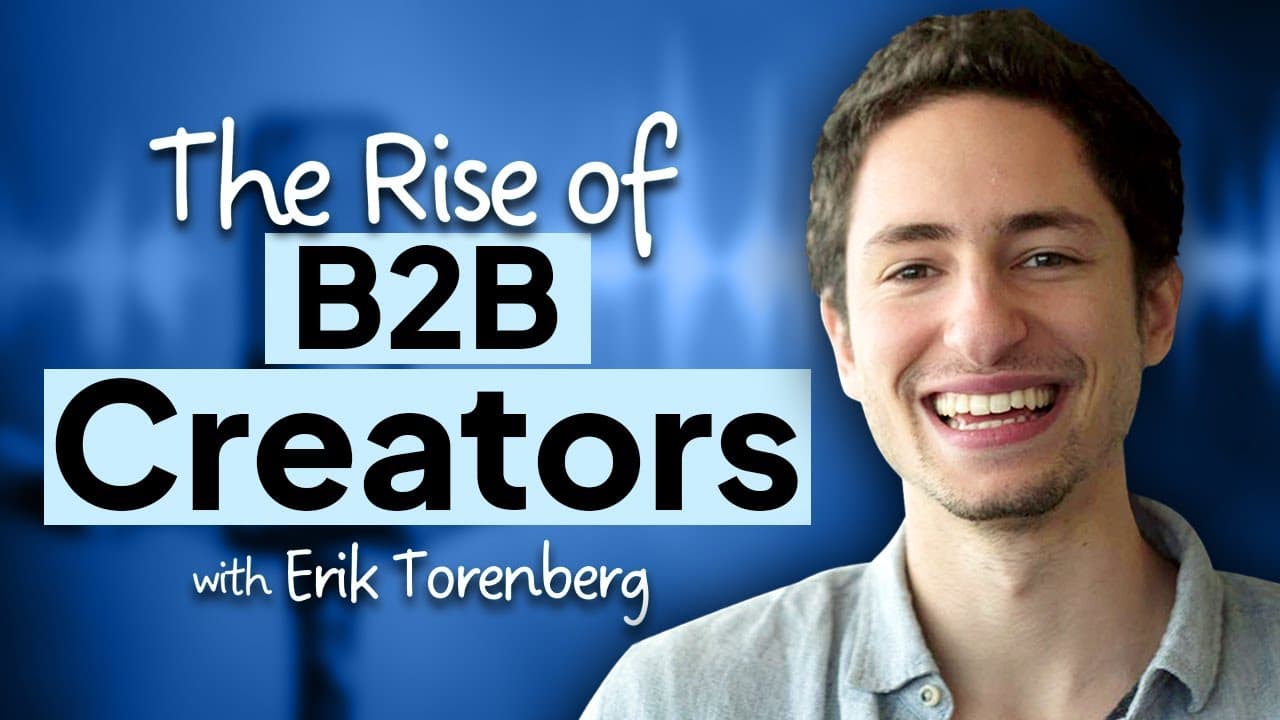
Erik Torenberg built Turpentine around the expectation that specialized B2B creators will emerge for individual roles and industries. Instead of pursuing a broad mainstream audience, the network creates podcasts for valuable professional groups, including finance, HR, and AI audiences, then uses those relationships and distribution channels to support additional media and business opportunities.
-
Podcasts provide a foundation for multiple media formats because recorded conversations can become videos, newsletters, communities, and conferences. A focused show can also rank strongly within a category where few quality competitors exist. Even with fewer than a thousand listeners per episode, a professional audience can monetize well because businesses want access to those buyers.
-
Profitable niches are selected by identifying enterprise buyers, startup sales targets, important sectors, and categories without mature media competition. Turpentine avoids areas such as crypto and web3 because their media ecosystems are crowded, while expanding into AI because the category remains early enough to support new podcasts, newsletters, and news coverage across platforms.
Read in Other Languages (beta)
Share This Summary 📚
Summarize YouTube Videos and Get Video Transcripts with 1-Click
Try YouTube Summary with ChatGPT & Claude or YouTube Transcript Generator
Explore More Summaries from Greg Isenberg 📚






Summarize YouTube Videos and Get Video Transcripts with 1-Click
Try YouTube Summary with ChatGPT & Claude or YouTube Transcript Generator