How Can the 16 Human Desires Make Ads Convert and Make You Money?
TL;DR
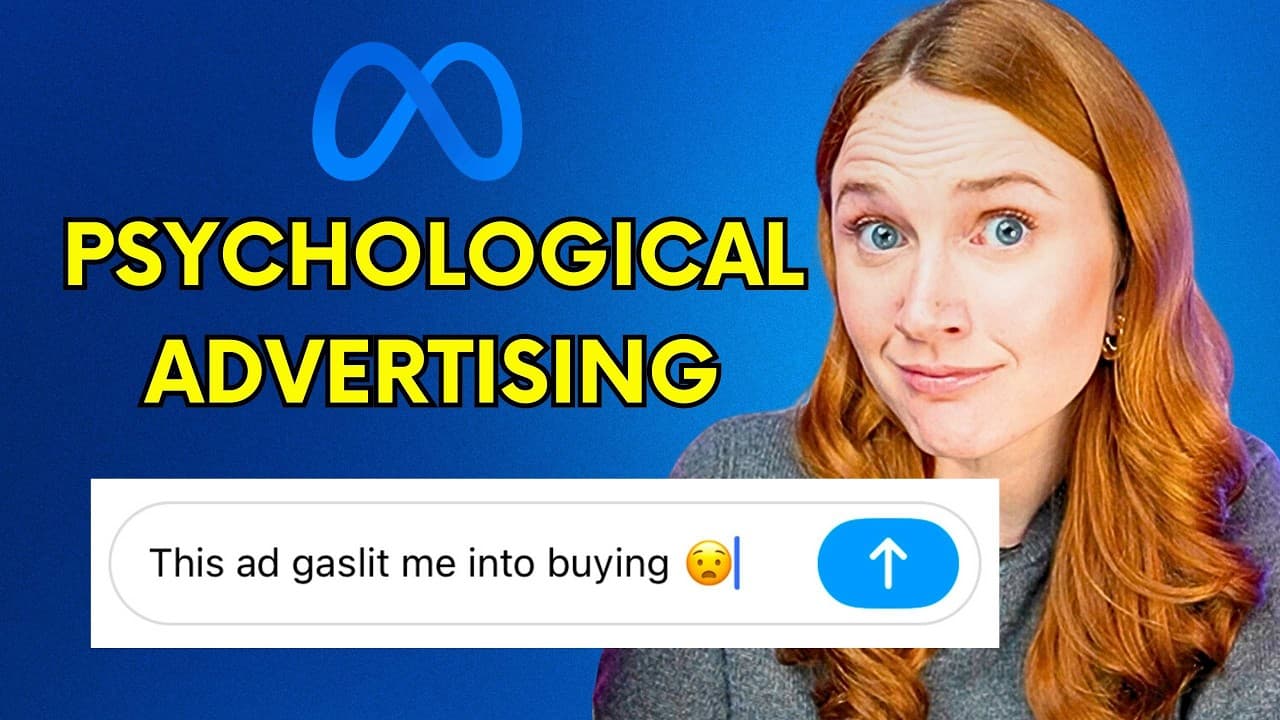
Ads convert when their creative connects a product’s emotional outcome with one or more of Steven Reiss’s 16 universal human desires, including acceptance, curiosity, family, and power. Brands can identify the right motivator by examining their customers’ life stage, challenges, and goals, then build messaging and examples around that need. Read on to see how specific desires can shape more resonant ad concepts.
Transcript
why do some Brands crush it on meta ads While others struggle to survive the secret all comes down to making ad creative that truly speaks to your customers's deepest psychological desires so in this video I'm actually going to break down the 16 human desires core motivators that truly motivate every single decision we make plus we're going to look... Read More
Key Insights
- Steven Reiss identified 16 universal human desires that drive decision-making.
- Aligning ads with these desires can significantly boost conversion rates.
- Acceptance is the need to be appreciated and can be tapped through community-focused ads.
- Curiosity drives the pursuit of knowledge and can be ignited by intriguing ad content.
- Family-related ads appeal to the desire to provide for and protect loved ones.
- Power is about controlling outcomes and can be leveraged by showcasing success and influence.
- Romance taps into the need for love and connection, often used by perfume and jewelry brands.
- Vengeance involves righting a wrong and can be used by positioning an ad against a common 'enemy.'
Install to Summarize YouTube Videos and Get Transcripts
Explore YouTube Video Summarizer or Get YouTube Transcript Extractor
Questions & Answers
Q: How do you use the 16 human desires to make ads convert?
Identify the emotional outcome the product provides, then connect it to a relevant desire such as acceptance, curiosity, family, or power. Shape the ad’s message and creative around how that desire appears in the target customer’s life.
Q: What are Steven Reiss’s 16 human desires?
The 16 desires are acceptance, curiosity, eating, family, honor, idealism, independence, order, physical activity, power, romance, saving, social contact, social status, tranquility, and vengeance. They are presented as universal motivators that influence how people live and what they buy.
Q: Why are human desires useful in advertising?
Human desires represent core needs that motivate decisions, including purchasing decisions. Understanding how those needs appear differently for a specific customer helps advertisers create messages that speak more directly to that audience.
Q: How can a brand choose the right human desire for an ad?
Analyze the target audience’s life stage, challenges, goals, and the emotional outcome delivered by the product. The most relevant desire is the one that best connects that outcome with a need the customer already feels.
Q: How can ads appeal to the desire for acceptance?
Acceptance is the need to be appreciated and accepted for who we are, so ads can emphasize community and belonging. The examples include Dove’s Real Beauty campaign and HexClad using social proof alongside the phrase “home cooks just like you” to create a sense of membership in a large community.
Q: How can curiosity improve an ad creative?
Curiosity includes both the pursuit of knowledge and the drive created when something feels intriguing. An ad can promise useful knowledge, as demonstrated by The Hustle, or withhold enough information to make the audience curious about the brand.
Q: How can brands use the family desire in advertising?
The family desire reflects the need to provide for and protect loved ones. Insurance and automobile advertising can connect with it through safety, while brands such as Cuts and True Classic refer to family because their customers are described as family-oriented.
Q: What does the desire for honor mean in advertising?
Honor is the need to remain faithful to old values and traditions. It is often relevant to brands with deep cultural or religious ties, and an ad can activate it by referring to a valued tradition or religious habit.
Summary & Key Takeaways
-
The 16 human desires identified by Steven Reiss are critical motivators in consumer behavior. By aligning ad creatives with these desires, advertisers can create more effective campaigns. For example, acceptance and curiosity are powerful motivators that can drive engagement and conversion in ads.
-
Understanding the emotional outcomes of a product is essential for aligning it with the appropriate human desire. This alignment can enhance the ad's impact by resonating with the audience's core needs, such as the need for family, power, or social contact.
-
Brands can creatively tap into these desires by analyzing their target audience's life stage and challenges. Tools like ChatGPT can assist in brainstorming ad ideas that effectively leverage these desires, leading to more successful advertising strategies.
Read in Other Languages (beta)
Share This Summary 📚
Summarize YouTube Videos and Get Video Transcripts with 1-Click
Try YouTube Summary with ChatGPT & Claude or YouTube Transcript Generator
Explore More Summaries from Dara Denney 📚




Summarize YouTube Videos and Get Video Transcripts with 1-Click
Try YouTube Summary with ChatGPT & Claude or YouTube Transcript Generator