How Do Fake AI Claims Mislead Investors and Regulators?
TL;DR
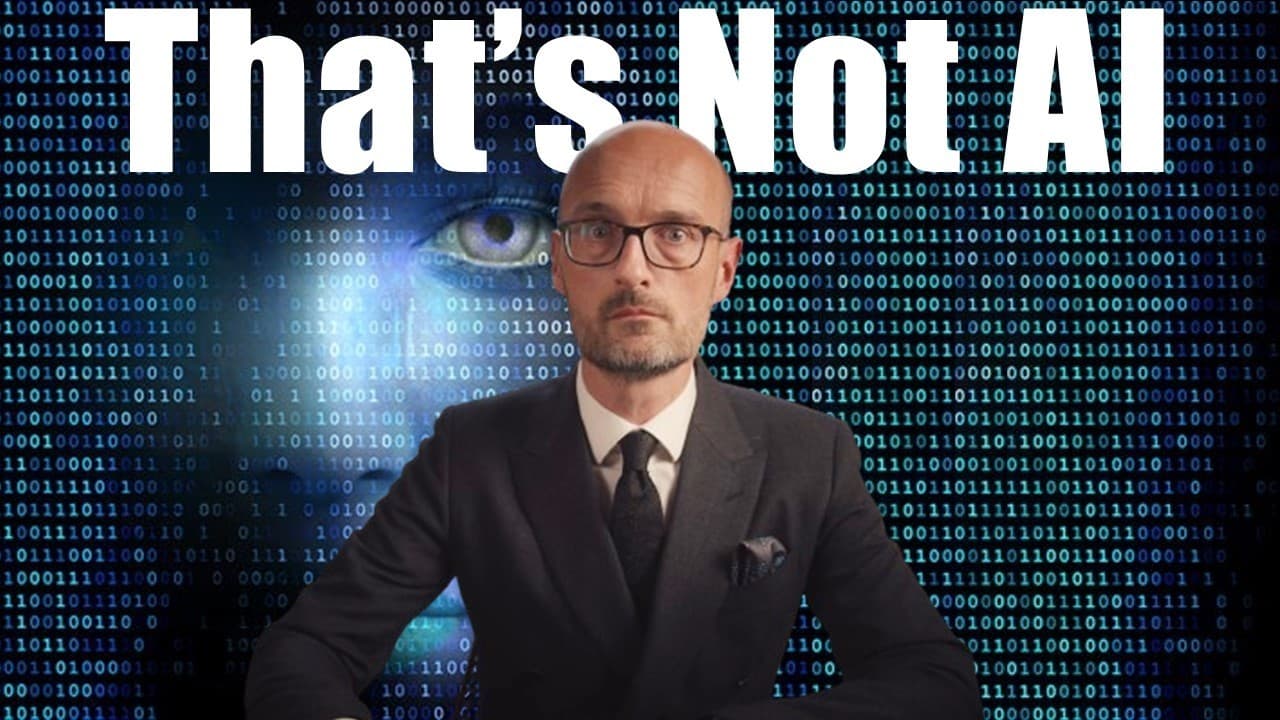
Fake AI claims mislead investors and harm consumers, as regulators warn against AI washing. Many firms mention AI in earnings and marketing without real investments in AI, while some settled charges show consequences for misleading use of AI language. The video traces AI hype, historic examples, and the need to verify actual AI capabilities over buzzword claims.
Transcript
Between 1998 and 1999 147 US listed companies changed their names to include dotcom, dot net or the word internet. Many of these companies’ core businesses were not internet related – it didn’t really matter… Concerned with all these announcements, the director of the SEC’s investor-education office warned investors not to just invest in a nam... Read More
Key Insights
- AI washing is a real concern where companies misrepresent AI usage to attract investors.
- The SEC has settled charges against firms for false AI claims, showing regulatory enforcement against misrepresentation.
- AI mentions in earnings calls have surged, but many claims may not reflect true AI capabilities or implementations.
- Investors should differentiate between genuine AI strategies and superficial buzzwords in corporate communications.
- Some firms market products with AI labels while actual functioning relies on non AI methods or human labor.
- Public interest in AI surged after ChatGPT’s release, driving hype and investment but not uniform real AI breakthroughs.
- Historical examples show hype cycles around new tech lead to misleading marketing, not always substitutes for true capability.
- Verification of AI capabilities requires looking at actual data use, model access, and measurable outcomes rather than marketing language.
- More videos from this channel:
- More from this channel: Patrick Boyle
Install to Summarize YouTube Videos and Get Transcripts
Explore YouTube Video Summarizer or Get YouTube Transcript Extractor
Questions & Answers
Q: What is AI washing and why does it matter for investors?
AI washing refers to companies marketing their products or services as AI powered when there is little or no actual AI implementation behind them. This matters for investors because it can mislead about potential returns, misallocate capital, and deprive investors of a clear view of a company’s real competitive advantage. Regulators have warned that such misrepresentations violate securities laws and undermine market integrity.
Q: How did the SEC respond to false AI claims by investment advisers?
The SEC settled charges with two investment advisers for making false and misleading statements about their use of artificial intelligence. The firms paid civil penalties without admitting wrongdoing. The regulator highlighted that marketing to clients about AI use when no genuine AI model existed constitutes deception, which can harm investors and violate rules intended to ensure truthful disclosures.
Q: Why did AI mentions spike in first quarter earnings calls for S&P 500 companies?
FactSet data shows 199 S&P 500 companies mentioned AI on their first quarter earnings calls, the highest on record. This spike reflects broad interest in AI as a buzzword and potential strategic area, though it does not necessarily indicate that those companies have active, effective AI programs. It highlights a market trend rather than a uniform implementation.
Q: What historical examples reinforce the risk of hype around new technology?
The video traces dots to the dotcom era when companies renamed themselves with tech buzzwords like dotcom or internet to attract attention despite non related core businesses. It also references the original mechanical Turk deceit, where a hidden human chess master disguised a machine. These examples show how hype can outpace actual capability and mislead consumers and investors.
Q: What is the Turing test and how does it relate to current AI hype?
The Turing test assesses whether a machine can imitate human conversation well enough to fool humans. The video notes that some consider recent AI like GPT-4 to approach passing the test, yet experts argue that passing the test does not imply true consciousness or understanding. This distinction helps temper hype by separating surface level mimicry from real intelligence.
Q: What did regulators say about marketing AI forecasts and tax loss harvesting claims?
Regulators criticized firms for claiming AI driven forecasts and offering services like tax loss harvesting based on AI when such claims were unfounded. These statements violated behavioral and marketing rules by presenting misleading assurances about capabilities, thus exposing firms to penalties and undermining trust in the financial advisory sector.
Q: How does the video describe consumer reaction to AI labeled products?
The video cites a study showing that labeling TVs, refrigerators, and other products as AI lowers some customers’ willingness to buy, suggesting skepticism about AI marketing. This reaction indicates that consumers think AI claims are often exaggerated, and credible functionality is necessary to sustain demand for AI branded products.
Q: What is a key takeaway for investors and consumers from the video?
A key takeaway is to verify whether claims of AI are backed by real data, models, and outcomes rather than marketing language. Skepticism toward AI labels helps avoid misallocation of resources and protects consumers from misleading promises. True AI adoption requires transparent disclosures and demonstrable capabilities rather than buzzwords.
Summary & Key Takeaways
-
The video opens with a caution against investing merely in a name or buzzwords, citing SEC warnings about AI washing and investor deception. It notes 199 of the S&P500 mentioned AI in Q1 earnings calls, showing how widespread AI mentions are, often without genuine AI strategy.
-
It explains that some firms were fined for misrepresenting AI usage, illustrating the regulatory risk of claiming AI capabilities when none exist, and emphasizes the importance of truthful disclosure to investors.
-
The narrative surveys AI history, from its academic roots to recent consumer hype, and contrasts real AI breakthroughs with sensational products and misleading marketing, urging skepticism toward AI labels and highlights the ongoing challenge of credible AI adoption.
Read in Other Languages (beta)
Share This Summary 📚
Summarize YouTube Videos and Get Video Transcripts with 1-Click
Try YouTube Summary with ChatGPT & Claude or YouTube Transcript Generator
Explore More Summaries from Patrick Boyle 📚




Summarize YouTube Videos and Get Video Transcripts with 1-Click
Try YouTube Summary with ChatGPT & Claude or YouTube Transcript Generator