How to work AI-native and move bottlenecks fast
TL;DR
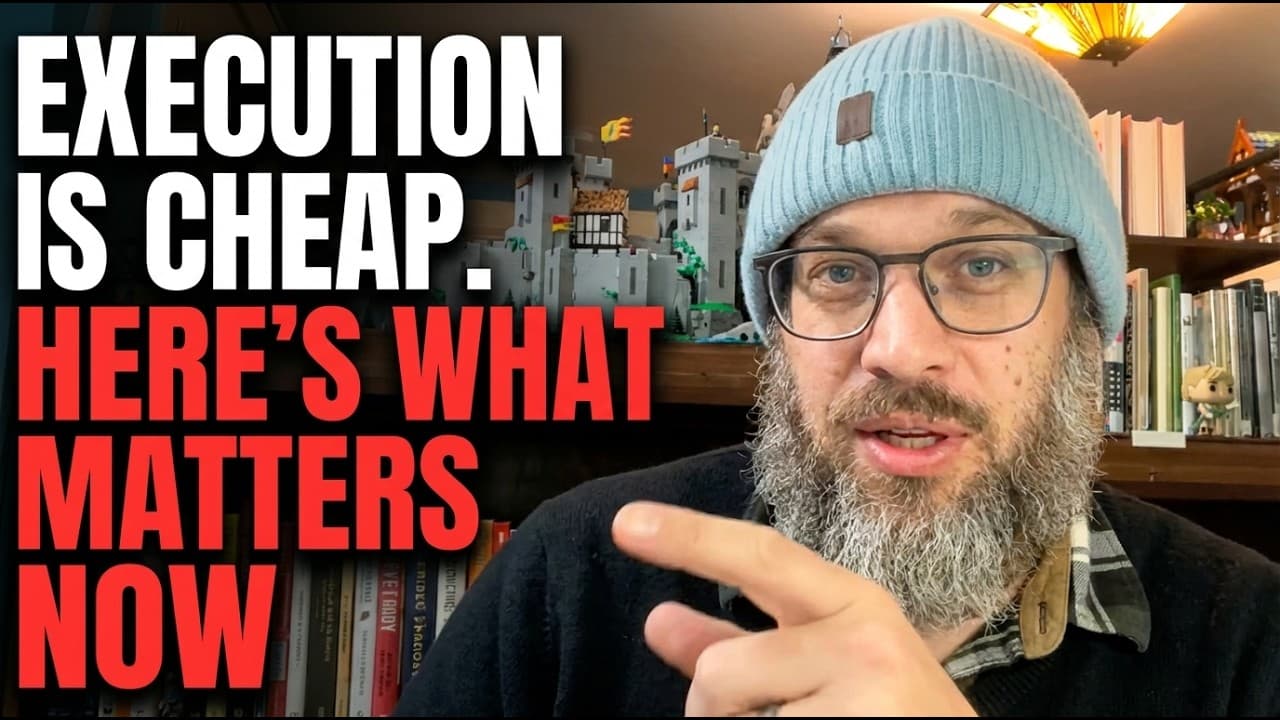
The bottleneck has shifted from pure execution to clarity, ambition, distribution, and relationships as AI speeds up coding and delivery. To adapt, embrace eight AI-native habits that replace old risk management rituals. This shift lets teams ship more often, with less emphasis on perfect upfront planning and more focus on delivering value quickly.
Transcript
The one constant right now is chaos. I hear it over and over again from folks. The rate of change, the sheer unpredictable chaos of AI is very difficult to tell what's up and what's down. So, in this video, I want to simplify it. I want to zero in on some of the underlying drivers that are shifting what truly AI native working looks like. Why most ... Read More
Key Insights
- Clarity is the new billion-dollar question because knowing what to build matters more than how fast you build.
- Ambition must scale with rapid shipping since every incremental release carries value when AI reduces build time.
- Distribution becomes a core moat as more teams can build, making reach and adoption the differentiator.
- Relationships become durable competitive advantages when capabilities accelerate and channels shift.
- The bottleneck moved downstream from execution to clarity, ambition, distribution, and relationships in AI native work.
- Coders and designers can now ship in days or weeks, not months, altering traditional planning rhythms.
- PRDs and extensive planning cycles can cost more than actually shipping, especially when AI speeds prototyping.
- Strategic partnerships enable mass distribution and leverage existing trust to reach customers faster.
- More videos from this channel:
- More from this channel: AI News & Strategy Daily | Nate B Jones
Install to Summarize YouTube Videos and Get Transcripts
Explore YouTube Video Summarizer or Get YouTube Transcript Extractor
Questions & Answers
Q: How can I start working AI-native to avoid the old bottlenecks?
Begin by redefining success criteria around clarity rather than upfront planning. Identify which problems are worth solving with AI and prioritize high impact bets. Embrace rapid iteration cycles, aim for multiple small releases, and reduce heavy gating processes that slow down prototyping. Build a culture that trusts fast experimentation.
Q: What does the video say about execution capacity now?
The video argues execution capacity is no longer scarce because AI enables rapid feature work like Claude co-work shipping in ten days with four people. The bottleneck has shifted downstream to clarity, ambition, distribution, and relationships, meaning the way we work must change even if building is easier.
Q: Why is clarity more important than ever in 2026?
Clarity dictates what is worth building when AI can accelerate creation. With the ability to prototype quickly, teams must decide which ideas truly solve customer needs and align with strategic goals. Without clarity, rapid shipping can lead to wasted effort despite fast delivery.
Q: How should organizations rethink planning rituals?
Move planning earlier toward validating value and prioritizing the most impactful bets, but keep meetings lightweight. Replace long PRD cycles with rapid prototypes and continuous feedback loops. The goal is to reduce costly preplanning while maintaining clear direction and fast iteration.
Q: What role do relationships play in AI-native work?
Relationships become the durable advantage as capabilities scale and channels shift. Trusted, capable collaborators and partners help distribute and deploy AI solutions across large organizations. Strong professional networks reduce risk and accelerate adoption by leveraging existing trust.
Q: What example illustrates distribution as a new moat?
Cognition’s Devon example shows distribution can trump product alone. Instead of pursuing internal channels, they partnered with Infosys to deploy across a massive client base, leveraging Infosys’s relationships and scale to reach customers effectively.
Q: What is meant by ‘horseless carriages’ in this context?
Horseless carriages symbolize a 10x vision that AI enables us to reach with multiple, rapid releases rather than isolated features. The idea is to pursue transformative products that significantly improve customer outcomes, not incremental add-ons that merely iterate on existing solutions.
Q: How should teams address the risk of too timid a strategy with many releases?
With AI reducing build time, teams should embrace bigger bets and a higher cadence of experimentation. The danger is not building the right thing but not pursuing enough ambitious visions that could unlock substantial customer value over multiple iterations.
Summary & Key Takeaways
-
In summary, execution is no longer the scarce resource as AI enables rapid prototyping and deployment. The real limits now lie in clarity about what to build, ambitious scope, how to distribute product value, and durable relationships that enable scale.
-
As organizations align with AI native work patterns, they break old rituals that protected execution time. The path to impact involves clear priorities, bold experimentation, and leveraging partnerships for wide reach.
-
The video emphasizes eight habits to drop in favor of AI native practices, illustrated by real-world examples like Claude co-work and the role of system bottlenecks shifting downstream.
Read in Other Languages (beta)
Share This Summary 📚
Summarize YouTube Videos and Get Video Transcripts with 1-Click
Try YouTube Summary with ChatGPT & Claude or YouTube Transcript Generator
Explore More Summaries from AI News & Strategy Daily | Nate B Jones 📚






Summarize YouTube Videos and Get Video Transcripts with 1-Click
Try YouTube Summary with ChatGPT & Claude or YouTube Transcript Generator