What Evidence Supports the Alaska Thunderbird Mystery?
TL;DR
A large unidentified bird, possibly a thunderbird, is explored as a potential explanation for Jenna Miller's disappearance atop Mount Marathon. Investigators consider weather, terrain, and a witness video to evaluate the bird theory, while also weighing alternative ideas such as a misstep, accident, or deliberate disappearance.
Transcript
-- Captions by VITAC -- www.vitac.com Captioning provided by A+E Networks ♪♪ NARRATOR: In 1999, in Seward, Alaska, Jenna Miller was out doing a training run on Mount Marathon. This grueling, three-mile trail hosts an annual race that draws hundreds of participants. Jenna was planning to take part in it. 200 yards from the top, a hiker named Marlo w... Read More
Key Insights
- A missing person case on Mount Marathon prompts exploration of large bird hypotheses.
- The thunderbird is defined by legends as a massive bird capable of creating storms and snatching prey.
- Geographic features like cliffs and thermals are considered as potential roosts or routes for a giant bird.
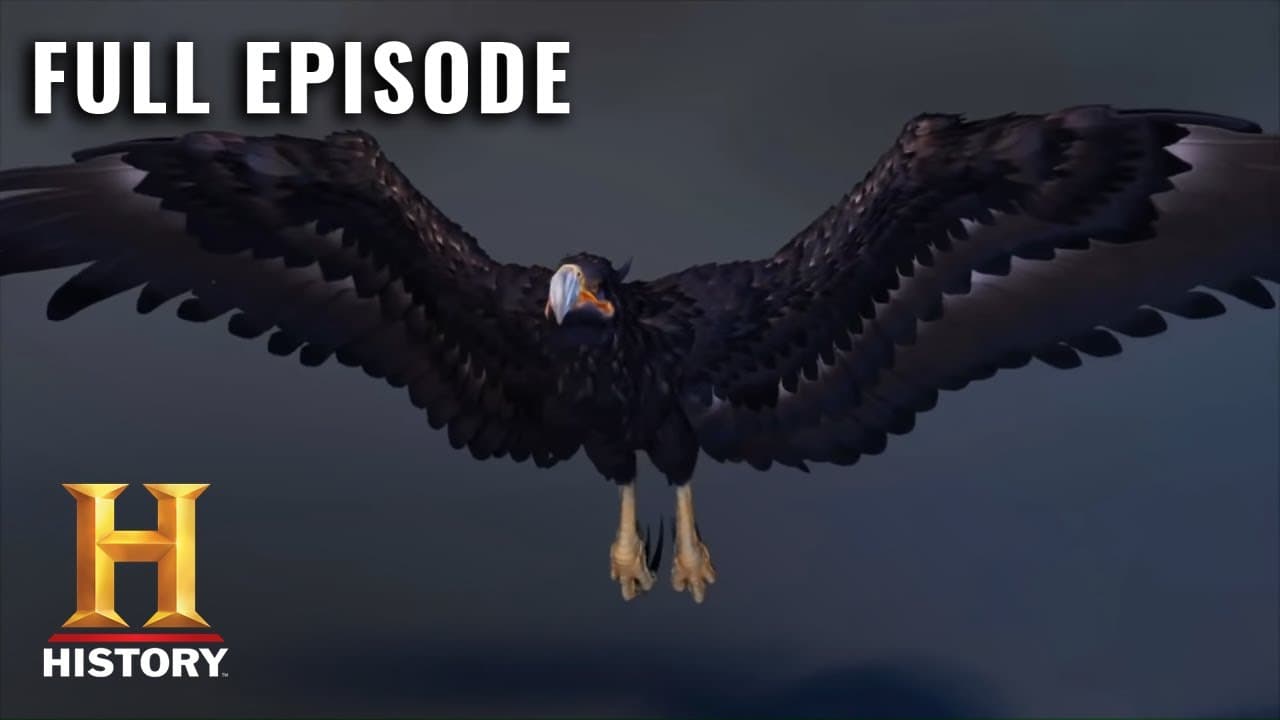
- Witness Marlo describes a dark, large bird with a hooked bill and huge talons before Jenna’s disappearance.
- Video footage from a witness is presented as potential evidence of a giant raptor.
- Experts discuss Teratorns as possible ancestral birds with wingspans over 20 feet.
- Weather conditions, including storms, are linked to thunderbird legend and may influence sightings.
- Alternative theories include an intentional disappearance or separate accident scenario.
- More videos from this channel:
- More from this channel: HISTORY
Install to Summarize YouTube Videos and Get Transcripts
Explore YouTube Video Summarizer or Get YouTube Transcript Extractor
Questions & Answers
Q: What is the Alaska Thunderbird hypothesis and why is it considered in Jenna Miller's disappearance?
The Alaska Thunderbird hypothesis proposes that a giant bird, possibly a thunderbird, could have interacted with the disappearance on Mount Marathon. The idea relies on witness descriptions of a large, silent bird with a hooked bill and large talons, along with legends that describe weather effects and air roosts. Investigators assess terrain, wind patterns, and possible sightings to determine if an oversized raptor could have carried Jenna or left behind clues, while weighing historical accounts and regional folklore.
Q: What evidence do observers cite to support the thunderbird theory?
Observers point to a witness video showing a large bird and to Marlo's description of a wingspan of at least 20 feet and a hooked bill. They also reference terrain features such as cliffs and thermals that could support a large bird’s presence. Additionally, legends of thunderbirds that can cause storms and snatch prey are cited as context for interpreting sightings and the possible connection to Jenna’s disappearance.
Q: Could Jenna have disappeared due to an intentional decision or disguise, and how is this addressed?
Casual speculation about an intentional disappearance is considered as one of several possibilities. Investigators discuss the possibility of Jenna staging her exit, but the documentation emphasizes caution, noting the difficulty of proving intent without corroborating evidence. They examine family context and potential motives, while also evaluating physical evidence and eyewitness accounts to determine if a nonaccidental scenario is plausible.
Q: What role do weather and storms play in the thunderbird explanation?
Weather and storms are central to the thunderbird explanation because legends describe the creature as being capable of generating thunder and lightning. Investigators look at historical weather patterns and the timing of Jenna’s disappearance relative to approaching storms, which could enhance sightings and affect birds’ flight paths, potentially influencing the likelihood of an encounter or an accident on the mountain.
Q: How do experts compare the thunderbird theory to other large birds like condors or eagles?
Experts compare the thunderbird theory to known large birds by examining wingspan, flight behavior, and ecological niches. California condors, eagles, and other raptors are considered baselines for what large birds can do in terms of soaring, gliding, and distance traveled. The thunderbird hypothesis relies on an oversized version with amplified traits such as extreme wingspan and talon strength, plus mythic attributes.
Q: What geographical features on Mount Marathon are relevant to the investigation?
Mount Marathon presents steep terrain, ravines, and exposed ridgelines that could affect a large bird’s movement and visibility. Cliffs and tree line transitions offer potential roosting spots or escape routes. Investigators use helicopter recon and ground searches to map access points, possible drop zones, and areas where evidence might be hidden or carried away by strong gusts.
Q: How is witness testimony treated in evaluating the thunderbird idea?
Witness testimony is treated as important but not definitive. Descriptions of a large, silent bird with a hooked bill and ventral talons are weighed against potential misidentifications and natural explanations. Investigators corroborate statements with video evidence, weather data, and terrain analysis to determine whether the testimony supports a thunderbird interpretation or points to alternative explanations.
Q: What would count as conclusive proof for the thunderbird hypothesis in this case?
Conclusive proof would require verifiable, unambiguous evidence of a giant bird consistent with a thunderbird, such as high quality footage showing a wingspan beyond typical raptor sizes, corroborated by multiple independent observers and environmental data indicating an actual encounter near the time Jenna disappeared. Physical evidence like distinctive feathers or a carcass would strengthen the claim, but such findings are unlikely given the time elapsed and challenging terrain.
Summary & Key Takeaways
-
The investigation centers on a missing person case on Mount Marathon and a reported sighting of a large bird with a 20 foot wingspan and big talons, examined as part of the thunderbird hypothesis.
-
Researchers analyze the terrain and weather conditions to assess how a large bird could interact with Jenna Miller’s disappearance and what evidence might be found.
-
Witness testimonies and video footage are evaluated to determine if a legendary thunderbird could be grounded in a real, observable event.
Read in Other Languages (beta)
Share This Summary 📚
Summarize YouTube Videos and Get Video Transcripts with 1-Click
Try YouTube Summary with ChatGPT & Claude or YouTube Transcript Generator
Explore More Summaries from HISTORY 📚


Summarize YouTube Videos and Get Video Transcripts with 1-Click
Try YouTube Summary with ChatGPT & Claude or YouTube Transcript Generator