Garry Kasparov: IBM Deep Blue, AlphaZero, and the Limits of AI in Open Systems | AI Podcast Clips
TL;DR
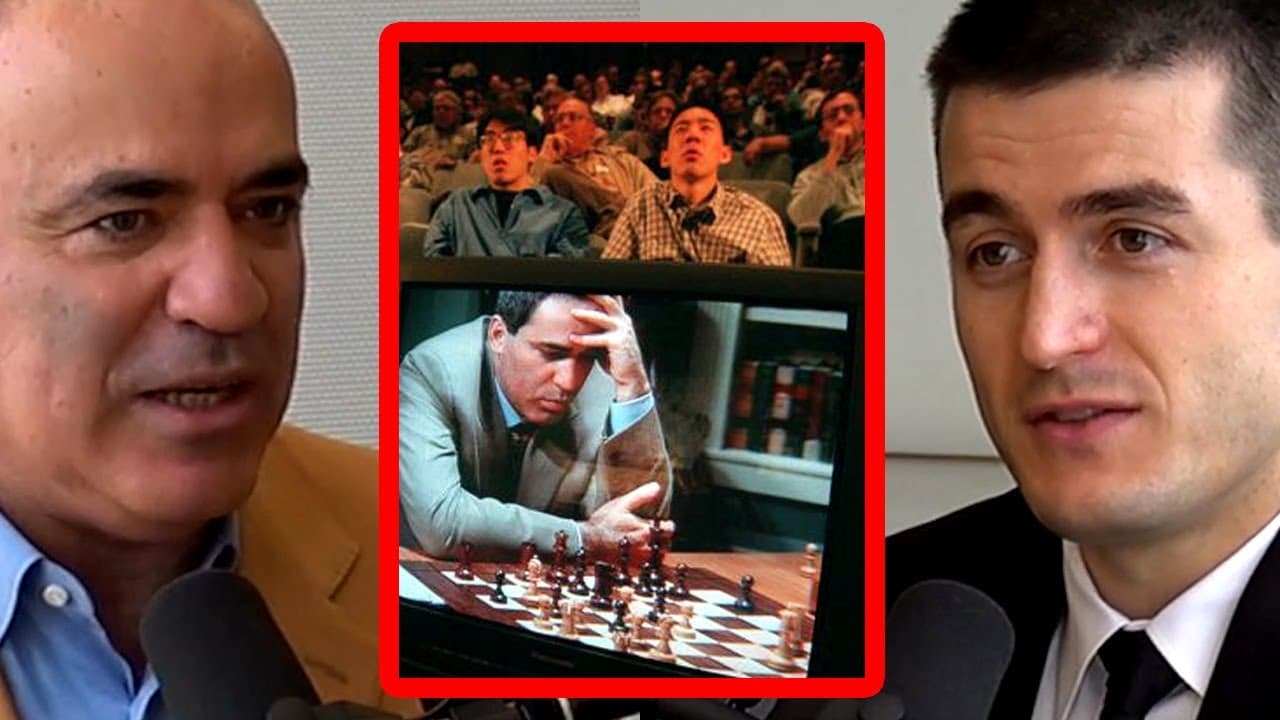
Kasparov's 1997 defeat to Deep Blue marked a pivotal moment, revealing machines' advantages in closed systems like chess. This event underscored the potential for collaboration between humans and AI, as humans bring unique qualities to open-ended challenges where machines struggle.
Transcript
your loss to IBM d blue in 1997 in my eyes that is one of the most seminal moments in the history again I apologize for being romanticized in the notion but in the history of our civilization because humans as the civilizations for century saw chess as you know the peak of what man can accomplish of intellectual mastery right and that moment when a... Read More
Key Insights
- 😚 Kasparov's loss to Deep Blue in 1997 was a revolutionary moment in history, signifying the superiority of machines in closed systems like chess.
- 🌸 The loss prompted a shift in perception, highlighting the need for human-machine collaboration rather than competition in intellectual fields.
- 😷 Kasparov recognized that machines excel at optimization and processing human-generated data but lack the ability to ask relevant questions and have intuition like humans.
- 🎰 The introduction of AlphaZero and machine-produced knowledge brings new possibilities and challenges, such as the need to correct weaknesses in the machine's understanding.
- 🎰 Humans still possess flexibility and the ability to make tweaks and adaptations, making them valuable in collaboration with machines.
- 🎙️ More videos with Garry Kasparov:
Install to Summarize YouTube Videos and Get Transcripts
Explore YouTube Video Summarizer or Get YouTube Transcript Extractor
Questions & Answers
Q: Why was Kasparov's loss to Deep Blue in 1997 considered a seminal moment in history?
Kasparov's loss to Deep Blue was significant because it marked the first time a machine had defeated a human in chess, inspiring a generation of AI researchers and challenging the perception of human intellectual mastery.
Q: Why was Kasparov physically and emotionally affected by the loss?
Kasparov felt angry and frustrated because he suspected external factors influencing the match beyond his bad play. He believed there were other variables at play, which made the loss physically painful for him.
Q: Did Kasparov lose to machines before playing against Deep Blue in 1997?
Yes, Kasparov had lost to other chess computers in the past, but the 1997 loss was particularly painful because it was the first time he lost to a machine overall.
Q: How did Kasparov view the capabilities of machines in chess and other games?
Kasparov recognized that machines excel in closed systems like chess, where they can make fewer mistakes. However, he believed that humans still possess unique qualities in open-ended systems, and the effectiveness of human-machine collaboration depends on understanding this distinction.
Key Insights:
- Kasparov's loss to Deep Blue in 1997 was a revolutionary moment in history, signifying the superiority of machines in closed systems like chess.
- The loss prompted a shift in perception, highlighting the need for human-machine collaboration rather than competition in intellectual fields.
- Kasparov recognized that machines excel at optimization and processing human-generated data but lack the ability to ask relevant questions and have intuition like humans.
- The introduction of AlphaZero and machine-produced knowledge brings new possibilities and challenges, such as the need to correct weaknesses in the machine's understanding.
- Humans still possess flexibility and the ability to make tweaks and adaptations, making them valuable in collaboration with machines.
- The collaboration between humans and machines will continue to evolve and reveal the next steps in AI and human intelligence.
Summary
In this video, Gary Kasparov discusses his loss to IBM's Deep Blue in 1997 and why it was such a significant moment in the history of artificial intelligence. He explains the physical and psychological pain he experienced as a result of the loss, as well as the misconceptions about chess and human intellect. Kasparov also talks about the difference between closed and open-ended systems, the limitations of machines in understanding and asking relevant questions, and the importance of humans working with machines rather than against them. He concludes by discussing the revolutionary nature of AlphaZero and the challenges it presents for human-machine collaboration.
Questions & Answers
Q: Why was your loss to Deep Blue in 1997 such a seminal moment in the history of artificial intelligence?
My loss to Deep Blue in 1997 was seen as a seminal moment because it was the first time a machine beat a human in a game that was considered the epitome of human intellectual mastery. This moment inspired a generation of AI researchers and demonstrated the potential of machine intelligence.
Q: Why was the loss so painful for you personally?
The loss was not just a defeat in a game, but the loss of something that I believed represented the peak of human accomplishment. I had suspicions that my loss was not solely due to my bad play, which made it even more frustrating. Losing to a machine was physically and emotionally painful for me.
Q: How do you view your loss to Deep Blue now, over 20 years later?
Looking back, I can see the seminal nature of that moment and the impact it had on advancing AI research. While the loss was painful, it is now something I can analyze objectively. It has become part of history and a valuable lesson in understanding the capabilities of machines.
Q: What was the misconception about chess and human intellect at the time?
Chess was often seen as a game of the highest intellect, where only the most intelligent individuals could excel. However, machines didn't need to understand the game on the same level as humans. They simply needed to make fewer mistakes. The loss to Deep Blue demonstrated that machines excelled at reducing mistakes, rather than outsmarting humans.
Q: How do you see the difference between closed and open-ended systems in relation to human-machine competition?
Machines will always have the upper hand in closed systems, where the rules and constraints are well-defined. Chess, go, and other board games are closed systems, and machines can excel in these domains. In open-ended systems, where there are no fixed rules or constraints, humans still have the advantage because machines struggle to understand when they are reaching diminishing returns and struggle to ask relevant questions.
Q: Can you give an example of an open-ended system where humans have the advantage?
Language and conversation are examples of open-ended systems where humans excel. Machines can process and optimize human-generated data, but they don't know how to ask the right questions or recognize relevant information. This is where humans can still make a difference and contribute unique qualities that machines lack.
Q: Do you think the set of approaches used in chess by machines can be applied to other fields, like language?
The learning approaches used by machines, like AlphaZero, are specific to closed systems like chess. The effectiveness of these approaches diminishes in open-ended systems. Machines do not understand the concept of reaching diminishing returns or know how to ask the right questions. So, while machines can generate knowledge and make advancements, there are still many unanswered questions in this area.
Q: What is the danger in interfering with machines' superior knowledge?
The greatest danger is when humans try to interfere with machines' superior knowledge. We should recognize the areas where machines excel and let them operate without human interference. In certain fields like radiology, it's better to trust experienced nurses who can work with machines rather than top professors who might want to challenge or override the machines.
Q: What are the limitations of AlphaZero?
AlphaZero is a revolutionary step towards machine-produced knowledge, but it still has limitations. If faced with a superior opponent accompanied by a human, AlphaZero would struggle to correct its weaknesses. Hundreds of thousands of games would be required for AlphaZero to learn from its mistakes and improve its performance. This shows that humans still possess a level of flexibility and adaptability that machines currently lack.
Q: How do you see the future of human-machine collaboration?
We need to recognize our unique human qualities that machines cannot reproduce and understand where we can make a difference in collaboration with machines. The collaboration should be focused on figuring out what humans can bring to the table and not interfere or challenge the superior knowledge of machines. Human-machine collaboration will continue to evolve and teach us the next steps in our exploration of AI.
Takeaways
Gary Kasparov's loss to Deep Blue in 1997 was a significant moment in the history of artificial intelligence and demonstrated the potential of machine intelligence. While the loss was personally painful for Kasparov, he now recognizes its seminal nature. Chess was not the peak of human intellect as previously believed, but rather a closed system in which machines could excel. Humans still have the advantage in open-ended systems like language and conversation, where machines struggle to ask relevant questions. The future of human-machine collaboration lies in understanding the unique human qualities that machines cannot reproduce and finding ways to leverage our strengths alongside machine intelligence.
Summary & Key Takeaways
-
Kasparov's loss to Deep Blue in 1997 was a highly influential moment in the history of civilization, marking the first time a machine beat a human in chess.
-
The loss was physically painful for Kasparov, not only because of his bad play but also due to suspicions of external factors affecting the outcome.
-
The defeat prompted a shift in perspective, showing that machines excel in closed systems like chess, but humans still possess unique qualities in open-ended systems.
Read in Other Languages (beta)
Share This Summary 📚
Summarize YouTube Videos and Get Video Transcripts with 1-Click
Try YouTube Summary with ChatGPT & Claude or YouTube Transcript Generator
Explore More Summaries from Lex Fridman 📚



Summarize YouTube Videos and Get Video Transcripts with 1-Click
Try YouTube Summary with ChatGPT & Claude or YouTube Transcript Generator