How to Maximize Dopamine for Improved Motivation
TL;DR
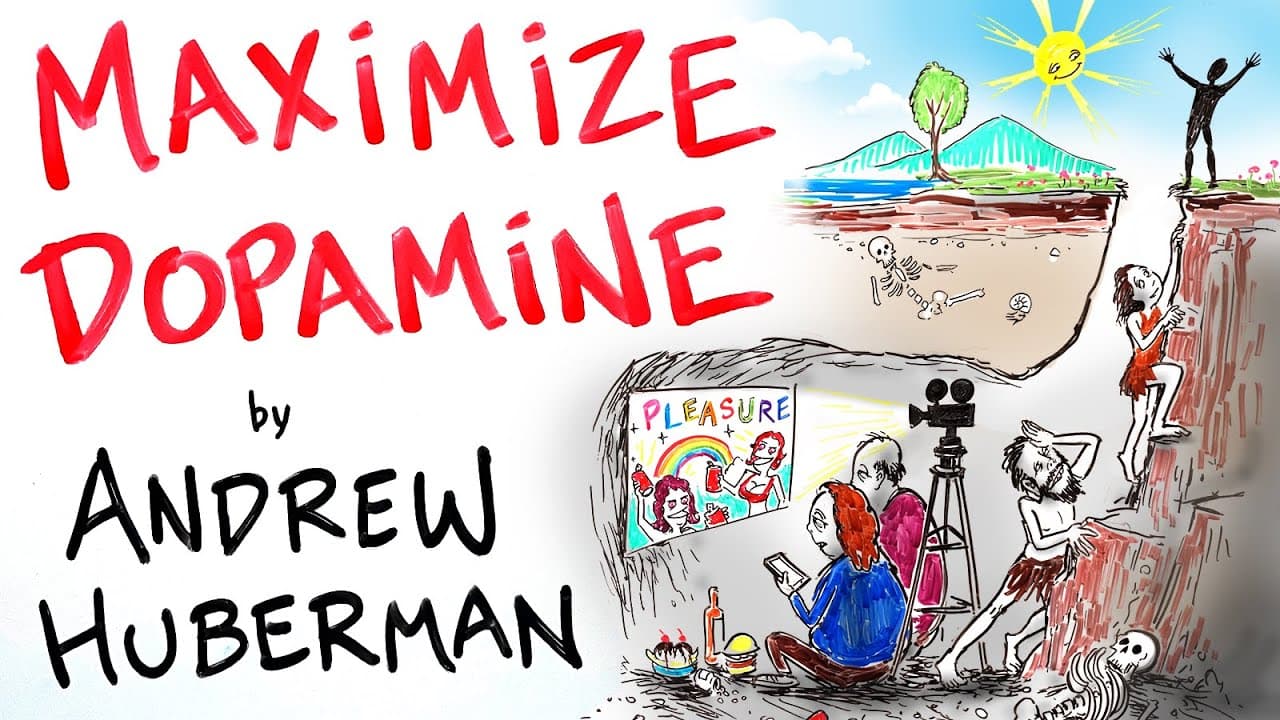
To maximize dopamine and enhance motivation, balance pleasure with effort, as dopamine primarily drives craving and the pursuit of rewards. Overindulgence in pleasurable activities without effort can diminish motivation, likening it to opioid effects. Understanding how to regulate dopamine levels can help maintain motivation and satisfaction in achieving goals.
Transcript
i think one of the most important findings in the last few years in neuroscience is that while the molecule dopamine is associated with reward it's more about motivation and craving there's a really classic experiment now that people use to demonstrate this take two rats and the rats independently separate cages can lever press for food or when... Read More
Key Insights
- Dopamine is primarily associated with motivation and craving rather than the enjoyment of rewards, challenging traditional views of its role in pleasure.
- Depleting dopamine in experiments shows that animals can experience pleasure without it, but lack motivation to pursue rewards.
- Human motivation and pursuit of goals are driven by dopamine, which encourages seeking experiences beyond immediate pleasures.
- Excessive consumption of pleasurable activities without effort can lead to decreased motivation and pleasure, similar to the effects of opioid systems.
- Dopaminergic drugs can create a cycle of excessive dopamine release, making the pursuit of rewards less satisfying compared to the drug itself.
- A balanced relationship with pleasure involves experiencing pain and effort, enhancing the reward's value once achieved.
- Understanding dopamine's role in motivation can help individuals regulate their behavior and avoid overconsumption of dopamine-inducing activities.
- The ability to self-regulate dopamine and manage the balance between pain and pleasure is crucial for personal success and well-being.
Install to Summarize YouTube Videos and Get Transcripts
Explore YouTube Video Summarizer or Get YouTube Transcript Extractor
Questions & Answers
Q: What role does dopamine play in motivation according to Andrew Huberman?
According to Andrew Huberman, dopamine is crucial for motivation and craving rather than just pleasure. It drives individuals to pursue rewards and experiences beyond immediate pleasures. Dopamine's role is more about motivating the pursuit of goals and activities, rather than the enjoyment of the rewards themselves.
Q: How does dopamine depletion affect animals in experiments?
In experiments where dopamine is depleted, animals still experience pleasure but lack the motivation to pursue rewards. For instance, an animal with depleted dopamine may enjoy food but will not exert effort to obtain it. This demonstrates dopamine's critical role in driving motivation and effort to achieve rewards.
Q: What is the impact of excessive consumption of pleasurable activities?
Excessive consumption of pleasurable activities without effort can lead to decreased motivation and pleasure. This is similar to the effects of opioid systems, where individuals may indulge in activities like social media or video games without feeling motivated to pursue other rewarding experiences, leading to a cycle of diminished motivation.
Q: How do dopaminergic drugs affect motivation and reward systems?
Dopaminergic drugs can create a cycle of excessive dopamine release, making the pursuit of natural rewards less satisfying compared to the drug itself. These drugs trigger high dopamine levels, leading to a focus on obtaining more of the drug, thus diminishing the motivation to pursue other rewarding activities.
Q: What is the relationship between pain, effort, and reward according to Huberman?
Huberman explains that experiencing pain and effort enhances the value of rewards once achieved. The balance between pain and pleasure is crucial, as enduring pain can lead to greater dopamine release and a more satisfying reward experience. This understanding can help individuals regulate their behavior and motivation.
Q: How can understanding dopamine's role help in self-regulation?
Understanding dopamine's role in motivation can help individuals self-regulate by avoiding overconsumption of dopamine-inducing activities. By recognizing the balance between pain and pleasure, individuals can manage their behavior, ensuring they don't become trapped in cycles of excessive dopamine release that diminish motivation.
Q: What is the significance of self-regulation in dopamine management?
Self-regulation in dopamine management is crucial for personal success and well-being. Individuals who can regulate their dopamine levels and manage the balance between pain and pleasure are more likely to achieve their goals and maintain motivation. This ability to self-regulate is increasingly important in environments with abundant pleasurable activities.
Q: How does Huberman suggest individuals can enhance their motivation?
Huberman suggests that individuals can enhance their motivation by understanding dopamine's role in driving motivation and craving. By balancing the experience of pain and pleasure, and regulating dopamine-inducing activities, individuals can maintain motivation and pursue rewarding experiences more effectively. This involves creating internal buffers and managing the proximity to pleasures.
Summary & Key Takeaways
-
Dopamine is not just about pleasure but significantly influences motivation and the pursuit of rewards. Depleting dopamine in experiments reveals that while animals still enjoy pleasures, they lack the motivation to seek them. This insight challenges traditional views of dopamine's role in reward systems.
-
Excessive pleasure consumption without effort can lead to decreased motivation, similar to opioid effects. Dopaminergic drugs can trap users in cycles of excessive dopamine release, making natural rewards less satisfying. Understanding dopamine's motivational role can help regulate behavior and avoid overconsumption.
-
Balancing pain and pleasure is essential for motivation and success. Experiencing pain and effort enhances the value of rewards. Self-regulation of dopamine levels is crucial, as excessive consumption of dopamine-inducing activities can lead to decreased motivation and well-being.
Read in Other Languages (beta)
Share This Summary 📚
Summarize YouTube Videos and Get Video Transcripts with 1-Click
Try YouTube Summary with ChatGPT & Claude or YouTube Transcript Generator
Explore More Summaries from After Skool 📚


Summarize YouTube Videos and Get Video Transcripts with 1-Click
Try YouTube Summary with ChatGPT & Claude or YouTube Transcript Generator