What happens to rates when Warsh drops forward guidance
TL;DR
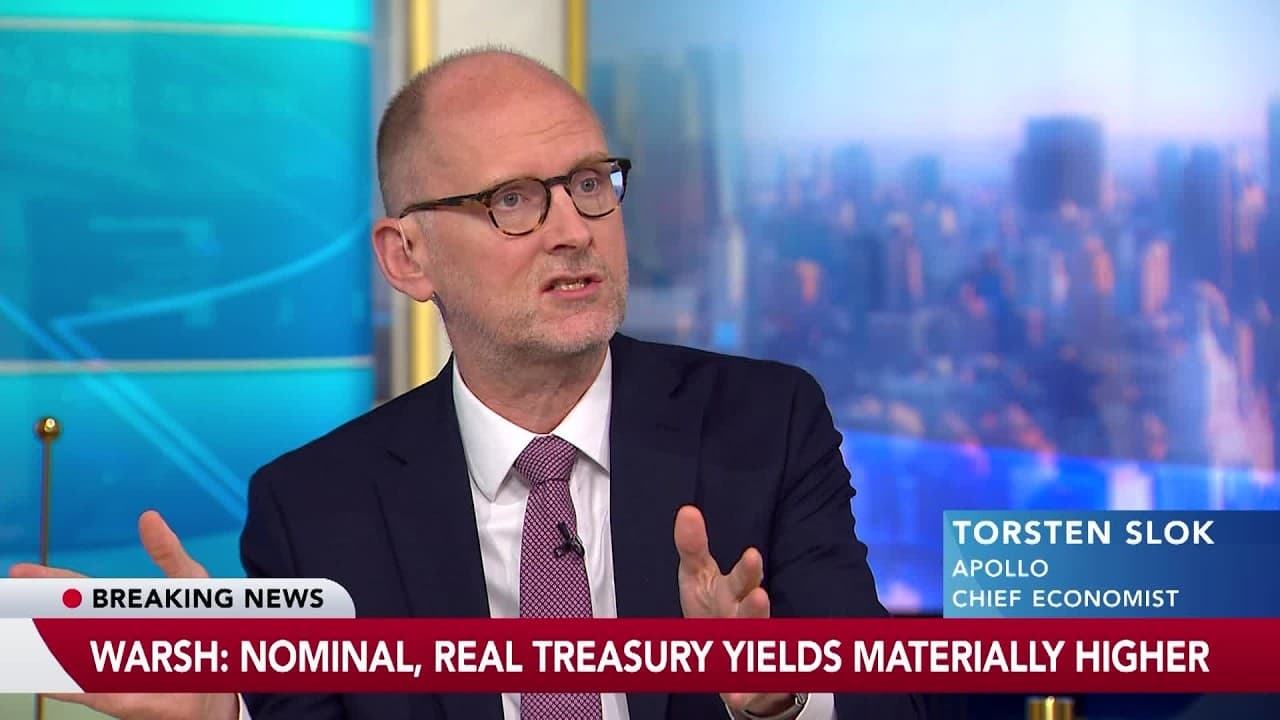
Dropping forward guidance triggers volatility as markets reinterpret policy signals and price in credibility risk. The long end of the yield curve responds by moving higher, reflecting bets on future policy and inflation, even if the committee keeps rates unchanged this meeting. The future path hinges on communication and credibility going forward.
Transcript
38 rates are basically saying if you're not hiking rates, then we are hiking rates. And that's why 30 year rates have just made it much more expensive to borrow to buy a house. And as a result of that, financial conditions are tightening. And he didn't tighten financial conditions, but the market decided to say, well, then we think it's time to tig... Read More
Key Insights
- Warsh’s stance removes forward guidance, increasing market volatility. The absence of forward guidance makes investors react more to incoming data and expectations rather than official signals.
- 30-year rates are highlighted as a critical focal point, with 520 being described as an OMG print and markets treating it as a pivotal level for housing finance costs.
- The price of reduced communication and unclear policy is reflected in tighter financial conditions and higher long-term yields as investors reprice expectations.
- Market reaction to the news conference suggests credibility is the key constraint on inflation expectations and policy path going forward.
- Task force discussions on communication are framed around whether to maintain forward guidance or avoid it to manage volatility.
- There is a debate about model reliance versus data; changing policy can alter behavior, complicating inflation forecasting.
- The long end of the yield curve acts as a barometer for credibility, potentially forcing a rate move if guidance is not followed through.
- The discussion links academic critique of standard models to practical policy signaling and its impact on market pricing.
- More videos from this channel:
- More from this channel: Bloomberg Television
Install to Summarize YouTube Videos and Get Transcripts
Explore YouTube Video Summarizer or Get YouTube Transcript Extractor
Questions & Answers
Q: A real search query question about the video (e.g. 'How to...', 'What is...', 'Why does...', 'When should...'). Question 1
The refusal to provide forward guidance makes markets more reactive to data as it arrives and raises volatility in the bond market. Investors price in higher uncertainty about future policy paths, which tends to push long-term yields higher when credibility concerns arise. This dynamic can shape expectations for the next central bank decision and beyond.
Q: Question 2
Removing forward guidance shifts the focus to the actual data flow and policy outcomes rather than fixed expectations. Market participants interpret incoming information as potential policy signals, adjusting pricing for inflation outlook and funding costs. This creates a feedback loop where higher volatility alters the perceived risk around future inflation and rate trajectories.
Q: Question 3
The video emphasizes that 30-year yields and the level around 520 are critical for financing, as they directly affect mortgage costs and housing demand. If investors demand higher compensation for long-run inflation risk, the long end of the curve will move, pressuring borrowing conditions and influencing economic activity.
Q: Question 4
Credibility becomes the central concern when guidance is reduced or removed. If the market doubts whether the central bank will follow through on inflation goals, long-term yields rise as participants demand a risk premium. This dynamic can constrain policy flexibility and intensify the market’s sensitivity to every data release.
Q: Question 5
There is a debate on whether a future policy framework should reintroduce some form of forward guidance or pursue a regime with no explicit guidance. The choice impacts volatility, as no clear path may require more reliance on data-driven outcomes, potentially leading to more abrupt policy steps to anchor inflation expectations.
Q: Question 6
The discussion references a shift away from historical model fitting toward a more data-driven or model-free approach. If policymakers change the policy regime, relying on past models can misprice risk. Markets respond by adjusting long-horizon rates to reflect new expected policy behavior and inflation trajectories.
Q: Question 7
Market participants question whether the committee will act at the next meeting if the long end remains unsettled. The potential for a September move increases if credibility signals fail to align with inflation expectations, causing traders to reassess duration risk and reprice long-duration securities accordingly.
Q: Question 8
The broader implication is that credibility and communication strategy may dictate monetary policy effectiveness. If guidance is too opaque, volatility rises and policy effectiveness risks being undermined by market moves. Conversely, clear communication could stabilize expectations and reduce speculative swings in bond markets.
Summary & Key Takeaways
-
The video analyzes how Warsh's move to abandon forward guidance increases market volatility and shifts expectations for future policy, with the long end of the yield curve reacting to perceived credibility risk. Investors must weigh policy communication against the data signal as rates adjust.
-
The discussion highlights the tension between policy non-commitment and market expectations, suggesting that a lack of forward guidance could lead to more volatile reactions but may be necessary to adapt to evolving inflation dynamics.
-
A key takeaway is that credibility becomes the primary market driver when guidance is removed, influencing pricing of longer-term securities and potentially forcing policy actions in upcoming meetings.
Read in Other Languages (beta)
Share This Summary 📚
Summarize YouTube Videos and Get Video Transcripts with 1-Click
Try YouTube Summary with ChatGPT & Claude or YouTube Transcript Generator
Explore More Summaries from Bloomberg Television 📚



Summarize YouTube Videos and Get Video Transcripts with 1-Click
Try YouTube Summary with ChatGPT & Claude or YouTube Transcript Generator