What Taiwan and Japan say about regional security
TL;DR
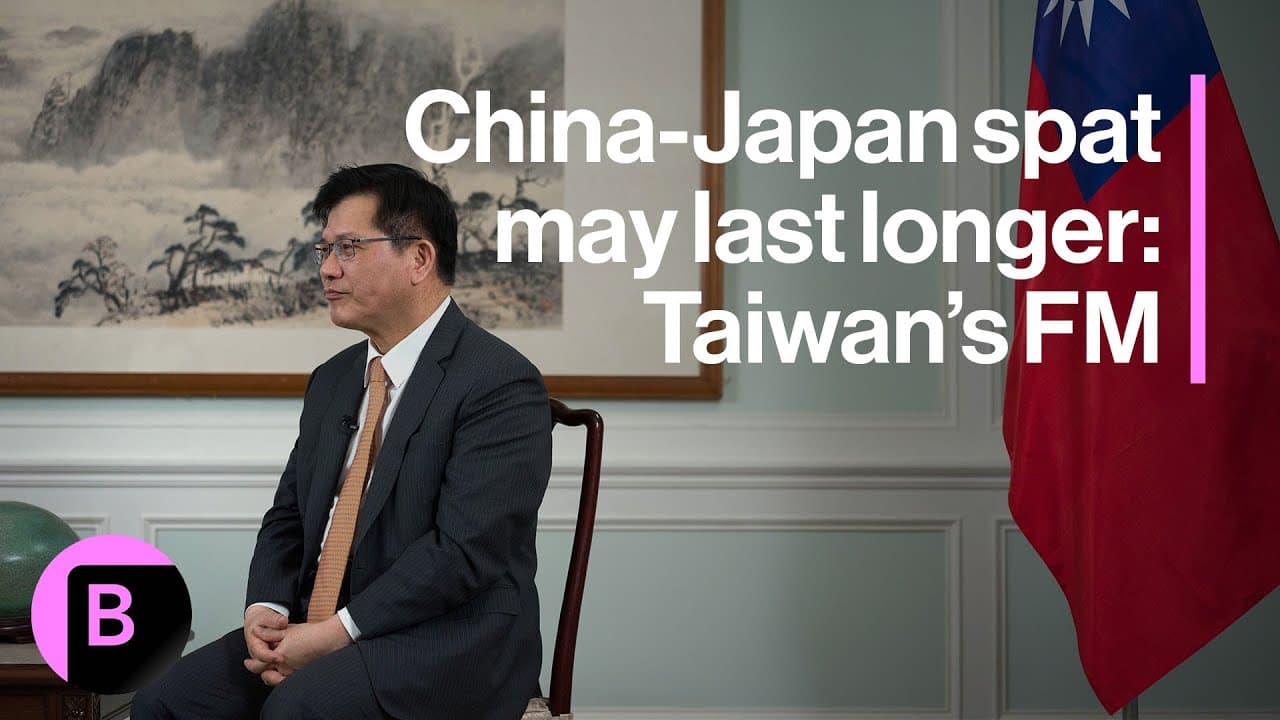
Taiwan and Japan coordinate closely on security, treating Taiwan as a Japan United States security contingency. They aim to cool tensions to prevent Beijing escalation and show commitment to defense, including burden sharing. The approach emphasizes stabilizing the Indo-Pacific and preventing overreaction by any side.
Transcript
How much dialogue has Taipei had with Tokyo in the days and weeks following that? Has there been coordination on the response for Taiwan, from Taiwan? Yes, because the the so-called Taiwan contingency becomes a Japan contingency. Therefore, it's also a Japan United States security contingency. So you're talking about the survival doctrine. Essentia... Read More
Key Insights
- Taiwan reports very good communication channels with the Japanese government.
- The Taiwan contingency is described as a Japan United States security contingency.
- Aimed goal is to avoid the situation becoming out of control and to cool tensions.
- Beijing’s escalation is considered unfavorable for Beijing and for regional stability.
- The alliance posture includes coordination with the United States to defend the status quo.
- There is no NATO-like arrangement in the Indo-Pacific, so bilateral ties must strengthen a lattice-like framework.
- Taiwan is increasing defense spending and extending mandatory military service to bolster resilience.
- Stabilizing the situation is in everyone’s interest to prevent nationalist and economic tensions from rising.
- More videos from this channel:
- More from this channel: Bloomberg Television
Install to Summarize YouTube Videos and Get Transcripts
Explore YouTube Video Summarizer or Get YouTube Transcript Extractor
Questions & Answers
Q: A real search query question about the video (e.g. 'How to...', 'What is...', 'Why does...', 'When should...'). Question 1
How does Taiwan describe its security relationship with Japan and the United States in the current regional context? Taiwan frames the relationship as a coordination on security where the Taiwan contingency becomes a Japan United States security contingency. This reflects a joint approach to defend the status quo and deter coercion, emphasizing shared responsibilities and integrated deterrence across partners.
Q: What does Taipei say about downplaying the tension with Beijing?
Taiwan argues that downplaying the tension can help prevent the situation from spiraling, suggesting that a soft approach can contribute to cooling nationalist sentiment and avoiding escalation. This stance is presented as beneficial for all parties, including Beijing, by reducing incentives to mobilize society around hostile nationalism.
Q: How is the security burden shared according to Taiwan and Japan’s dialogue?
The dialogue indicates a belief in burden sharing for defense capabilities and diplomatic efforts within the Indo-Pacific. This includes strengthening bilateral cooperation and incorporating a lattice-like strategic framework that extends beyond a NATO-style alliance. The emphasis is on practical, bilateral actions to maintain regional balance and deter aggression.
Q: What stance is taken on NATO and collective security in the Indo-Pacific?
The speakers state that the Indo-Pacific does not have a collective security arrangement like NATO. Therefore, they argue for stronger bilateral cooperation and a more integrated framework among partners to defend the status quo. The focus is on practical collaboration rather than a formal alliance model.
Q: What domestic measures has Taiwan adopted to bolster defense?
Taiwan has adopted a series of policies to strengthen its defense posture, including increases in the defense budget and an extension of mandatory military service. These steps are part of a broader effort to enhance whole-society defense resilience and asymmetric warfare capabilities in the face of regional pressure.
Q: What is the stated goal of stabilizing the situation for all parties involved?
The stated goal is to stabilize the current situation to prevent escalation and avoid negative consequences from economic downturns, unemployment, or trade conflicts. By keeping tensions in check, all parties can preserve regional stability and reduce the risk of a broader security crisis.
Q: What does Taiwan say about Japan's willingness to shoulder security burdens?
Taiwan indicates that Japan is willing to shoulder more security burdens through both defense capabilities and diplomatic channels. This collaboration is described as part of a broader effort to share responsibilities in protecting regional security and the status quo against coercive actions.
Q: How does the description portray the long-term outlook for regional security coordination?
The description suggests that coordination will continue and may deepen, with efforts to move bilateral arrangements toward a lattice-like framework and sustained defense resilience. The expectation is that this approach will help deter aggression, stabilize relations, and prevent a slide toward conflict even as regional tensions persist.
Summary & Key Takeaways
-
Taiwan and Japan maintain very good communication channels to manage the situation and avoid it spiraling out of control. This includes coordinating with the United States to defend the status quo in the region. A soft approach is used to reduce nationalist sentiment that could worsen tensions.
-
Taiwan is prepared to share burdens in defense and diplomacy within the Indo-Pacific, highlighting bilateral coordination over a global NATO style framework. The goal is to maintain stability and deter coercion while reinforcing resilience and deterrence in the face of pressure.
-
Taiwan emphasizes strengthening asymmetrical warfare capabilities and domestic resilience, including defense budget increases and extended mandatory military service, as part of a broader strategy to safeguard democracy and regional security.
Read in Other Languages (beta)
Share This Summary 📚
Summarize YouTube Videos and Get Video Transcripts with 1-Click
Try YouTube Summary with ChatGPT & Claude or YouTube Transcript Generator
Explore More Summaries from Bloomberg Television 📚

Summarize YouTube Videos and Get Video Transcripts with 1-Click
Try YouTube Summary with ChatGPT & Claude or YouTube Transcript Generator