How Did Cargill Build a Global Middleman Empire?
TL;DR
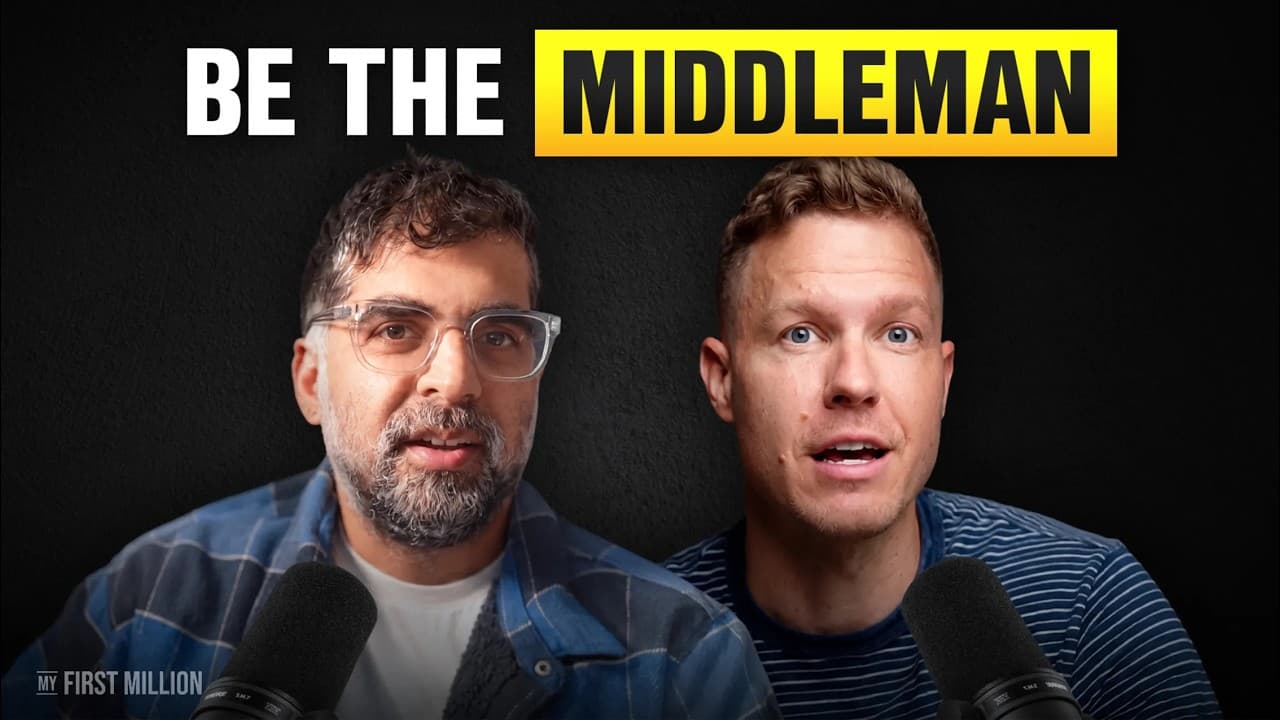
Cargill became America's largest private company by owning essential infrastructure between producers and buyers, then reinvesting 80% of its profits to expand across the food supply chain. Its grain elevators, transportation assets, processing operations, and commodity hedging turned an ordinary middleman model into a family-owned empire with about $150 billion in annual revenue.
Transcript
When I Googled this family, the words came up were silent dominance, middlemen at planetary scale. [laughter] All right, Sam, I have a uh I have a Billy of the Week for you. An MFM classic. This is not just any Billy of the Week. This is one of the biggest Billies in America. One that I wasn't really that aware of. I think you will know more than m... Read More
Key Insights
- Cargill is described as America's largest private company for the last 40 years, with 88% family ownership and about $150 billion in annual revenue. Its scale exceeds the combined revenue of Goldman Sachs, Nike, and Starbucks, according to the discussion.
- Cargill's original advantage was physical infrastructure located beside railroads. Grain elevators let farmers store crops, prevent rapid spoilage, and reach buyers without personally managing every sale and transportation detail, making the company an indispensable intermediary rather than an easily removed broker.
- The middleman model becomes defensible when the intermediary owns infrastructure that neither side can easily reproduce. Cargill was physically positioned between farms and transportation networks, so eliminating it would have required replacing storage facilities, market access, logistics, and working commercial relationships.
- Cargill's expansion strategy was to internalize inefficient parts of its supply chain. It moved from grain storage into barges, shipbuilding, processing, animal feed, poultry, meatpacking, salt, fertilizer, seeds, oils, starches, and other activities connected to food production and distribution.
- Cargill can participate in numerous stages of a single hamburger meal. The discussion traces possible involvement from seeds and fertilizer through grain storage, shipping, animal feed, cattle, meatpacking, restaurant supply, salt, corn syrup, soybean oil, and milkshake starch.
- Cargill's 80/20 rule directs 80% of profits back into the company and distributes 20% to the family as dividends. This reinvestment policy supports continued expansion while still providing substantial family income from normal annual profit estimated in the discussion at about $3 billion.
- Cargill's commodity activities create a need for financial hedging. The family also owns Gardta Capital Partners, described in the discussion as a hedge fund larger than $10 billion, which reflects how commodity trading and risk management developed alongside the physical agricultural business.
- Cargill's low public profile was presented as part of its competitive strategy. By avoiding publicity and operating primarily through business-to-business markets, the company could quietly strengthen its logistics position without attracting the attention commonly directed toward consumer brands or prominent founders.
- More videos from this channel:
- More from this channel: My First Million
Install to Summarize YouTube Videos and Get Transcripts
Explore YouTube Video Summarizer or Get YouTube Transcript Extractor
Questions & Answers
Q: How did Cargill become America's largest private company?
Cargill began by building grain elevators beside railroads, where farmers could store crops and connect with buyers and transportation. It then expanded into shipping, shipbuilding, processing, animal feed, poultry, meatpacking, salt, fertilizer, seeds, oils, and starches. By controlling more stages of the supply chain and reinvesting 80% of profits, it developed into America's largest private company.
Q: Why was Cargill's middleman business so valuable?
Cargill was valuable because it did more than introduce buyers and sellers. Its grain elevators physically stored crops beside railroad connections, reduced spoilage risk, and simplified transportation and sales for farmers. Removing this middleman would have required somebody else to reproduce expensive infrastructure and logistics, so Cargill's position became defensible rather than vulnerable to routine disintermediation.
Q: How did Cargill's grain elevator model work?
Farmers delivered grain to Cargill's storage facilities near railroads instead of arranging every sale and shipment independently. They could receive an IOU promising payment after the grain sold, or sell immediately to Cargill at a wholesale rate. Cargill stored the grain, connected it to transportation and buyers, and earned value from facilitating the transaction.
Q: What does Cargill control in the food supply chain?
The discussion describes Cargill as operating across seeds, fertilizer, grain purchasing, grain elevators, shipping, animal feed, cattle, meatpacking, poultry, salt, corn syrup, soybean oil, and starch. A hamburger meal could therefore involve Cargill at several stages, including growing feed, transporting crops, supplying cattle, processing beef, and providing ingredients used by the restaurant.
Q: What is Cargill's 80/20 profit rule?
Cargill's 80/20 rule means that 80% of company profits are reinvested into the business and 20% are distributed to the family as dividends. The discussion estimates normal annual profit at about $3 billion, which would direct close to $1 billion to family owners while preserving most earnings for acquisitions, infrastructure, and continued expansion.
Q: Why did Cargill build ships and a shipyard?
Cargill built ships and a shipyard after concluding that existing shipping barges were inefficient for transporting grain when rail was not the appropriate route. Owning transportation allowed the company to control another critical supply-chain stage instead of depending completely on outside operators. Its shipbuilding operation eventually produced vessels for the US Navy as well.
Q: Why has the Cargill family remained relatively unknown?
The family remained relatively unknown because Cargill operated quietly in business-to-business industries rather than building a prominent consumer brand around a famous founder. The discussion says this low profile was part of its strategy for avoiding attention and competition while strengthening its logistics position. Even its headquarters was known simply as the lake office.
Q: What business lesson does Cargill offer entrepreneurs?
Cargill shows that a middleman can become more valuable than either side of a market when it owns essential infrastructure and removes difficult operational problems. Its success came from storing products, connecting producers with transportation and buyers, expanding into inefficient adjacent activities, and repeatedly reinvesting profits. The opportunity was not glamorous, but it was necessary and difficult to replace.
Summary & Key Takeaways
-
Cargill began by placing grain elevators beside railroads, giving farmers a practical place to store and sell crops without independently finding buyers and arranging transportation. The company could issue an IOU payable after a sale or purchase grain at a wholesale price, making its physical position between farms and markets commercially valuable.
-
The company expanded beyond storage after identifying inefficiencies elsewhere in its supply chain. It built shipyards and ships, produced vessels for the US Navy, acquired a major poultry business, and developed substantial positions in grain, meat, salt, animal feed, oils, starches, and other ingredients used throughout packaged food and restaurants.
-
Cargill remains unusually private despite its scale. The family owns 88% of the company, receives 20% of profits as dividends, and reinvests the remaining 80% into the business. Professional chief executives now manage operations, while the company maintains the quiet profile that helped it avoid attention and competition.
Read in Other Languages (beta)
Share This Summary 📚
Summarize YouTube Videos and Get Video Transcripts with 1-Click
Try YouTube Summary with ChatGPT & Claude or YouTube Transcript Generator
Explore More Summaries from My First Million 📚



Summarize YouTube Videos and Get Video Transcripts with 1-Click
Try YouTube Summary with ChatGPT & Claude or YouTube Transcript Generator