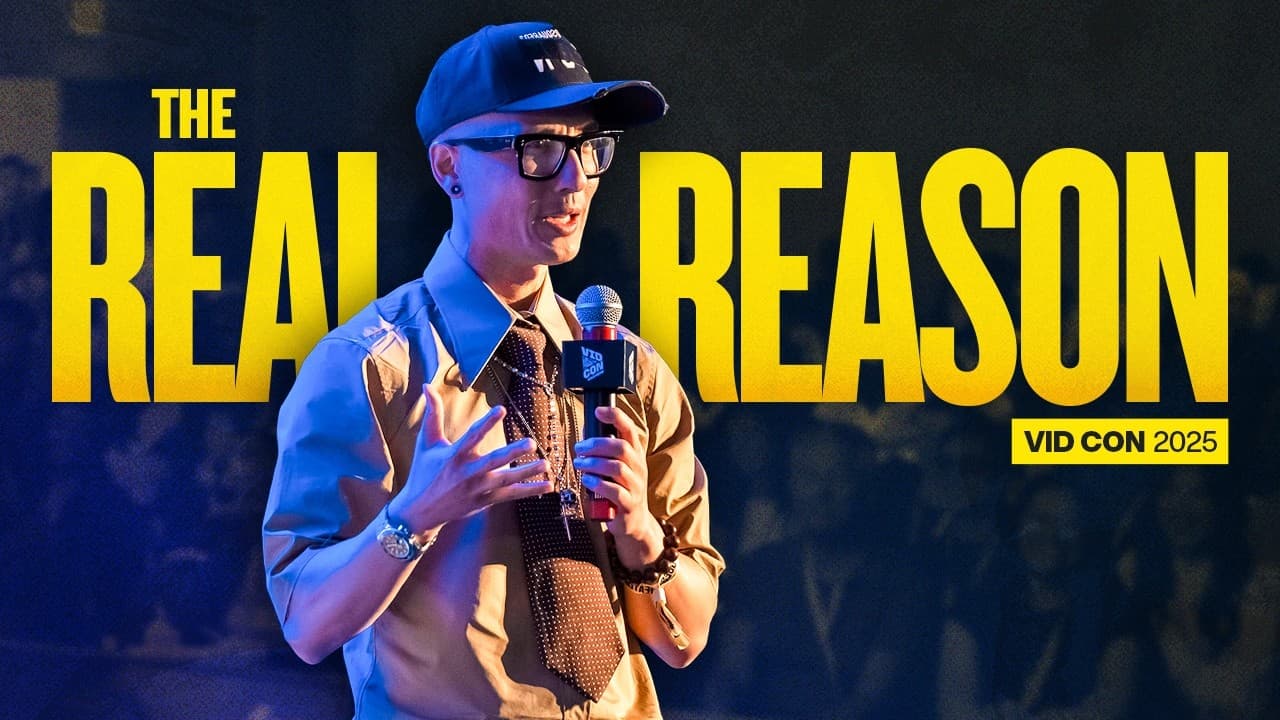
How to Stand Out Online: Chris Do's VidCon Talk
TL;DR
Standing out online comes from being different, not better, and from owning your personality instead of toning it down. Chris Do argues that attention is the economy, that social media has become the new resume, and that creators should stop chasing new things and keep repeating what works.
Transcript
If you intend to stand out in this world, you need to do it sooner than later. You look at the root word of original. It's origin. The point or place where something begins. That's you. That's your story. That's the beginning of your story. A story that you may have forgotten. It's all about the feelings now. And we can see everywhere we look. Char... Read More
Key Insights
- Standing out starts with your origin. The root word of original is origin, the place where your story begins, so a distinctive brand comes from the story you may have forgotten, not from copying others.
- Online culture has moved from the age of character to the age of personality. People once judged you by what you did, and now they judge by how you make them feel.
- Attention is the economy, not just a part of it. This is where the money is being made, so being known is a requirement for getting opportunities.
- Social media has become the new resume. Event organizers check a speaker's social accounts first, and may refuse to book brilliant people who cannot help sell tickets because nobody knows them.
- Reach attracts money. Brand sponsors pay for your audience and reach, and publishers offer better deals when you have a perceived audience because they do not have to market you as hard.
- Chasing new is a trap. Darren Aronofsky's The Fountain scored 52% on Rotten Tomatoes and grossed $16 million on a $35 million budget, and the Wachowskis' Cloud Atlas earned $27 million domestically.
- Repetition pays. Comedian Rich Hall jokes that all Tom Cruise movies are the same, and Chris Do notes Cruise is laughing all the way to the bank while the experimental directors drop duds.
- Toning down your personality removes what makes you you. Chris Do chose to be hated for who he is rather than loved for who he is not, because online, nuance and personality are the point.
Install to Summarize YouTube Videos and Get Transcripts
Explore YouTube Video Summarizer or Get YouTube Transcript Extractor
Questions & Answers
Q: Why do creators stay invisible online?
According to Chris Do, the problem is not visibility but blending in. Creators tone themselves down, remove personality and nuance, and try to be more professional, which erases what makes them distinct. He says you need to be different rather than better, and to own your story and edge.
Q: What does it mean that attention is the economy?
Chris Do says it is not merely an attention economy, but that attention itself is the economy, because this is where the money is being made. People with reach attract sponsors, better publishing deals and speaking bookings, since those buyers are really paying for access to your audience.
Q: Why is social media called the new resume?
Resumes involve some fluffing, so people now take a shortcut and check your social accounts. Chris Do gives the example of an event organizer named Neil, who will not book a speaker nobody knows, because the speaker will not help sell tickets and it is the speaker's job to get known.
Q: Why should you not chase new things?
Chris Do shows that new work is often rewarded less than repeating what works. The Fountain scored 52% on Rotten Tomatoes and was a box office flop, and Cloud Atlas earned only $27 million domestically. Tom Cruise repeats a similar formula and keeps winning commercially.
Q: What is the difference between character and personality in personal branding?
Chris Do says we used to be judged by the things we did, meaning character. Now the question is what kind of person you are and how you make people feel. Character, once held in high regard, has seemingly disappeared, while personality drives how audiences respond today.
Q: How does reach help creators make money?
Reach brings sponsors who want your audience and will pay for it. Publishers also give better deals because they do not have to market you as hard. Chris Do summarizes this as there being riches in the reaches, a twist on the saying that there are riches in the niches.
Q: What example does Chris Do use to show the power of reach?
He uses Hailey Bieber, who has a skincare line, fashion and nails, is a socialite and model, and recently sold her company Rhode for a billion dollars. He uses her story to show how reach and fame can be turned into enormous business value.
Q: What is Seth Godin's dip and why does it matter here?
The Dip is a graph with results on the vertical axis and effort and time on the horizontal axis. Starting something new feels fun, like learning Photoshop or AI, but results dip after the excitement fades. Chris Do uses it to explain why people keep restarting instead of sticking with one thing.
Summary & Key Takeaways
-
Chris Do opens with a story about a friend who told him people misunderstand him because he is edgy. He refused to tone it down, saying he would rather be hated for who he is than loved for who he is not, because online personality is what people respond to.
-
He argues the world has shifted from character to personality, that attention is the economy, and that social is the new resume. Event organizers, sponsors and publishers all use reach as a shortcut, and Hailey Bieber selling Rhode for a billion dollars shows the power of reach.
-
His first contrarian rule is not to chase new. Using Aronofsky's The Fountain, the Wachowskis' Cloud Atlas and Tom Cruise's repeated formula, he shows that audiences reward familiarity. He then introduces Seth Godin's The Dip to explain why starting over feels exciting but stalls results.
Read in Other Languages (beta)
Share This Summary 📚
Summarize YouTube Videos and Get Video Transcripts with 1-Click
Try YouTube Summary with ChatGPT & Claude or YouTube Transcript Generator
Explore More Summaries from The Futur 📚
Summarize YouTube Videos and Get Video Transcripts with 1-Click
Try YouTube Summary with ChatGPT & Claude or YouTube Transcript Generator