What Augustine says about original sin and City of God
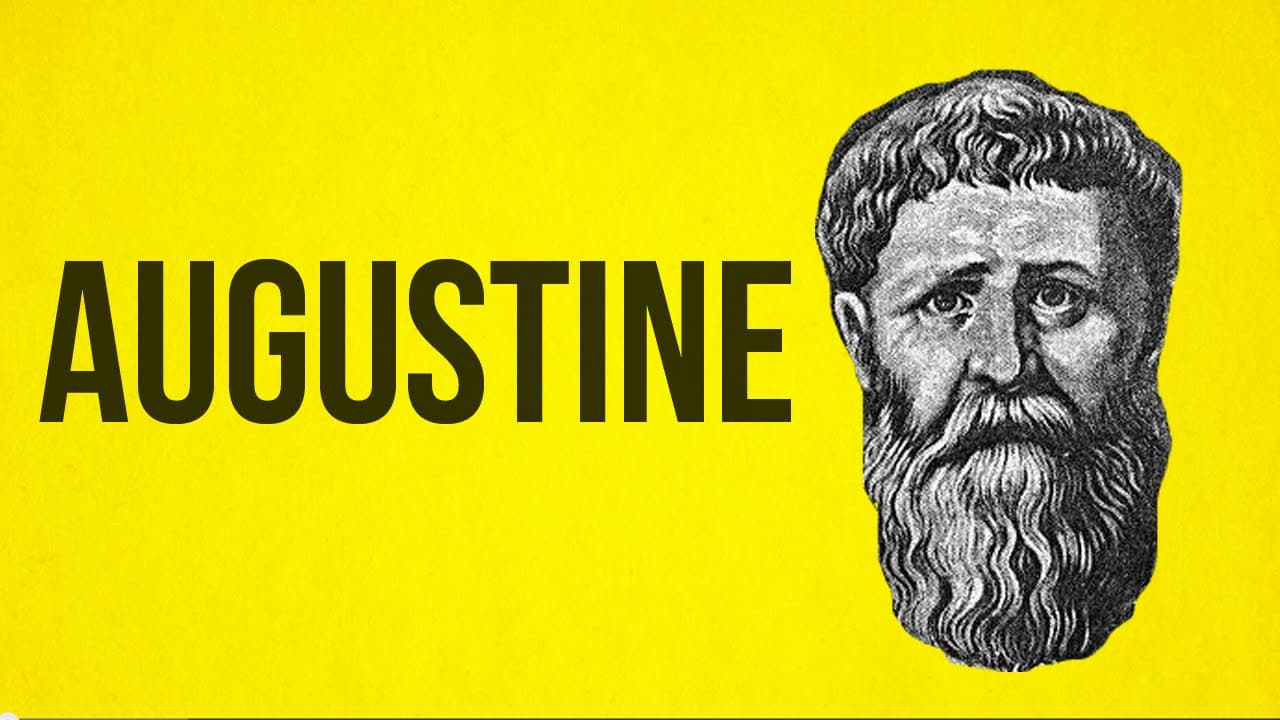
TL;DR
Augustine argues that earthly happiness and just social order are flawed, and humans are inherently fallen due to original sin. He distinguishes two cities, City of Men and City of God, urging humility toward failure and generosity to others, rather than chasing perfection through earthly power. His ideas invite skepticism toward power and a compassionate view of human limits.
Transcript
Augustine was a Christian philosopher, who lived in the 4th and 5th century A.D., on the fringes of the rapidly declining Roman Empire in the North African town of Hippo. He served as bishop for 35 years, proving popular and inspirational to his largely uneducated and poor congregation. In his last days, a Germanic tribe known as the Vandals burnt ... Read More
Key Insights
- Original sin means all humans are crooked due to inherited sin from Adam, shaping desire and rational limits.
- The libido dominandi describes a universal urge to dominate others, undermining genuine love and social harmony.
- Augustine rejects the notion that Rome ever embodied true justice or that earthly power guarantees virtue.
- He differentiates between the City of God and the City of Men, arguing for a heavenly republic beyond human achievement.
- Earthly success is not a reliable indicator of virtue, challenging meritocratic myths common in ancient Rome.
- Augustine promotes skeptical, non-judgmental attitudes toward wealth, status, and power, encouraging humility toward failure.
- The City of God represents a future paradise where virtue and justice align, guiding ethical behavior in the here and now.
- Even non-Christians can find value in Augustine’s emphasis on generosity toward failure and caution toward power.
- More videos from this channel:
- More from this channel: The School of Life
Install to Summarize YouTube Videos and Get Transcripts
Explore YouTube Video Summarizer or Get YouTube Transcript Extractor
Questions & Answers
Q: What is original sin as Augustine describes it in the talk?
Original sin, in Augustine’s framework, is the idea that all humans inherit a crooked nature because of the sins of Adam. This fallen state makes true virtue difficult to achieve and fuels a persistent egoism and desire to dominate others, which in turn undermines reason and love. The concept explains why humans struggle to achieve lasting happiness on earth.
Q: How does Augustine differentiate between two cities?
Augustine distinguishes between the City of God and the City of Men. The City of God represents a heavenly realm where virtue and justice prevail, founded by Christ, and cannot be fully realized on earth. The City of Men is a flawed social order where money and status may seem to determine success but do not reflect true virtue.
Q: What is the libido dominandi and its significance?
The libido dominandi is Augustine’s term for a universal urge to dominate others. It explains much of human conflict, pride, and social cruelty, revealing why wealth and power often fail to reflect virtue. Recognizing this impulse helps explain the persistent gap between outward success and inner moral integrity.
Q: Why does Augustine critique Rome’s meritocracy and wealth?
Augustine argues that Rome’s meritocracy and focus on wealth are insufficient measures of virtue. He contends that justice on earth is illusory and that earthly power does not establish righteousness. This critique encourages skepticism toward power and humility in the face of human limitations.
Q: What does Augustine say about true justice?
True justice, according to Augustine, has no existence in earthly realms and is realized only in the heavenly republic governed by Christ. This view reframes ethics away from worldly achievement toward alignment with divine justice, guiding behavior toward generosity and humility rather than societal prestige.
Q: How can Augustine’s ideas apply to non-Christians?
Even for non-Christians, Augustine’s ideas offer universal insights: skepticism toward power, generosity toward failure, and humility in the face of human imperfection. These themes encourage compassionate political attitudes, reduce snobbery, and promote a more realistic and humane approach to social life.
Q: What is the impact of Augustine’s two cities on modern political thought?
Augustine’s two cities model inspires ongoing debates about the limits of earthly politics, the role of virtue in public life, and the possibility of justice in human societies. It invites a cautious approach to power, a recognition of human flaw, and a hopeful vision of moral governance grounded in divine or transcendent principles.
Q: Why is Augustine said to be generous toward failure?
Augustine’s framework treats failure and poverty as part of the human condition rather than moral failings. This generosity toward failure discourages moralism and snobbery, promotes sympathy for those who falter, and emphasizes supporting others while remaining critical of material displays of virtue.
Summary & Key Takeaways
-
Augustine shows that earthly happiness and social justice are elusive, arguing that human nature is corrupted by original sin and that perfection cannot be achieved on earth. He contrasts the City of Men with the City of God, urging humility and reliance on divine justice rather than worldly merit.
-
He critiques Roman values of meritocracy and wealth as insufficient measures of virtue, proposing that true justice exists only in a heavenly republic founded by Christ and not in earthly power. This leads to a generous stance toward failure and vulnerability.
-
The talk frames Augustine as a bridge between ancient thought and modern political psychology, emphasizing the universal gifts of his philosophy to critique power, support the marginalized, and remind us of human limits without requiring adherence to Christianity.
Read in Other Languages (beta)
Share This Summary 📚
Summarize YouTube Videos and Get Video Transcripts with 1-Click
Try YouTube Summary with ChatGPT & Claude or YouTube Transcript Generator