How to Write YouTube Scripts That Convert Clients
TL;DR
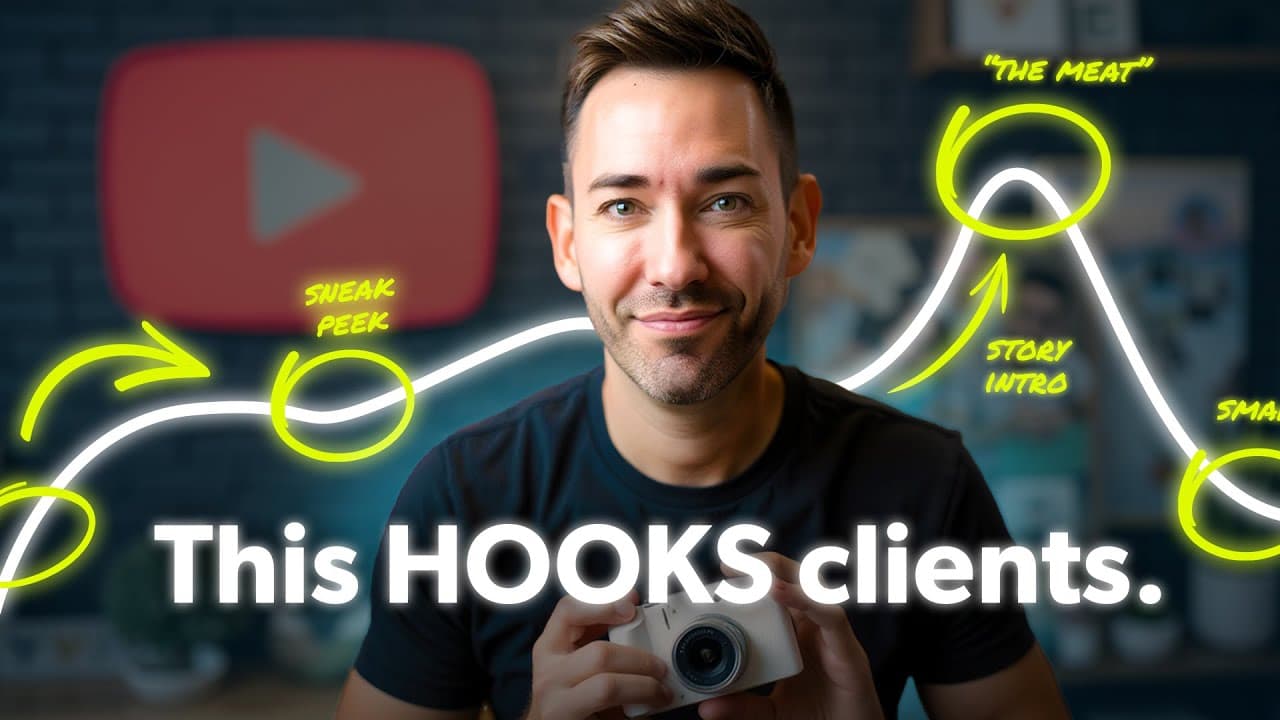
The core method is a five step script structure that starts with writing the title first to set expectations, then crafting a strong hook, followed by a clear story intro, and close attention to tension with open loops. Use specific hook formulas like information gap, show and teach, or hot take, and include real examples to improve viewer retention and client inquiries.
Transcript
There's a YouTube script formula so powerful it can't help but hook in enough viewers to fully book your calendar. And I'm about to show you exactly how to write one. And this isn't about being charismatic on camera or having Hollywood level production. It's just a five-step script structure that I've used to convert viewers into thousands of payin... Read More
Key Insights
- The video promotes a five step script structure that can convert viewers into paying clients.
- Writing the title before your script creates a promise the content must deliver and reinforces audience expectations.
- The hook is the most critical part because a large portion of viewers drop off within the first 30 seconds.
- Three hook formulas are the information gap, show and teach, and hot take, each creating specific curiosity and practical value.
- Open loops are used to promise upcoming value, which keeps viewers watching and builds anticipation.
- Step three, the story intro, can be a mini history lesson, a metaphor, or a personal story to set context for the teaching.
- There is a focus on not overpromising but delivering tangible, repeatable results your audience can emulate.
- The approach includes concrete real-world examples to illustrate each element of the script and to prevent generic advice.
- More videos from this channel:
- More from this channel: Wes McDowell
Install to Summarize YouTube Videos and Get Transcripts
Explore YouTube Video Summarizer or Get YouTube Transcript Extractor
Questions & Answers
Q: How to start a YouTube script with a strong title and hook?
To begin a YouTube script effectively, write the title first to establish the promise the video will deliver. Then craft a hook that clearly states the video topic and makes it feel uniquely valuable to the viewer. The hook should address the viewer directly, promise concrete benefits, and set up what is coming next, ensuring high initial engagement.
Q: What is the information gap hook and how does it work?
The information gap hook creates curiosity by revealing that there is essential knowledge the audience does not yet know. It presents a future change or a hidden detail that affects the viewer, then promises to reveal it or explain how to apply it. This approach compels viewers to continue watching to fill the gap.
Q: What does the show and teach hook combination involve?
The show and teach hook combines a real-world demo with a lesson. It demonstrates what worked in practice and then breaks down the exact steps to replicate the result. This method provides tangible evidence and a clear instructional path, increasing credibility and viewer motivation to apply the technique.
Q: How does the hot take hook differ from other hooks?
The hot take hook asserts a firm belief that goes against common wisdom and then quickly proves it with data or reasoning. It positions the creator as a trusted expert who challenges conventional advice, making viewers curious to see the supporting argument and the practical outcome.
Q: Why are open loops important in YouTube scripting?
Open loops create strategic tension by signaling that valuable information is coming later in the video. They encourage viewers to stay until the reveal, thereby increasing watch time. Presenting future what you will cover helps maintain momentum and reduces early drop-off.
Q: What are the three options for a strong story intro?
The three options are: a mini history lesson to provide context for why current advice matters, a metaphor or analogy to make abstract concepts tangible, and a personal story or case study to reinforce credibility and human connection. Each option helps the audience understand and accept the forthcoming teaching.
Q: How should you structure the three questions in the open loop section?
Based on your title, determine the three questions your viewers most want answered. Frame each point as an intriguing question or partial reveal. This approach creates specific expectations, keeps the viewer engaged, and provides a clear roadmap for the upcoming content.
Q: What role does the script’s tension play in viewer retention?
Tension raises curiosity and keeps viewers watching by delaying the full solution and escalating stakes. By guiding the audience through gaps in knowledge and promising progressive revelations, the script sustains engagement, reduces early exit rates, and increases the likelihood of viewers taking the desired action, such as inquiries or signups.
Summary & Key Takeaways
-
The video presents a five step script framework and emphasizes writing the title before the script to align expectations and increase engagement. It also highlights the importance of a powerful hook to reduce early drop-off and the use of open loops to maintain viewer interest throughout. Examples and mistakes are provided to guide immediate application.
-
The hook section covers three formulas: information gap, show and teach, and hot take, each designed to create curiosity and deliver actionable value. Viewers are taught to present what they will learn, then reveal three targeted questions to answer, increasing watch time and conversion potential.
-
The story intro segment offers three options to build context: mini history lesson, metaphor or analogy, and personal story or case study. This helps viewers understand why current advice matters and how the upcoming steps apply to their situation, improving comprehension and retention.
Read in Other Languages (beta)
Share This Summary 📚
Summarize YouTube Videos and Get Video Transcripts with 1-Click
Try YouTube Summary with ChatGPT & Claude or YouTube Transcript Generator
Explore More Summaries from Wes McDowell 📚
Summarize YouTube Videos and Get Video Transcripts with 1-Click
Try YouTube Summary with ChatGPT & Claude or YouTube Transcript Generator