Why Task Queues Are Replacing AI Chat Interfaces
TL;DR
Task queues let users assign several defined jobs to an AI agent, run them in parallel, and review progress without maintaining long, iterative chats. Claude Cowork applies Claude Code’s file-reading, planning, execution, and human-in-the-loop architecture to a nontechnical desktop interface, reflecting Anthropic’s view that local files provide a more cooperative and reliable environment than browser-only workflows.
Transcript
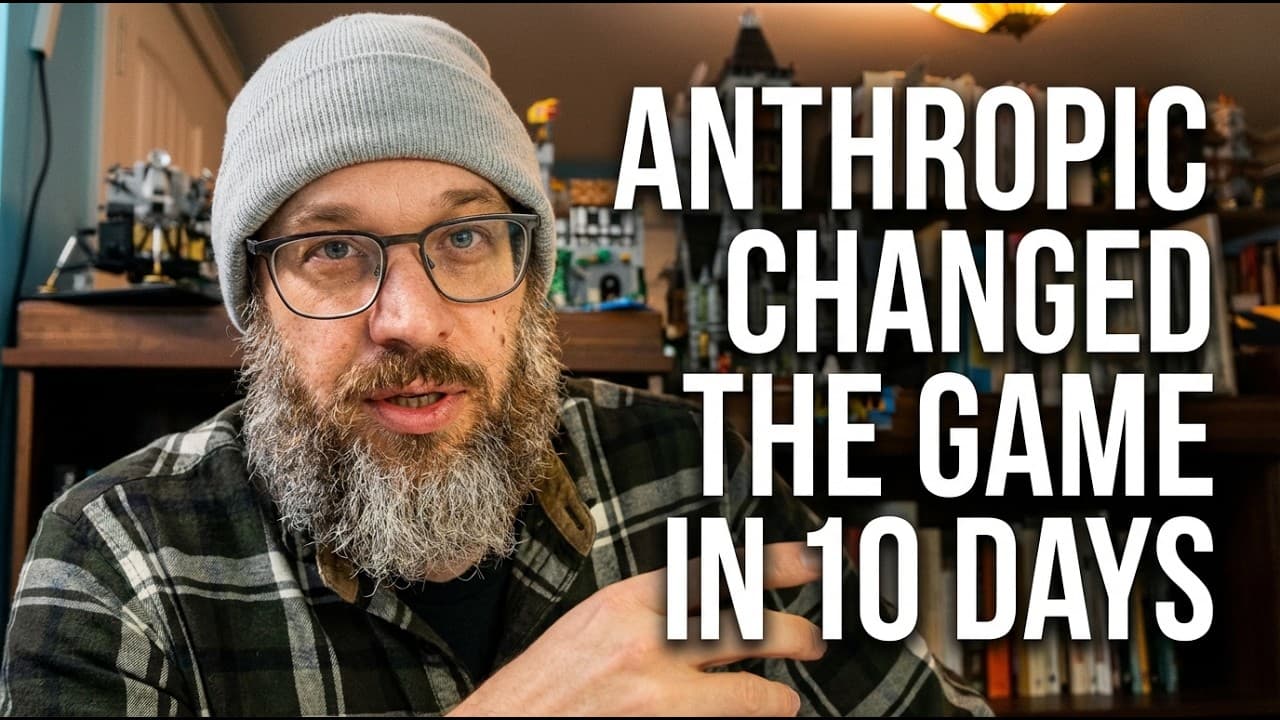
10 days. That's how long it took Anthropic to build and ship Claude Co-work after they noticed something their product team was not expecting. Developers were using their own coding tool to organize expense receipts. And really that story of the timeline matters more than anything else about the launch of Claude Co-work this week. It's not the expe... Read More
Key Insights
- Anthropic reportedly shipped Claude Cowork in 10 days after its product team noticed developers using Claude Code for expense receipts, photo organization, research synthesis, transcript analysis, and file management. The rapid response illustrates how observing actual behavior can guide product development faster than conventional feature-planning cycles.
- Claude Code’s architecture is a sandboxed agent that can read files, write files, create and execute plans, and involve humans during progress. Anthropic’s internal data reportedly showed a 67% increase in merged pull requests per engineer per day, providing evidence that the architecture was useful in production engineering work.
- Claude Cowork is the same general agent architecture presented through an interface that does not require terminal experience. Users can select a folder, describe an outcome conversationally, review the agent’s plan, leave it working autonomously, and return when intervention or verification is needed.
- Task queues are replacing prolonged chats by allowing users to submit several independent jobs and let the agent work through them in parallel. This changes AI interaction from perfecting one prompt through repeated conversation into directing multiple workstreams, monitoring progress, and checking completed outputs.
- File-system agents operate in a cooperative environment because users explicitly grant access to folders and files that generally lack bot detection, captchas, and repeated authentication. This controlled setting reduces the error surface compared with navigating websites whose interfaces, security measures, and login flows can change or block automation.
- Browser agents are more brittle for high-stakes work because the web is designed for humans and protected for security. Websites can block agents, captchas can interrupt them, and login flows can fail, although the transcript notes that browser agents have improved in navigation accuracy and intervention requests.
- Claude Cowork combines local file access with web browsing rather than treating them as competing modes. Through its Chrome integration, the agent can use authenticated websites while processing artifacts on the user’s machine, linking web-based information and actions with documents, spreadsheets, recordings, receipts, and other local work products.
- Intent formulation and verification are becoming scarce skills because autonomous generation moves cognitive effort toward defining the task before execution and checking results afterward. The description characterizes this as an anti-slop architecture, where specificity before generation helps distinguish useful leverage from merely producing more output.
Install to Summarize YouTube Videos and Get Transcripts
Explore YouTube Video Summarizer or Get YouTube Transcript Extractor
Questions & Answers
Q: How do task queues change the way people use AI agents?
Task queues allow people to submit several separate assignments, start multiple work threads, and let an agent process them in parallel. Instead of maintaining one long conversation and repeatedly refining a prompt, the user defines desired outcomes, observes each task’s progress, intervenes when necessary, and verifies the outputs. The interaction therefore resembles leaving assignments for a coworker through an inbox.
Q: Why did Anthropic create Claude Cowork from Claude Code?
Anthropic’s product team observed that developers were already using Claude Code for tasks unrelated to programming, including organizing expense receipts, categorizing vacation photos, cleaning downloads folders, synthesizing research, analyzing transcripts, and managing files. Those usage patterns validated broader demand for the architecture. Anthropic then reportedly used Claude Code to build a nontechnical interface and shipped Cowork in 10 days.
Q: How does Claude Cowork work with files and folders?
Claude Cowork lets a user select a folder through a graphical interface and describe the required result in conversational language. The agent reads the permitted files, develops a visible plan, executes the necessary steps, writes outputs, and reports progress. This retains Claude Code’s file-based, sandboxed workflow while removing the need to operate through a terminal or understand programming tools.
Q: Why can file-system agents be more reliable than browser agents?
File-system agents work in an environment controlled by the user. Local folders generally do not contain bot detection, captchas, changing page layouts, or repeated login barriers, and the agent receives explicit permissions to read and write. Browser agents must navigate websites designed for humans and protected for security, so blocks, authentication failures, and interface changes create a larger error surface.
Q: Can Claude Cowork use the web as well as local files?
Claude Cowork can combine file-system work with web browsing through its Claude in Chrome integration. The user assigns a task and provides the appropriate website login directly in Chrome, after which Claude operates within a dedicated tab group. This design lets the agent process local work artifacts while also retrieving information or completing actions on websites when the workflow requires them.
Q: What made Claude Code useful beyond software development?
The valuable capability was not limited to generating code. Claude Code could inspect supplied files, understand instructions, form a plan, perform a multistep workflow, write results, and ask for human involvement during execution. Those functions apply to any task with suitable inputs and outputs, including receipts, photographs, research materials, transcripts, directories, daily briefings, and personal projects.
Q: Why is Anthropic’s 10-day Cowork launch significant?
The 10-day timeline demonstrates an operating model built around observing real usage, recognizing an unexpected pattern, and rapidly turning that evidence into a product. The transcript contrasts this with conventional enterprise processes involving prolonged reviews, approvals, and documentation. It argues that this responsiveness is becoming a competitive advantage alongside model quality because rivals can pursue the same emerging market opportunities.
Q: What skills matter when delegating knowledge work to AI agents?
Clear intent formulation and careful verification become especially important when an agent can plan and execute work autonomously. Users must specify the desired outcome, relevant inputs, constraints, and permissions before generation begins, then inspect the plan, monitor intervention requests, and check completed artifacts. The description argues that these skills separate people who obtain practical leverage from those who merely generate additional output.
Summary & Key Takeaways
-
Anthropic reportedly built and shipped Claude Cowork in 10 days after observing developers use Claude Code for noncoding work. Users pointed the terminal agent at receipts, photos, transcripts, and disorganized folders, revealing that its file access, planning, and execution architecture could support general-purpose knowledge work beyond software development tasks.
-
Claude Cowork preserves Claude Code’s underlying agent model while removing the terminal barrier. Users select folders, describe desired outcomes, inspect proposed plans, monitor progress, and queue multiple tasks for parallel execution. The resulting experience resembles assigning work to a colleague through an inbox more than conducting one extended, carefully prompted conversation.
-
The file-system-first approach treats local documents, spreadsheets, notes, receipts, and recordings as the primary surface for valuable knowledge work. Unlike websites, local folders generally lack bot detection, captchas, and fragile login flows. Cowork can still browse the web through Chrome, allowing local processing and online actions to complement each other.
Read in Other Languages (beta)
Share This Summary 📚
Summarize YouTube Videos and Get Video Transcripts with 1-Click
Try YouTube Summary with ChatGPT & Claude or YouTube Transcript Generator
Explore More Summaries from AI News & Strategy Daily | Nate B Jones 📚






Summarize YouTube Videos and Get Video Transcripts with 1-Click
Try YouTube Summary with ChatGPT & Claude or YouTube Transcript Generator