How to Build a Career That AI Cannot Replace
TL;DR
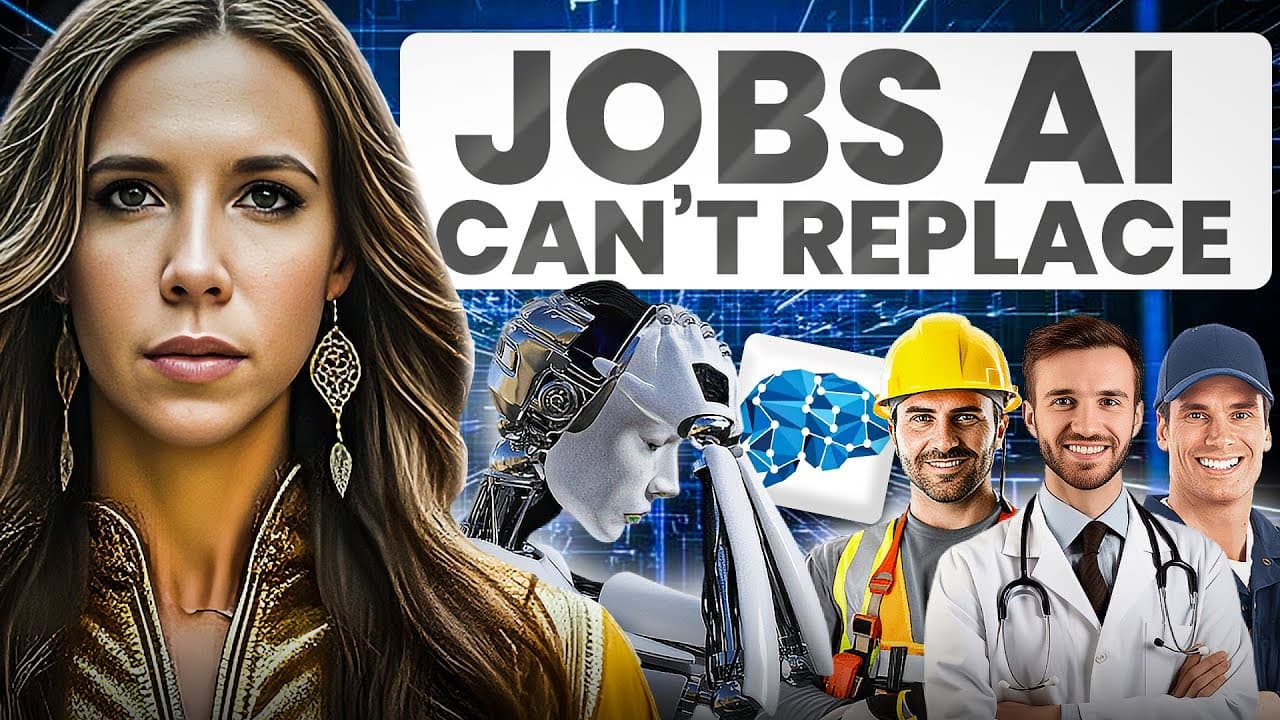
Build career resilience by moving beyond routine intellectual work and developing value rooted in physical presence, deep expertise, trusted relationships, exclusive access, creative problem solving, or high-stakes judgment. Learn continuously, identify the portion of your work that specifically requires you, and use AI to strengthen your capabilities instead of competing with it at tasks automation can already perform.
Transcript
The next three years you and I are living inside of will reshape the job market more dramatically than any period in human history. And unlike past industrial revolutions that unfolded over decades, this transformation is happening in months. While the world debates whether AI will take our jobs, I'm here to tell you something more urgent. It alrea... Read More
Key Insights
- AI is replacing mundane intellectual labor, particularly routine document review, basic investment management, standard call-center queries, and entry-level administrative work. The transcript contrasts this shift with the Industrial Revolution, which primarily replaced human muscle rather than repetitive cognitive tasks.
- Physical-world work has greater staying power because AI is not yet as capable as humans at physical manipulation. Skilled trades such as plumbing, electrical work, and HVAC, along with healthcare involving physical diagnosis and treatment, retain value through necessary real-world presence.
- The key to moving beyond entry-level work is expanding the value offered beyond tasks AI can perform. A financial adviser, for example, can add tax strategy, relationship capital, exclusive investment access, and personalized service based on understanding a client’s life story.
- Deep learning is the ability to investigate a subject, gather information, ask useful questions, acquire expertise, and make decisions. The transcript argues that a PhD can teach this capacity, but sustained focus rather than a formal degree is the essential requirement.
- Career mastery requires committing to a subject for one or two years and learning alongside peers who encourage improvement. The subject might be programming, AI, mathematics, or application writing, because the central goal is developing confidence that difficult capabilities can be mastered.
- Relationship capital is a defense against automation when it creates trust-based networks, off-market deals, or access to exclusive opportunities. Basic transactional services are vulnerable, while professionals who connect clients with private equity, hedge funds, startup investments, or unavailable listings remain more valuable.
- Strategic orchestration is the ability to manage human-AI hybrid teams and make consequential judgments when information is incomplete. These responsibilities are harder to automate because they combine coordination, contextual understanding, accountability, and decision-making under uncertain, high-stakes conditions.
- The practical career question is which portion of a role specifically requires a human professional. If AI can perform 80% of someone’s work, the recommended response is to identify the remaining 20% involving unique expertise, judgment, relationships, or service and concentrate on strengthening it.
Install to Summarize YouTube Videos and Get Transcripts
Explore YouTube Video Summarizer or Get YouTube Transcript Extractor
Questions & Answers
Q: How can I build a career that AI cannot easily replace?
Build career resilience by moving past routine entry-level tasks and developing capabilities tied to physical presence, deep specialization, trusted relationships, exclusive access, creative problem solving, or high-stakes judgment. Learn difficult subjects deeply, use AI as a tool, and expand your work beyond basic deliverables. The central test is whether your contribution depends on expertise or human involvement that automation cannot readily reproduce.
Q: Which jobs are most vulnerable to AI automation?
The most vulnerable roles involve routine intellectual labor that can be standardized and repeated. Examples in the transcript include legal assistants and paralegals conducting routine document review, financial advisers managing basic stock portfolios, call-center representatives answering standard questions, and entry-level office or administrative workers. These jobs face pressure because AI agents can increasingly complete their core tasks without the same staffing levels.
Q: Why do skilled trades have staying power in an AI economy?
Skilled trades have staying power because they require physical presence, real-world manipulation, and responses to conditions that may differ at every worksite. Plumbing, electrical work, and HVAC are highlighted as examples. The transcript argues that AI will take a long time to match human physical manipulation, creating a protective moat around work that cannot be completed through software or standardized intellectual output alone.
Q: How should financial advisers adapt to AI automation?
Financial advisers should move beyond basic portfolio management, which the transcript describes as replaceable, and offer value that depends on strategy, trust, access, and personal knowledge. Possible additions include tax strategy, relationship capital, white-glove service, and connections to private equity, hedge funds, startup investments, or other exclusive opportunities. Understanding a client’s life story also makes the service more individualized and difficult to automate.
Q: What does learning to learn mean for career development?
Learning to learn means being able to approach an unfamiliar subject, investigate it deeply, gather relevant information, ask the right questions, and acquire enough expertise to make sound decisions. The transcript associates this ability with doctoral training but says a PhD is unnecessary. Instead, workers can build it through sustained focus, difficult practice, intellectual curiosity, and regular interaction with ambitious peers.
Q: How long should someone commit to developing a valuable skill?
The transcript recommends choosing a subject and committing to it for one or two years because becoming genuinely good at something takes sustained effort. The particular field can be programming, AI, mathematics, or writing applications. What matters is developing deep competence, surrounding yourself with peers who encourage improvement, and gaining confidence that you can master challenging material through persistent work.
Q: What should mid-career professionals do to remain valuable?
Mid-career professionals should expand their value beyond the basic tasks included in their current roles. They should identify exclusive access, trusted relationships, specialized knowledge, or irreplaceable expertise they can develop. If AI can perform 80% of their work, they should determine which 20% still requires their personal judgment, context, network, or attention, then invest heavily in strengthening that portion.
Q: Which human skills are hardest for AI to replicate?
The transcript identifies physical-world mastery, relationship capital, creative problem solving in novel situations, strategic orchestration, and judgment under uncertainty as difficult areas for AI to replicate. It also highlights high-touch personal service, off-market dealmaking, access to exclusive opportunities, managing human-AI teams, building products around deeply held interests, and producing work strong enough to generate organic word of mouth.
Summary & Key Takeaways
-
AI is already automating routine intellectual labor, including document review, basic portfolio management, standard customer queries, and administrative tasks. Work involving physical manipulation, specialized trades, personal trust, exclusive access, or complex human relationships has greater staying power because current AI systems cannot easily reproduce those capabilities or perform them independently.
-
The proposed career framework has three parts: move beyond entry-level contributions, develop the ability to learn deeply, and concentrate on capabilities AI cannot easily replicate. Professionals should expand basic services with strategic guidance, relationship capital, specialized expertise, exclusive opportunities, creative problem solving, or personal attention grounded in understanding each client’s circumstances.
-
Career resilience requires sustained learning, confidence in mastering difficult subjects, and commitment to valuable problems. Younger workers should replace mindless consumption with skill acquisition, while mid-career professionals should identify their irreplaceable expertise and relationships. Anyone whose work is largely automatable should focus intensely on the portion that still requires distinctly human judgment or involvement.
Read in Other Languages (beta)
Share This Summary 📚
Summarize YouTube Videos and Get Video Transcripts with 1-Click
Try YouTube Summary with ChatGPT & Claude or YouTube Transcript Generator
Explore More Summaries from Julia McCoy 📚






Summarize YouTube Videos and Get Video Transcripts with 1-Click
Try YouTube Summary with ChatGPT & Claude or YouTube Transcript Generator