Why Did WTC Building 7 Collapse on 9/11?
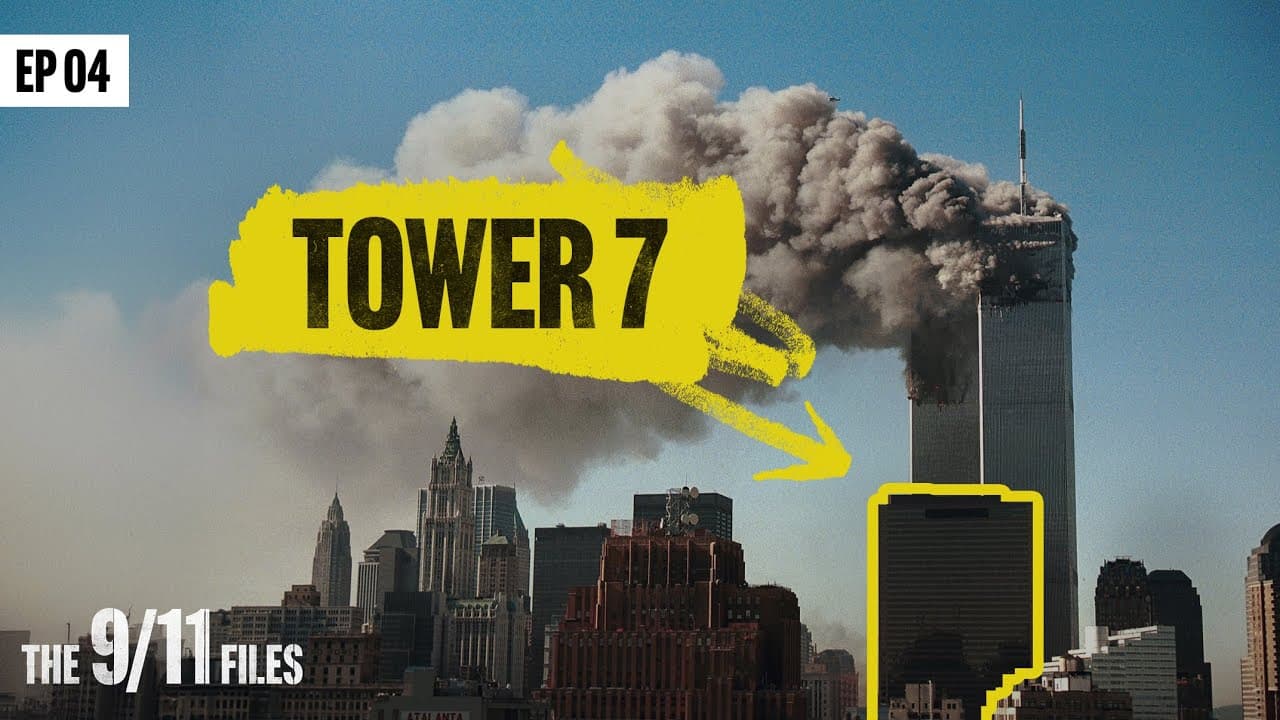
TL;DR
World Trade Center Building 7, a 47-story steel high-rise, collapsed at 5:20 p.m. on 9/11 despite no plane hitting it, and the 577-page 9/11 Commission report never explains why. NIST blamed fire-driven thermal expansion failing a single girder, but an independent 2020 study by Professor Leroy Hulsey concluded office fires could not have caused it.
Transcript
If you wanted conspiracy theories to flourish after the 9/11 attacks, here's what you'd do. You'd suppress video evidence of the attacks themselves. You'd ship the rubble from the attacks overseas immediately without looking at it. You'd call everyone who disputed the official narrative crazy or a criminal. You'd engage in a campaign of very ob... Read More
Key Insights
- World Trade Center Building 7 was a 47-story steel-frame high-rise located about a football field's length from the North Tower, on the other side of Vessie Street, and it collapsed at 5:20 p.m. on 9/11 without any plane striking it.
- The 9/11 Commission report is 577 pages long but contains no explanation for why Building 7 fell, while the collapse of the Twin Towers received extensive coverage, an omission that fueled decades of questions.
- Building 7 housed notable tenants whose records were destroyed, including the New York City Office of Emergency Management, the Secret Service's New York Field Office on floors 9 and 10, a secret CIA office on the 25th floor, and a Department of Defense office.
- NIST's explanation is that thermal expansion of steel beams, not melting, caused a connection tying girder 2001A to column 79 to fail; the girder walked 6.25 inches off its seat, triggering a progressive collapse spreading downward through the building.
- Comparable steel-frame buildings survived worse fires: Philadelphia's 1 Meridian Plaza burned 18 hours in 1991, LA's First Interstate Bank burned in 1988, and London's Grenfell Tower burned over 24 hours in 2017, yet none collapsed like Building 7 did after 7 hours.
- Steel columns were shipped to mills as far away as Asia without ever being examined, per a New York Times article five months after the attacks, making it nearly impossible for engineers to determine why the buildings collapsed.
- Professor Leroy Hulsey of the University of Alaska Fairbanks, supported by Architects and Engineers for 9/11 Truth, released a 2020 study concluding office fires could not have produced enough thermal expansion to fail the girder, pointing instead to controlled demolition.
- The widely circulated collapse video is selectively edited; the unedited footage shows Building 7 came down in two stages, with the penthouse collapsing first and then the rest of the building, leaving more questions than it answers.
Install to Summarize YouTube Videos and Get Transcripts
Explore YouTube Video Summarizer or Get YouTube Transcript Extractor
Questions & Answers
Q: What was World Trade Center Building 7 and when did it collapse?
World Trade Center Building 7 was a 47-story steel-frame high-rise located about a football field's length away from the North Tower on the other side of Vessie Street. It collapsed at 5:20 p.m. on the afternoon of September 11th, 2001, hours after the Twin Towers fell. Notably, no plane struck Building 7, and a building standing between it and the North Tower did not collapse, which fueled intense questions about why Building 7 came down at all.
Q: Why is Building 7's collapse considered suspicious?
Building 7 is suspicious because no plane hit it, yet it collapsed symmetrically into its own footprint at near-freefall acceleration after only about 7 hours of burning. The 577-page 9/11 Commission report gives no explanation for the collapse. Widely circulated video appears to show it falling all at once, and the debris was removed immediately and shipped to Asia. Comparable steel-frame buildings elsewhere survived much longer, hotter fires without collapsing, making Building 7's failure unusual.
Q: What did NIST say caused Building 7 to collapse?
According to NIST, the National Institute for Standards and Technology, the collapse of the Twin Towers earlier that morning damaged water mains, so the building's sprinkler systems failed, and fire chiefs decided not to fight the fires. NIST concluded that thermal expansion of steel beams, not complete melting of steel, caused the connections tying girder 2001A to column 79 to fail. The girder walked 6.25 inches off its seat, precipitating a progressive collapse that started in one area and spread downward through the building due to gravity.
Q: What did Professor Leroy Hulsey's independent study conclude?
Professor Leroy Hulsey of the University of Alaska at Fairbanks, supported by a group called Architects and Engineers for 9/11 Truth, conducted an independent study released in 2020. He found that office fires of the kind in Building 7 could not have produced sufficient thermal expansion to cause the crucial girder to fail, calling it impossible. His team also found that NIST's explanation does not account for the video evidence showing the entire building coming down all at once in a total collapse rather than a progressive one, concluding a controlled demolition was the only trigger.
Q: How did other steel buildings perform in fires compared to Building 7?
The video cites several steel-frame buildings that survived severe fires without collapsing. In 1991, the 38-story 1 Meridian Plaza in Philadelphia had an 8-floor fire that burned for 18 hours, yet the building did not collapse. In 1988, the 62-story First Interstate Bank building in Los Angeles had a massive fire starting on the 12th floor with no structural failure. In 2017, the 24-story Grenfell Tower in London burned for over 24 hours, yet its internal steel withstood the fire. Building 7 collapsed after just 7 hours.
Q: Why couldn't engineers fully investigate the collapse?
Investigation was severely hampered because the debris was removed almost immediately. According to a New York Times article published five months after the attacks, an unknown number of steel columns was sent off to mills as far away as Asia without ever having been examined or saved. This made it nearly impossible for engineers to answer why buildings designed to sustain a jet impact completely collapsed. What analysis occurred was done by volunteers at a scrapyard in Jersey City, New Jersey, and the FEMA investigation also relied on volunteers.
Q: What government agencies had offices in Building 7?
Building 7 housed a notable list of tenants, and records from several were destroyed in the collapse. The New York City Office of Emergency Management, the agency responsible for responding to the 9/11 attacks, was located there. The 9th and 10th floors held the New York Field Office of the United States Secret Service, whose equipment and records were destroyed. The 25th floor was home to a secret CIA office whose records were also destroyed, and a Department of Defense office was across the same floor, though its purpose there is unclear.
Q: Is the widely circulated video of Building 7's collapse accurate?
The video argues that the widely circulated footage of Building 7 coming down is selectively edited, which is one issue with the controlled demolition hypothesis. In reality, the building did not exactly collapse all at once. The unedited full video shows it came down in two stages, with the penthouse collapsing first and then very quickly the rest of the building going. According to the narrator, this unedited video leaves more questions than it answers and calls the official NIST narrative into question without fully resolving what happened.
Summary & Key Takeaways
-
The video argues that the US government's actions after 9/11, suppressing video evidence, shipping rubble overseas unexamined, avoiding investigations and public trials, and dumping Bin Laden's body at sea, created conditions in which conspiracy theories flourished and distracted from the government's alleged central role in facilitating the attacks.
-
The central focus is World Trade Center Building 7, a 47-story steel high-rise that collapsed at 5:20 p.m. on 9/11 despite no plane hitting it. Its collapse went unexplained in the 577-page 9/11 Commission report and prompted a Senate investigation and lasting public suspicion.
-
NIST attributed the collapse to fire-driven thermal expansion failing girder 2001A at column 79, causing progressive collapse. Critics, including Professor Leroy Hulsey's 2020 independent study, dispute this, noting the building fell symmetrically at near-freefall while similar buildings survived far longer fires without collapsing.
Read in Other Languages (beta)
Share This Summary 📚
Summarize YouTube Videos and Get Video Transcripts with 1-Click
Try YouTube Summary with ChatGPT & Claude or YouTube Transcript Generator
Explore More Summaries from Tucker Carlson 📚






Summarize YouTube Videos and Get Video Transcripts with 1-Click
Try YouTube Summary with ChatGPT & Claude or YouTube Transcript Generator