What Is The Rise Of The New Normal Reich?
TL;DR
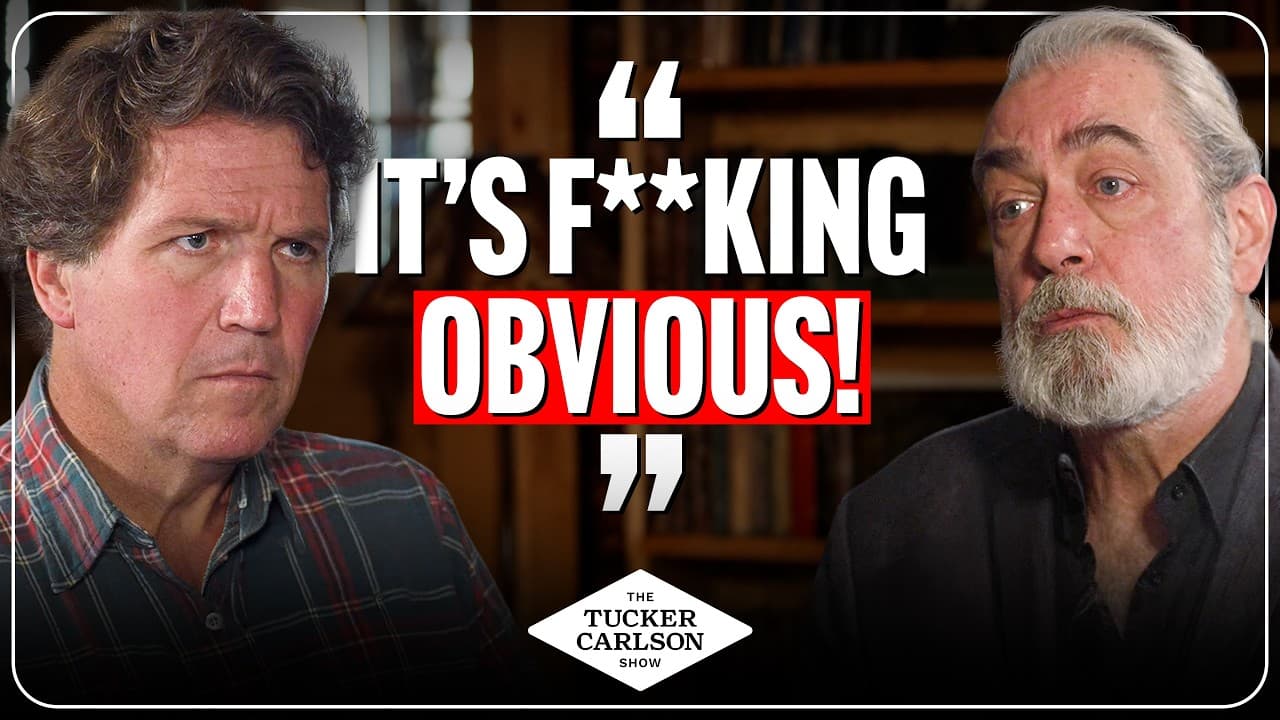
The conversation centers on censorship, book bans, and the portrayal of Covid dissent as extremist. It discusses CJ Hopkins and his book, the 2020 censorship climate, and the claim that authorities censor the truth to protect power. The interview also touches on how perceived cult like behavior emerges in society during public crises.
Transcript
Now, if there's one hallmark of totalitarianism of the 1930s, it's banning books. Book burning. Remember that? We're against it. That couldn't possibly happen now. Oh, it happens a lot. More than it happened in the 1930s. In fact, we're going to talk to a man whose book became a bestseller and then was banned by the government. His crime, he accura... Read More
Key Insights
- Book bans and censorship are presented as a tool used by authorities to suppress dissent and control the narrative.
- Cultural shifts during the 2020 period are described as creating a new normal that resembles an authoritarian climate.
- The narrator compares suppression of dissent to cult like dynamics where questioning the official story is branded as extremism.
- Dissenting voices are framed as threats to power, leading to isolation and punitive measures against critics.
- The speaker emphasizes data scrutiny and critical thinking as antidotes to propaganda and mass conformity.
- The discussion cites the process of banning a book and the subsequent republishing as a form of resistance to censorship.
- The host describes a personal experience of being labeled an extremist and the social consequences that followed.
- The interview highlights how online and media narratives can amplify fear and suppress alternative viewpoints.
Install to Summarize YouTube Videos and Get Transcripts
Explore YouTube Video Summarizer or Get YouTube Transcript Extractor
Questions & Answers
Q: A real search query question about the video (e.g. 'How to...', 'What is...', 'Why does...', 'When should...'). Question 1
How does the book The Rise of the New Normal Reich relate to modern censorship and authoritarian attitudes? The answer explains that the book argues authorities censor the truth to protect power, a claim that is explored through Hopkins experience with book bans and a discussion of how public opinion can be shaped by labeling dissent as extremist.
Q: Question 2
What is described as the reaction of society to Covid skepticism in the interview? The answer notes that critics were labeled as Nazis or extremists, censored, and ostracized, creating a climate where questioning official narratives was met with harsh social penalties and professional repercussions.
Q: Question 3
Why does the interviewer compare the dissenting view to a cult experience? The answer explains that the narrative frames alternate realities created by belief as separate from everyday reality, with ritualistic behaviors and conformity resembling cult dynamics rather than open debate.
Q: Question 4
What personal experience does CJ Hopkins share about censorship and labeling? The answer highlights Hopkins recounting being accused of anti semitism and extremism for challenging the official pandemic narrative, illustrating the social consequences of dissent.
Q: Question 5
How is the term new normal Reich used in the discussion? The answer describes it as the establishment’s phrase for a preordained social order during the pandemic, a term Hopkins says originated with authorities and used to normalize restrictive measures.
Q: Question 6
What role does data scrutiny play in the conversation? The answer states that Hopkins examined data and media reports to question the official Covid narrative, arguing that data inconsistency and propaganda warranted public skepticism.
Q: Question 7
What is the significance of republishing banned books according to the dialogue? The answer explains that republishing serves to counter censorship, preserve controversial ideas, and enable readers to access alternative narratives that authorities may seek to suppress.
Q: Question 8
How does the conversation frame the relationship between censorship and power? The answer asserts that censorship serves to maintain power by controlling the discourse, while censorship resistant actions like publishing banned works challenge institutional authority and encourage critical examination.
Summary & Key Takeaways
-
The discussion explains how a book critical of Covid measures was banned and how censorship can shape public discourse, with emphasis on the authors experience and the broader cultural context.
-
The interview analyzes social dynamics during crises, arguing that dissent is framed as extremism, and describes how censorship and ostracism were used to enforce conformity in the public sphere.
-
The conversation concludes with the idea of republishing banned works to counter suppression and preserve controversial viewpoints for readers who seek alternative narratives.
Read in Other Languages (beta)
Share This Summary 📚
Summarize YouTube Videos and Get Video Transcripts with 1-Click
Try YouTube Summary with ChatGPT & Claude or YouTube Transcript Generator
Explore More Summaries from Tucker Carlson 📚
Summarize YouTube Videos and Get Video Transcripts with 1-Click
Try YouTube Summary with ChatGPT & Claude or YouTube Transcript Generator