Why Are We Constantly Tired?
TL;DR
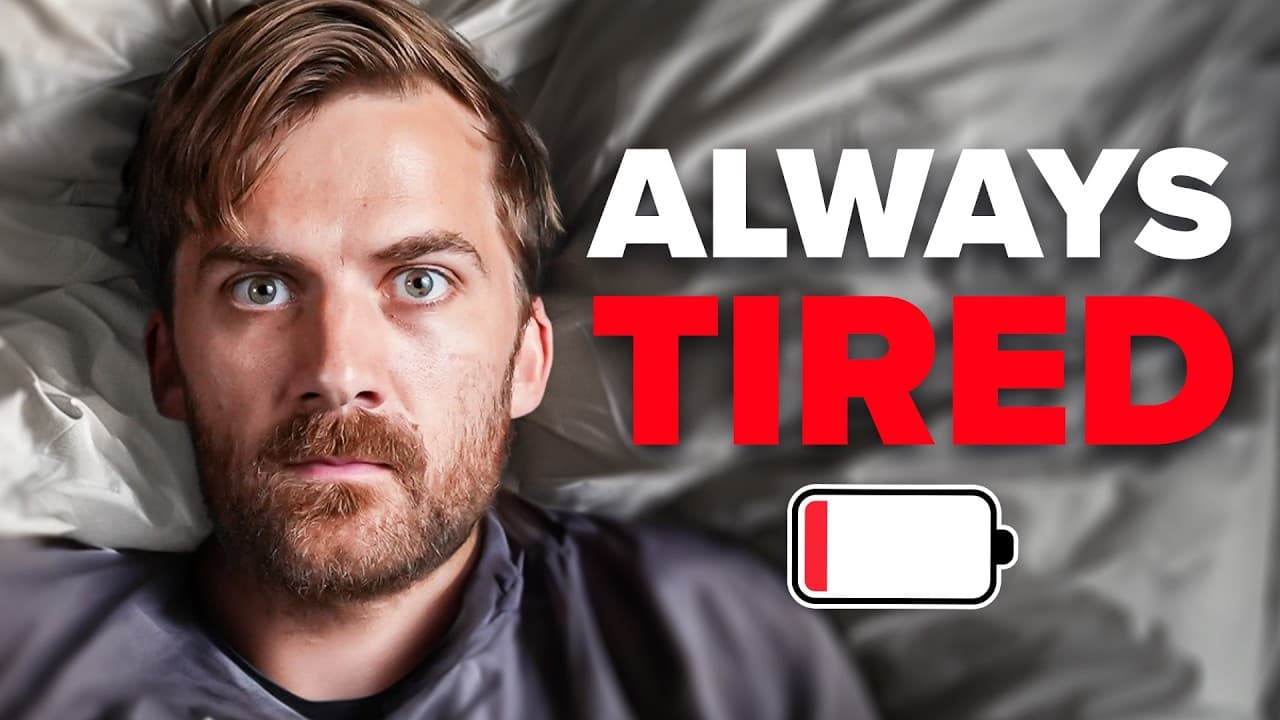
Modern life leads to constant fatigue due to decision overload and evolutionary mismatch. Our brains, adapted for simpler times, struggle with today's complex decision-making, causing mental fatigue. Strategies like decision reduction and aligning sleep with natural chronotypes can help alleviate tiredness.
Transcript
- Year after year, more of us are quietly asking the internet, why am I so tired? Searching for answers to something we all feel but don't really understand. Every morning we're waking up feeling a little bit more worn out than we were the day before. Our afternoon slumps are a little slumpier. So much so that companies make fun of us for this. (br... Read More
Key Insights
- Modern humans make approximately 35,000 decisions daily, leading to mental fatigue.
- Glutamate buildup in the brain from decision-making can cause feelings of tiredness.
- Biphasic sleep, or taking naps, can improve brain function and reduce heart disease risk.
- Caffeine blocks adenosine, delaying fatigue, but can lead to an afternoon crash.
- Chronotypes are genetic predispositions to sleep at certain times, affecting sleep quality.
- Decision fatigue can be mitigated by planning outfits and meals in advance.
- Caffeine naps, combining a short nap with caffeine intake, can effectively boost energy.
- Aligning daily schedules with natural chronotypes can improve sleep quality and reduce fatigue.
Install to Summarize YouTube Videos and Get Transcripts
Explore YouTube Video Summarizer or Get YouTube Transcript Extractor
Questions & Answers
Q: Why are modern humans so tired even with less physical work?
Modern humans experience fatigue due to mental overload from making approximately 35,000 decisions daily. This decision-making process leads to glutamate buildup in the brain, causing mental fatigue. The evolutionary mismatch between our caveman brains and modern life's demands exacerbates this tiredness, despite reduced physical labor.
Q: How does glutamate affect fatigue levels?
Glutamate, a neurotransmitter, is essential for decision-making processes in the brain. However, as decisions accumulate, glutamate builds up, clogging neural pathways and making further decision-making more difficult. This buildup results in mental fatigue, contributing to the feeling of being constantly tired.
Q: What is biphasic sleep and how does it help with fatigue?
Biphasic sleep, commonly known as taking naps, involves resting for a short period during the day. This practice helps clear out accumulated glutamate and adenosine, refreshing the brain and reducing fatigue. Cultures practicing biphasic sleep show increased brain function and a lower risk of heart disease.
Q: How does caffeine influence tiredness and energy levels?
Caffeine blocks the neurotransmitter adenosine, which signals the brain to feel tired, delaying fatigue temporarily. However, once caffeine wears off, accumulated adenosine floods the brain, causing an afternoon crash. Timing caffeine intake strategically can help manage energy levels throughout the day.
Q: What are chronotypes and their impact on sleep?
Chronotypes are genetic predispositions dictating optimal sleep times for individuals. Aligning sleep schedules with one's chronotype can enhance sleep quality and reduce fatigue. However, societal norms often conflict with natural chronotypes, leading to sleep deprivation and increased tiredness.
Q: How can decision fatigue be reduced in daily life?
Decision fatigue can be mitigated by planning routine aspects of life in advance. For example, choosing outfits and meals for the week ahead reduces daily decision-making, conserving mental energy. This strategy helps minimize glutamate buildup and maintain higher energy levels throughout the day.
Q: What is a caffeine nap and how does it work?
A caffeine nap involves consuming caffeine just before taking a short nap. During the nap, the body clears adenosine, and as the caffeine kicks in, it provides a heightened energy boost. This combination effectively combats fatigue, enhancing alertness and cognitive performance upon waking.
Q: How can aligning schedules with chronotypes improve energy levels?
Aligning daily activities with one's chronotype ensures that sleep occurs during optimal times, enhancing sleep quality. This alignment helps the body effectively clear fatigue-inducing chemicals like glutamate and adenosine. Understanding and respecting natural sleep patterns can significantly reduce tiredness and improve overall energy.
Summary & Key Takeaways
-
Modern life contributes to fatigue through decision overload and evolutionary mismatch. Our brains, designed for simpler times, are overwhelmed by today's complex decision-making, resulting in mental fatigue. Strategies like reducing daily decisions and aligning sleep with natural chronotypes can help alleviate constant tiredness.
-
The prefrontal cortex is heavily taxed by modern decision-making, leading to glutamate buildup and fatigue. Taking naps and managing caffeine intake can help clear these chemicals and improve energy levels. Understanding personal chronotypes and adjusting sleep schedules accordingly can also enhance sleep quality.
-
Caffeine temporarily blocks adenosine, delaying tiredness, but can result in an afternoon crash. Biphasic sleep and caffeine naps offer effective solutions for managing fatigue. By planning meals and outfits ahead of time, decision fatigue can be minimized, leading to better overall energy management.
Read in Other Languages (beta)
Share This Summary 📚
Summarize YouTube Videos and Get Video Transcripts with 1-Click
Try YouTube Summary with ChatGPT & Claude or YouTube Transcript Generator
Explore More Summaries from Johnny Harris 📚






Summarize YouTube Videos and Get Video Transcripts with 1-Click
Try YouTube Summary with ChatGPT & Claude or YouTube Transcript Generator