What Are AI Agents and How Do They Work?
TL;DR
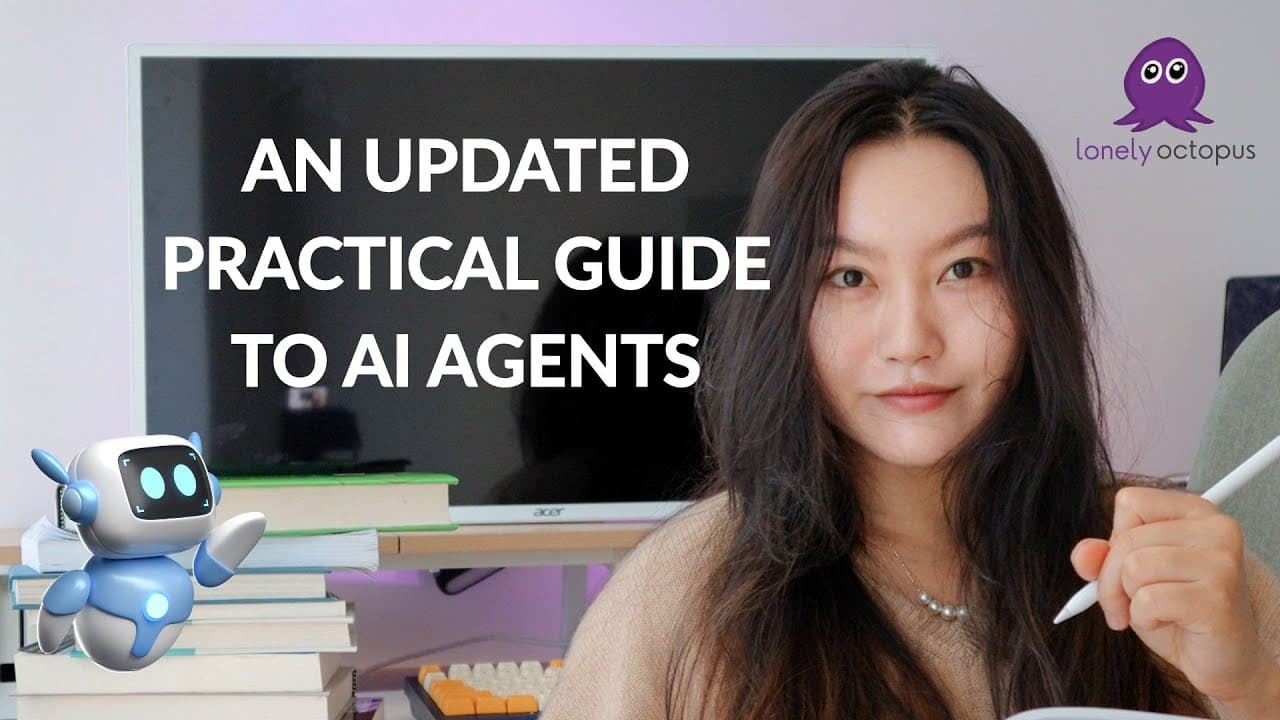
AI agents are autonomous software systems that pursue goals and complete tasks for users. They consist of six key components: models, tools, knowledge and memory, audio and speech, guardrails, and orchestration. Evaluations (evals) are essential for measuring their performance and include types such as LM as a judge, rule-based evaluations, and human evaluations, ensuring effectiveness and continuous improvement.
Transcript
Hello friends, how is it going? Let me refresh my page. Hello. Hello. Live in 60 seconds. Yes, I am live now. How are y'all doing? Good morning, good afternoon, good evening, good evening. Should that be the latest? Yes. How's everyone doing? Hello, Experiences Inv. I would love to see it, but I'm in Europe, so it'll be 2 a.m. for me. Yes, do not w... Read More
Key Insights
- AI agents are autonomous software systems that use AI to pursue goals and complete tasks on behalf of users. They are goal-oriented, autonomous, and user-focused.
- The six components of AI agents include models, tools, knowledge and memory, audio and speech, guardrails, and orchestration.
- Prompt engineering is crucial for instructing AI models on how to use tools, access knowledge, and interact with users effectively.
- Evaluations, also known as evals, are essential for systematically measuring and improving AI agent performance through feedback loops.
- Three main types of evals are LM as a judge, rule-based evaluations, and human evaluations, each serving different purposes.
- Context engineering, an evolution of prompt engineering, focuses on providing AI models with the right context to perform tasks effectively.
- Sharing context and full agent traces is crucial in multi-agent systems to prevent misinterpretations and ensure reliable outcomes.
- Context engineering involves managing the context window of AI models, ensuring relevant information is available for task completion.
Install to Summarize YouTube Videos and Get Transcripts
Explore YouTube Video Summarizer or Get YouTube Transcript Extractor
Questions & Answers
Q: What are AI agents?
AI agents are autonomous software systems designed to pursue goals and complete tasks on behalf of users. They are characterized by their goal-oriented, autonomous, and user-focused nature. AI agents typically encompass roles that can be performed autonomously, such as customer service or sales assistance, using AI technologies.
Q: What is prompt engineering?
Prompt engineering is the art of designing and building dynamic systems that provide AI models with the right information in the right format at the right time. It involves communicating with AI to instruct models on using tools, accessing knowledge, and interacting effectively with users, ensuring the desired outcomes are achieved.
Q: What are the types of evaluations for AI agents?
There are three main types of evaluations for AI agents: LM as a judge, rule-based evaluations, and human evaluations. LM as a judge involves using AI to grade the output for quality and accuracy. Rule-based evaluations use patterns or keyword matching, while human evaluations involve manual scoring by human reviewers.
Q: What is context engineering?
Context engineering is an evolution of prompt engineering that focuses on providing AI models with the right context to perform tasks effectively. It involves managing the context window, which is the working memory of AI models, ensuring relevant information is available for task completion, and optimizing the use of tools and knowledge.
Q: Why is sharing context important in multi-agent systems?
Sharing context in multi-agent systems is crucial to prevent misinterpretations and ensure reliable outcomes. Without shared context, agents may make independent decisions that conflict, leading to failures in task completion. Providing full agent traces and context helps align agents' actions and improve overall system reliability.
Q: How do evals improve AI agent performance?
Evals systematically measure AI agent performance by testing outputs against specific criteria. This feedback loop allows for analyzing results and refining prompts, leading to improved agent behavior over time. Evals help identify areas for improvement, ensuring agents meet desired performance standards and user expectations.
Q: What is the importance of orchestration in AI agents?
Orchestration involves deploying, monitoring, and improving AI agents in production environments. It ensures agents operate as intended, preventing unintended behaviors and maintaining performance standards. Effective orchestration involves setting up frameworks to monitor agents, making necessary adjustments, and ensuring agents remain aligned with their goals.
Q: How does context engineering relate to the context window?
Context engineering involves managing the context window, which is the working memory of AI models. The context window holds relevant information needed for task completion. Effective context engineering ensures the right information is included, optimizing the model's performance and ensuring tasks are completed accurately and efficiently.
Summary & Key Takeaways
-
AI agents are designed to autonomously pursue goals and complete tasks on behalf of users. They consist of six components: models, tools, knowledge and memory, audio and speech, guardrails, and orchestration. Prompt engineering is vital for instructing AI models on using these components effectively.
-
Evaluations, or evals, are crucial for measuring and improving AI agent performance. They include LM as a judge, rule-based evaluations, and human evaluations. Context engineering, an evolution of prompt engineering, focuses on providing AI models with the right context for task completion.
-
In multi-agent systems, sharing context and full agent traces is essential to prevent misinterpretations and ensure reliable outcomes. Context engineering involves managing the context window, ensuring AI models have access to relevant information for effective task execution.
Read in Other Languages (beta)
Share This Summary 📚
Summarize YouTube Videos and Get Video Transcripts with 1-Click
Try YouTube Summary with ChatGPT & Claude or YouTube Transcript Generator
Explore More Summaries from Tina Huang 📚




Summarize YouTube Videos and Get Video Transcripts with 1-Click
Try YouTube Summary with ChatGPT & Claude or YouTube Transcript Generator