How to Lead Teams with Trust and Human Skills
TL;DR
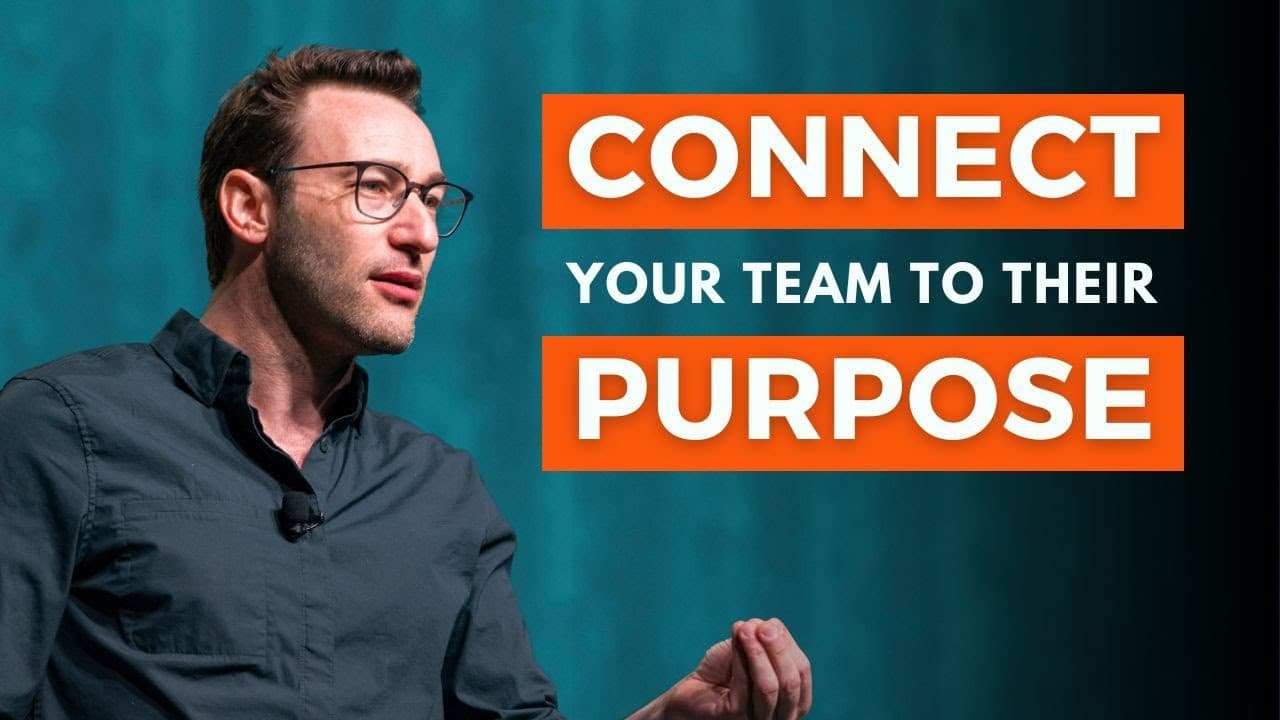
Put people first, teach leaders practical human skills, and protect trust even when economic pressure makes short-term sacrifices tempting. Effective leadership combines empathy with accountability, connects employees emotionally to the organization’s purpose, and treats leadership as a distinct discipline rather than assuming strong individual performers automatically know how to lead others.
Transcript
good afternoon everyone uh thank you so much for joining us today I am super excited for a conversation we're about to have with Simon cnnic my name if you haven't met is Alan Richardson and I have the pleasure of leading the talent strategy and services Solutions team here at RBC uh and we're very pleased to Welcome All of You our participants and... Read More
Key Insights
- Good leadership is concern for another person’s well-being in both difficult and favorable conditions. During the pandemic, many leaders returned to this basic practice by calling team members individually and asking how they were doing, demonstrating behavior that should not require a crisis.
- Short-termism is a source of declining organizational trust because leaders may use employees’ lives to manage quarterly and annual results. Mass layoffs intended to protect short-term numbers can create lasting damage to loyalty and require much longer to repair than financial performance.
- Human skills are essential professional capabilities that include active listening, empathy, effective confrontation, difficult conversations, and giving or receiving feedback. Calling them soft skills understates their importance and falsely suggests that they oppose the technical skills employees need to perform their work.
- Leadership is a different job from doing the work because a leader becomes responsible for people who perform the role the leader previously held. A successful salesperson and a successful sales manager therefore need different skill sets, making dedicated leadership preparation necessary.
- Organizational priorities communicate what leaders are willing to sacrifice. When growth, shareholder value, and customers appear above employees, workers may reasonably conclude that leadership will sacrifice people to protect numbers, regardless of statements claiming that employees are important.
- People-first organizations protect employees by accepting short-term financial sacrifices instead of sacrificing employees for short-term gains. This hierarchy supports trust over time because layoffs made to meet arbitrary targets can produce long-lasting organizational consequences that are difficult to reverse.
- Starting with why creates an emotional connection to an organization’s mission. Sinek argues that why engages the part of the brain associated with feelings and behavior, while how and what address rational and language functions, making purpose important for decisions and action.
- Effective leadership balances empathy and accountability rather than treating them as opposing choices. Too much pressure for performance can produce mercenary behavior and internal betrayal, while too much emphasis on harmony can eliminate accountability and prevent necessary work from being completed.
Install to Summarize YouTube Videos and Get Transcripts
Explore YouTube Video Summarizer or Get YouTube Transcript Extractor
Questions & Answers
Q: How can leaders build trust within their teams?
Leaders build trust by showing genuine concern for employees’ well-being, listening actively, demonstrating empathy, and handling difficult conversations effectively. Trust also depends on consistent priorities. If leaders claim to value people but sacrifice them whenever short-term targets are threatened, their actions undermine that message. Protecting employees during pressure and maintaining human connection in ordinary times make care credible.
Q: What human skills should organizations teach leaders?
Organizations should teach leaders how to listen actively, demonstrate empathy, give and receive feedback, conduct difficult conversations, and manage effective confrontation. These abilities are not secondary soft skills. They are human skills required for leading people. Employees often receive extensive training for technical work, but leadership positions require additional preparation because managing performers differs fundamentally from performing the job itself.
Q: Why is leadership different from being a strong individual performer?
Leadership changes the nature of a person’s responsibility. An individual performer completes the work, while a leader supports and directs the people who complete it. The transcript uses a salesperson and a sales manager as an example of roles requiring completely different skill sets. Technical competence may help a leader understand the work, but it does not automatically provide empathy, listening, feedback, or confrontation skills.
Q: Why should organizations put employees first?
Putting employees first signals that leaders will protect people rather than sacrifice them to preserve short-term results. Simon Sinek argues that organizations outperforming competitors over time tend to accept temporary financial pressure to protect employees. Mass layoffs used to meet arbitrary targets can damage trust and loyalty for a long time, while rebuilding financial numbers may take less time than rebuilding damaged relationships.
Q: How does starting with why influence employee behavior?
Starting with why connects employees emotionally to the organization and its mission. Sinek describes why as engaging the part of the brain responsible for feelings and behavior, while how and what engage rational and language functions. When people feel connected to a mission, they are more likely to make decisions and take actions that advance both that mission and the organization.
Q: How can leaders balance empathy with accountability?
Empathy and accountability can coexist, but balancing them is part of the art of leadership. An organization focused too heavily on performance can fill with people who undermine one another to reach numbers and secure personal rewards. An organization focused too heavily on harmony can lose accountability and productivity. Leaders must continually adjust between these extremes instead of relying on one fixed position.
Q: Why can mass layoffs damage organizational trust?
Mass layoffs can show employees that short-term numbers rank above their security and well-being. Even when layoffs protect an annual or quarterly target, they may create long-lasting damage to trust and loyalty across the organization. Sinek argues that rebuilding this trust can take much longer than rebuilding financial performance, making layoffs consequential beyond the immediate reduction in employees or costs.
Q: What did the pandemic reveal about effective leadership?
The pandemic showed that many leaders already understood the basic behavior required for human-centric leadership. Under severe pressure, they called team members individually, asked how they were doing, and focused on personal well-being. Sinek’s conclusion is that this conduct is simply good leadership. It should remain present during stable periods and should not depend on a crisis to activate concern for others.
Summary & Key Takeaways
-
Human-centric leadership begins with genuine concern for employees’ well-being. During the pandemic, many leaders called team members individually and asked how they were doing. Simon Sinek argues that this behavior is simply good leadership and should continue in both difficult and favorable conditions, rather than appearing only during a crisis.
-
Organizations extensively train employees for technical responsibilities but often provide little preparation when promoting them into leadership. Leaders need human skills such as active listening, empathy, feedback, confrontation, and difficult conversations. Managing people requires capabilities different from performing the work, as illustrated by the distinction between a salesperson and a sales manager.
-
Sustainable leadership requires balancing performance with care for people. Excessive emphasis on results can create internal competition and destructive behavior, while excessive emphasis on harmony can weaken accountability. Leaders must continually navigate between these extremes, prioritize people over short-term gains, and connect teams emotionally to a meaningful organizational purpose.
Read in Other Languages (beta)
Share This Summary 📚
Summarize YouTube Videos and Get Video Transcripts with 1-Click
Try YouTube Summary with ChatGPT & Claude or YouTube Transcript Generator
Explore More Summaries from Simon Sinek 📚



Summarize YouTube Videos and Get Video Transcripts with 1-Click
Try YouTube Summary with ChatGPT & Claude or YouTube Transcript Generator