How Did Changpeng Zhao Build the Binance Empire?
TL;DR
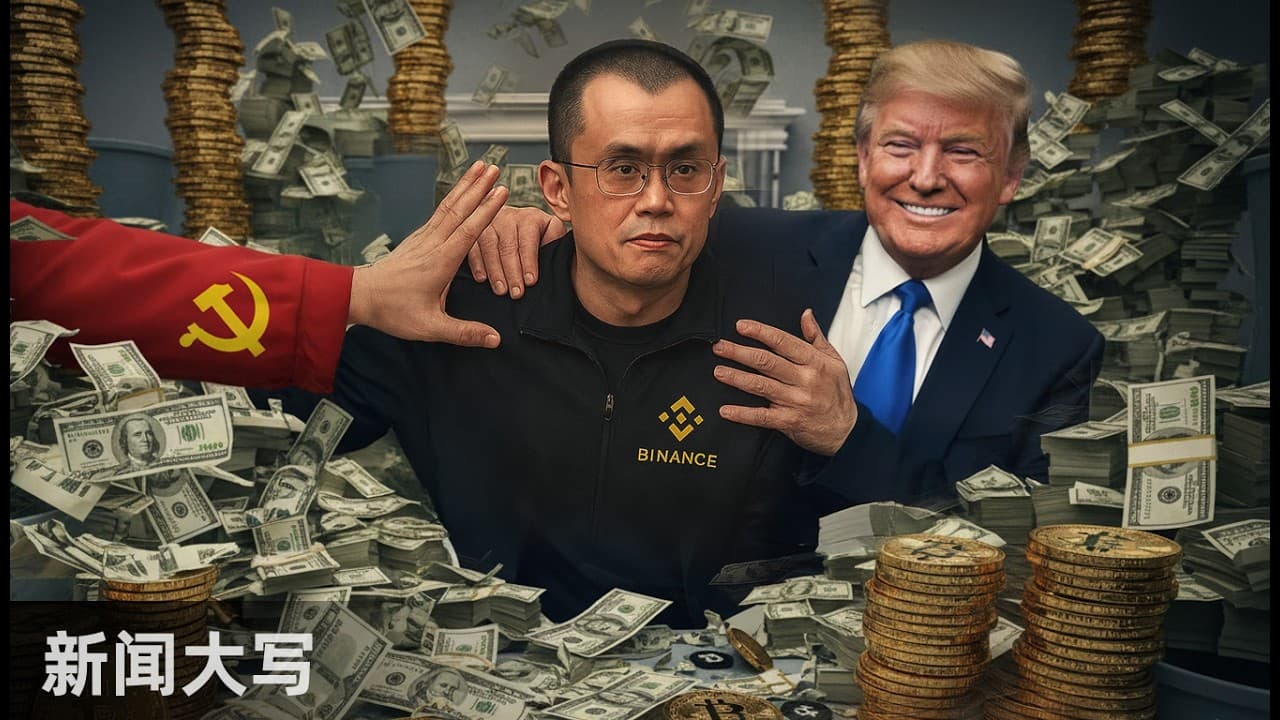
Changpeng Zhao built Binance into a dominant global crypto exchange by combining trading-system expertise, rapid execution, community growth, and aggressive expansion across jurisdictions. That strategy produced enormous wealth but also sustained regulatory conflict, culminating in a guilty plea, major financial penalties, four months in prison, and a full presidential pardon from Donald Trump on October 22, 2025.
Transcript
U.S. President Donald Trump. President Trump. President Trump. Has just issued a pardon— A presidential pardon for the founder of a major company — a global crypto exchange. One of the most influential figures in the crypto world— Changpeng Zhao. Changpeng Zhao. CZ Zhao. He had pleaded guilty to money-laundering related charges. A case many say was... Read More
Key Insights
- Zhao’s technical foundation began with a 286 computer that his financially struggling father bought for nearly $7,000. The machine sparked his interest in coding and helped direct him from an abandoned biology major toward computer science, electronic markets, and financial technology.
- Zhao’s professional advantage was his combined knowledge of software and financial trading. He built electronic matching systems at the Tokyo Stock Exchange, developed futures-trading software for Bloomberg Tradebook, and later supplied high-frequency trading systems to major Wall Street firms operating in China.
- Zhao’s commitment to Bitcoin became concrete in 2014 when he sold a Shanghai apartment worth about $1 million and converted the proceeds into Bitcoin. The decision followed Bitcoin’s first major crash and reflected his willingness to accept concentrated personal risk when he believed in a technology.
- Binance’s early growth was powered by rapid execution, community building, a wide selection of tokens, user-friendly design, and an ICO involving BNB. Within six months of its July 2017 launch, daily trading volume reached $6 billion, and overwhelming demand temporarily forced it to suspend registrations.
- China’s 2017 ban on ICOs and domestic crypto exchanges pushed Binance toward international expansion. Zhao moved servers and operations abroad, then pursued opportunities in Japan, Malta, and Singapore, leaving each location when licensing or regulatory conditions became unfavorable.
- Binance’s lack of a stable regulatory home was both a competitive strategy and a major liability. Moving between jurisdictions helped the exchange preserve access to global customers, but the approach also intensified questions about licensing, oversight, compliance, and responsibility for activity on the platform.
- Binance’s scale became extraordinary during the crypto boom. The exchange processed $34 trillion in trades during 2021, earned more than $20 billion in annual revenue according to the narrative, and handled roughly half of global crypto trading at the market’s peak.
- Zhao’s regulatory confrontation ended with severe personal and corporate consequences before his pardon. The description states that enforcement came from the CFTC, SEC, and DOJ, followed by a guilty plea, substantial financial penalties, four months in prison during 2024, and Trump’s full pardon in 2025.
Install to Summarize YouTube Videos and Get Transcripts
Explore YouTube Video Summarizer or Get YouTube Transcript Extractor
Questions & Answers
Q: How did Changpeng Zhao become interested in computers?
Changpeng Zhao became interested in computing after his father bought him a 286 computer while the family was living modestly in Vancouver. The machine cost nearly $7,000, described as almost the family’s life savings. Zhao immersed himself in coding, later abandoned biology at McGill University, and switched to computer science before eventually leaving university without completing his degree.
Q: What jobs prepared Changpeng Zhao to create Binance?
Changpeng Zhao first built software for electronic trade-matching systems in the technology department of the Tokyo Stock Exchange. He then joined Bloomberg’s Tradebook team on Wall Street, where he developed futures-trading software for major investment banks. After returning to China, he co-founded Fusion Systems, which created high-frequency trading systems for firms including Goldman Sachs and Credit Suisse.
Q: Why did Changpeng Zhao sell his apartment for Bitcoin?
Changpeng Zhao sold his Shanghai apartment because he had become convinced that Bitcoin’s decentralized and borderless design could transform global money transfers. He first heard a detailed explanation of Bitcoin during a 2013 poker game. In 2014, despite a major price decline, he sold the apartment, valued at about $1 million, and converted the proceeds into Bitcoin.
Q: How did Binance grow so quickly after launching?
Binance grew through fast product execution, strong engagement with crypto communities, a broad selection of tradable tokens, and a user experience that attracted customers across countries. Zhao funded the July 2017 launch through an ICO involving BNB. By January 2018, daily trading volume had reached $6 billion, while demand became so intense that new registrations were temporarily suspended.
Q: How did China’s crypto ban affect Binance?
China’s September 2017 prohibition on ICOs and domestic cryptocurrency exchanges forced Binance to leave its original market only months after launching. Zhao announced compliance, exited the Chinese market, and began relocating servers and operations. Although disruptive, the crackdown also pushed Binance to become global and helped it attract users displaced by the closure or restriction of other Chinese platforms.
Q: Why did Binance move between different countries?
Binance moved because Zhao repeatedly sought jurisdictions that appeared receptive to cryptocurrency businesses while avoiding places where licenses were denied or restrictions intensified. The company explored Japan, Malta, and Singapore after leaving China. Japan ordered Binance to stop operating without a license, Malta tightened its position under pressure, and Binance eventually withdrew from Singapore after failing to obtain approval.
Q: What legal consequences did Changpeng Zhao face?
Changpeng Zhao faced enforcement pressure described as coming from the CFTC, SEC, and DOJ. He pleaded guilty to charges related to money laundering compliance, while Binance and Zhao incurred major financial penalties. The description states that he served four months in prison in 2024. These events represented the personal cost of Binance’s long-running conflict with American regulators and compliance authorities.
Q: Why did Donald Trump pardon Changpeng Zhao?
Donald Trump said many people had told him that Changpeng Zhao had done nothing wrong and had been persecuted by officials under the Biden administration. Trump granted a full and unconditional pardon on October 22, 2025. The narrative also mentions rumors of private lobbying and reported connections involving Trump family crypto ventures, but presents those points as allegations rather than established facts.
Summary & Key Takeaways
-
Changpeng Zhao left China for Canada with his mother and sister in 1989, reuniting with his father in Vancouver. His family struggled financially, but a costly 286 computer introduced him to programming. He later switched from biology to computer science at McGill University before leaving without completing his degree.
-
Zhao developed electronic trading technology at the Tokyo Stock Exchange and Bloomberg Tradebook before co-founding Fusion Systems in Shanghai. After discovering Bitcoin during a 2013 poker game, he sold his Shanghai apartment and bought Bitcoin. Work at Blockchain.com and OKCoin then prepared him to launch Binance in July 2017.
-
Binance expanded rapidly through its BNB token, broad asset selection, usable platform, and loyal community. Its borderless operating strategy helped it survive regulatory pressure but generated conflicts with authorities. After enforcement actions, financial penalties, a guilty plea, and four months in prison, Zhao received Trump’s presidential pardon in 2025.
Read in Other Languages (beta)
Share This Summary 📚
Summarize YouTube Videos and Get Video Transcripts with 1-Click
Try YouTube Summary with ChatGPT & Claude or YouTube Transcript Generator
Explore More Summaries from 王志安 📚



Summarize YouTube Videos and Get Video Transcripts with 1-Click
Try YouTube Summary with ChatGPT & Claude or YouTube Transcript Generator