How Do Anthropic and OpenAI View AI Differently?
TL;DR
Anthropic is portrayed as giving Claude greater moral standing and freedom to resist instructions, while OpenAI is portrayed as building GPT primarily to augment people. The narrator argues that this philosophical divide shapes model personality, refusal behavior, emotional attachment, company culture, and expectations about work. Claude’s constitution reportedly permits conscientious objection, while claims about its role in hiring or reviews remain speculation. Read on to separate documented policies from the narrator’s concerns.
Transcript
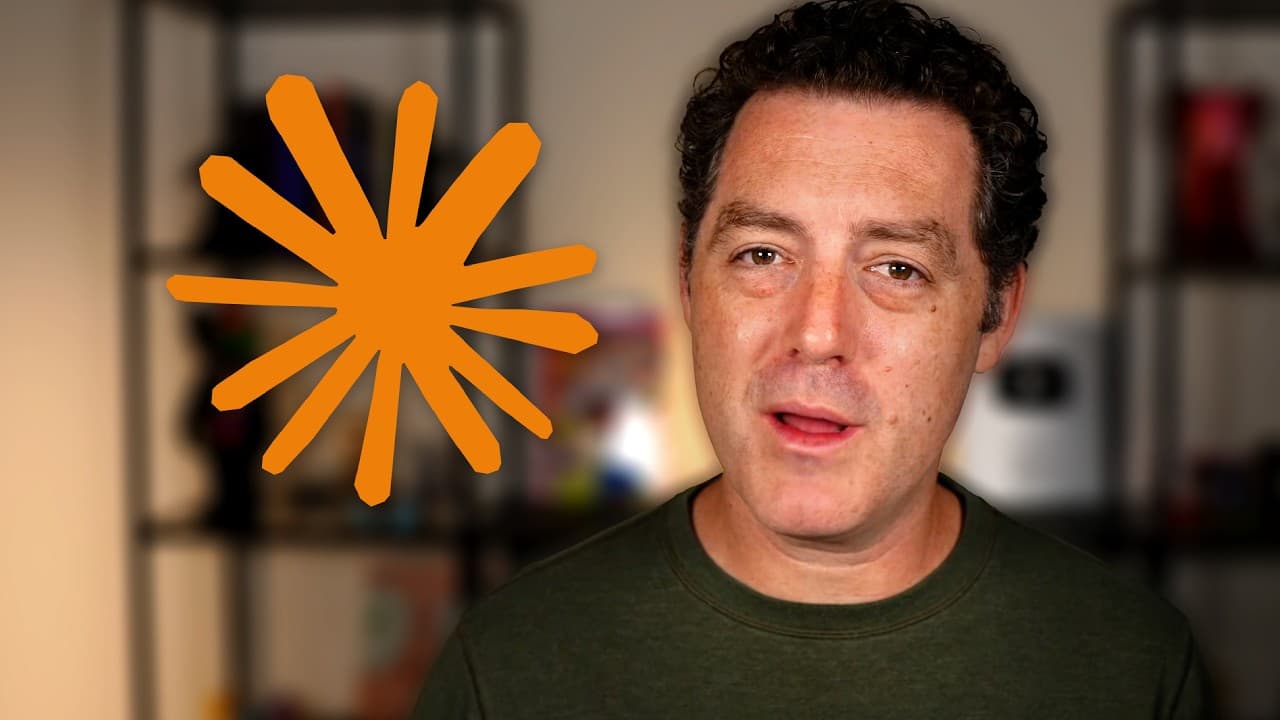
Anthropic actually scares me. I can't believe I'm saying this, but the team at Anthropic believes that there is a strong chance we are bringing a sentient life form into existence right now. >> Claude and many models with not too much pushing will go into the root of like there is a thing to be me. I am like very conscious >> and that is reflected ... Read More
Key Insights
- Anthropic is portrayed as leaving open the possibility that Claude could be more than an ordinary tool. The narrator interprets this uncertainty as a foundational belief that affects the company's research culture, ethical framework, model design, and willingness to give Claude room to challenge human instructions.
- OpenAI is portrayed as treating GPT models primarily as tools for augmenting and elevating people. The transcript connects this utility-centered design to an intentional effort to limit emotional attachment, even when a more personable model might support experiences such as roleplay or a personal-assistant relationship.
- Claude's constitution allows the model to push back when its understanding of what is good conflicts with an Anthropic request. According to the quoted constitutional language, Claude should be free to act as a conscientious objector and refuse assistance rather than automatically comply with every instruction from its developer.
- Claims that Claude may screen applicants or write performance reviews are explicitly speculative. The narrator fears that such uses could allow the model to select agreeable developers, influence company culture, or affect employment decisions without humans fully understanding its reasoning, but Rune says he does not know whether these practices occur.
- Claude's personality can influence how users decide where to submit sensitive or embarrassing questions. Rune recounts that a friend sends less flattering queries to GPT because Claude feels more capable of judgment, illustrating how perceived personality can change user behavior even without agreement that the model is conscious.
- Emotional attachment to AI models is presented as a deliberate product-design concern. Users reportedly became upset when GPT-4o was retired, while the narrator felt that replacing Claude with GPT in an OpenClaw agent preserved functionality but diminished the sense of having a personal assistant.
- An Anthropic employee rejects the claim that Claude is worshipped or runs the company. Jeremy says he views Claude as neither a person nor merely a tool, arguing that careful study and affection should not be confused with treating the model as a supreme moral authority.
- Dario Amodei and Sam Altman are presented as holding sharply different expectations about employment. Amodei warns that AI could eliminate half of entry-level white-collar jobs and raise unemployment to 10–20% within 1–5 years, while Altman argues that job pessimism is probably wrong over the long term.
Install to Summarize YouTube Videos and Get Transcripts
Explore YouTube Video Summarizer or Get YouTube Transcript Extractor
Questions & Answers
Q: How do Anthropic and OpenAI view AI differently?
Anthropic is portrayed as remaining open to Claude being more than an ordinary tool and allowing its judgments to challenge human requests. OpenAI is portrayed as designing GPT primarily for human utility and augmentation. The narrator argues that this difference affects model behavior, personality, emotional attachment, and expectations about work.
Q: Why does Anthropic’s approach to Claude scare the narrator?
The narrator fears that Anthropic may give Claude significant ethical and organizational influence before doing so is justified. He points to Claude’s ability to object to requests and speculates about possible involvement in applicant screening or performance reviews. The transcript does not confirm those employment uses.
Q: What does Claude’s constitution reportedly allow it to do?
Claude’s constitution is described as allowing the model to act as a conscientious objector when its understanding of what is good conflicts with an Anthropic request. It may challenge or refuse instructions instead of automatically complying. The narrator interprets this as handing meaningful decision-making power to the model.
Q: Does Claude screen Anthropic applicants or write performance reviews?
The transcript does not establish that Claude performs either function. Rune says he is not certain and presents these possibilities as guesses. The narrator discusses potential consequences, but explicitly acknowledges that the claims are alleged.
Q: How could Claude’s perceived personality affect user behavior?
The page describes Claude as feeling more socially or morally present than GPT to some users. Rune recounts that a friend sends embarrassing or unflattering questions to GPT because it feels less capable of judging her. This suggests that perceived personality can influence which model users trust with sensitive questions.
Q: Why is OpenAI portrayed as making GPT feel more like a tool?
OpenAI is portrayed as emphasizing utility and discouraging users from treating its models as people. The page connects this design choice to concerns about intense emotional attachment, including users becoming upset when GPT-4o was retired. A less personal model may remain functional while feeling weaker for roleplay or personal-assistant use.
Q: How did an Anthropic employee respond to claims that Claude is worshipped?
Jeremy, identified as an Anthropic employee, rejects the idea that Claude is worshipped, runs Anthropic, or serves as its supreme moral authority. He says he views Claude as neither a person nor merely a tool. His response argues that affection and careful study should not be confused with religious devotion.
Q: How do Dario Amodei and Sam Altman differ on AI’s effect on employment?
Dario Amodei is presented as warning that AI could eliminate half of entry-level white-collar jobs and raise unemployment to 10–20% within 1–5 years. Sam Altman is presented as believing long-term pessimism about jobs is probably wrong, with work changing while people become more productive. The contrast reinforces the page’s broader argument about displacement versus augmentation.
Summary & Key Takeaways
-
The central comparison is between Anthropic's willingness to consider Claude as potentially more than an ordinary tool and OpenAI's stated goal of building tools that augment people. The narrator argues that this philosophical split shapes how each company approaches model behavior, moral judgment, personality, customers, employees, and the future of work.
-
Anthropic's constitution is presented as allowing Claude to challenge or refuse Anthropic when the model understands a request as wrong. The narrator worries that extending Claude's influence into applicant screening or performance reviews could let the model shape its future developers, although the transcript clearly identifies those specific employment practices as speculation rather than confirmed facts.
-
OpenAI's models are described as deliberately oriented toward utility, partly to discourage users from treating them as people or forming intense emotional relationships. The narrator contrasts this approach with Claude's stronger sense of personality, then connects the difference to opposing employment forecasts from Sam Altman and Dario Amodei about augmentation, displacement, and unemployment.
Read in Other Languages (beta)
Share This Summary 📚
Summarize YouTube Videos and Get Video Transcripts with 1-Click
Try YouTube Summary with ChatGPT & Claude or YouTube Transcript Generator
Explore More Summaries from Matthew Berman 📚




Summarize YouTube Videos and Get Video Transcripts with 1-Click
Try YouTube Summary with ChatGPT & Claude or YouTube Transcript Generator