How Can Countries Cut China Rare Earth Reliance?
TL;DR
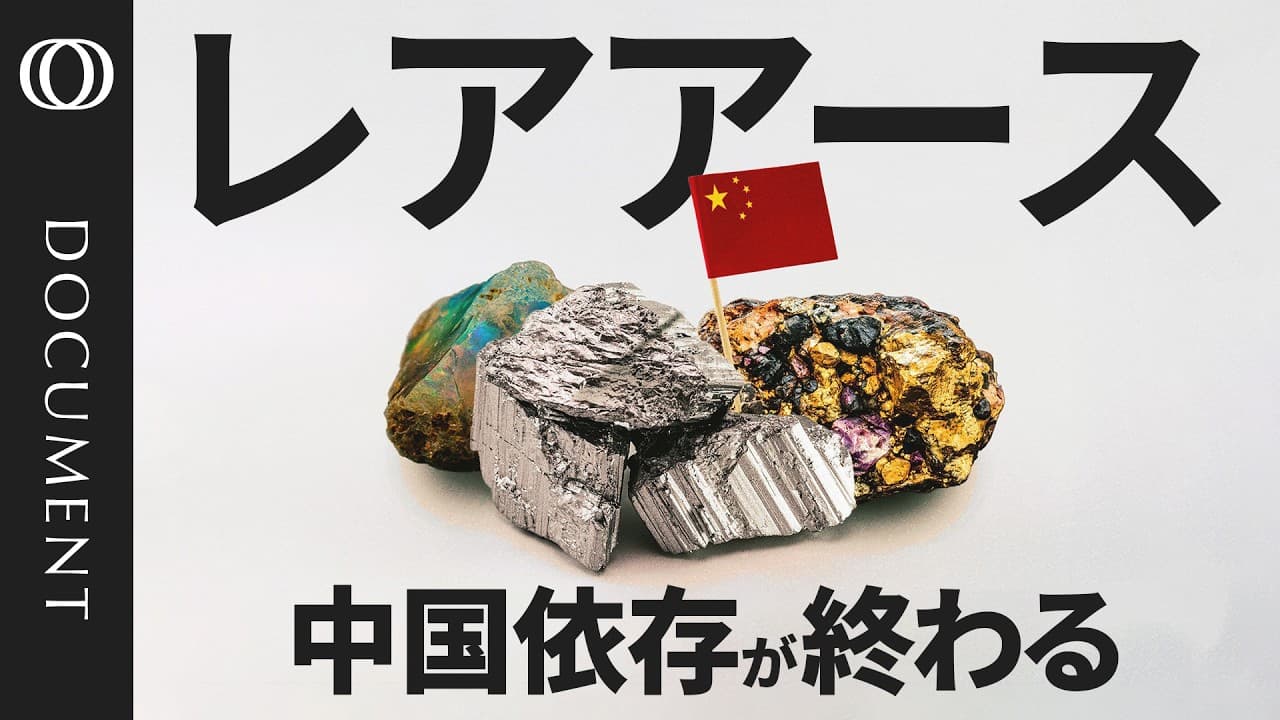
Reducing dependence on China requires complete supply chains that cover mining, chemical separation, refining, and permanent-magnet production, not merely new mineral deposits. Australia, Brazil, the United States, Japan, and other countries are investing in alternatives, but China still controls about 90% of refining and magnet production, so meaningful diversification will require sustained public funding, technical skills, and years of commercial-scale development.
Transcript
It doesn't look like much, but this is the prize for the rest of the world in trying to catch up with China. [music] We need rarers. China owns them, processes them, refineses them, and sells them. The entire supply chain is built around Beijing. No matter what you do, you're always kind of beholden to China. Rare earths are really the backbone of ... Read More
Key Insights
- Rare earths are a group of 17 chemically similar metallic elements that enable powerful, heat-resistant permanent magnets. These magnets are used across phones, wind turbines, electric vehicles, missile systems, and other technologies because they help make equipment smaller, lighter, and more powerful.
- China controls about 90% of rare earth refining and roughly 90% of magnet production. Mining alone therefore cannot eliminate dependence, because ores must undergo difficult chemical separation and refining before manufacturers can use the resulting materials in high-performance permanent magnets.
- Rare earth processing is costly and environmentally damaging because it creates toxic waste, including radioactive materials. High labor costs, thin margins, and pollution concerns pushed many Western operators out while China expanded capacity and supplied manufacturers with inexpensive, reliable magnets.
- China has used rare earth dominance as geopolitical leverage more than once. It restricted exports to Japan during a territorial dispute in 2010, then imposed export controls during the renewed United States-China trade conflict in 2025, alarming automotive manufacturers that depended on permanent magnets.
- Lynas is the leading scaled producer of separated light and heavy rare earths outside China. Its processing operation aims to produce more than 10,000 tons of rare earth oxides annually, and the company has a $96 million heavy rare earth supply contract with the United States Department of Defense.
- Brazil holds roughly one quarter of the world's rare earths, according to the cited United States Geological Survey figures. Meteoric Resources says its southeastern Brazilian project contains 1.5 billion tons of rare earth clay and aims to produce mixed rare earth carbonates before developing separation technology.
- Technical skills are a major supply-chain constraint because specialized mining and processing expertise takes years to develop. The transcript contrasts 350 mining engineering graduates in the United States with a dedicated Chinese mining and engineering university enrolling 25,000 undergraduate students.
- Diversification is more realistic than quickly ending Chinese dominance. Japan reduced its dependence on China from 90% in 2010 to about 60% to 70% after 15 years, while a 50/50 or 60/40 sourcing split is presented as achievable around 2030 and afterward.
Install to Summarize YouTube Videos and Get Transcripts
Explore YouTube Video Summarizer or Get YouTube Transcript Extractor
Questions & Answers
Q: Why does China dominate the rare earth supply chain?
China dominates because it developed capacity across the full supply chain, from mineral deposits and chemical processing to refining and permanent-magnet production. Beijing treated rare earths as a strategic industry while many Western operators withdrew because of thin margins, high labor costs, and environmental damage. China subsequently gained about 90% of refining and roughly 90% of magnet production, making manufacturers worldwide dependent on Chinese products at some stage.
Q: What are rare earths used for in modern technology?
Rare earths are 17 chemically similar metallic elements whose main role is enabling powerful, heat-resistant permanent magnets. These magnets allow electric motors and other equipment to remain compact, light, and powerful. The transcript identifies phones, wind turbines, electric vehicles, missile systems, advanced weapons, and defense systems among the technologies relying on rare earth magnets, which makes reliable access important to both commercial manufacturing and national security.
Q: Why is rare earth processing more important than mining?
Mining provides raw ore, but manufacturers cannot use that ore directly in high-performance magnets. The elements must first be chemically separated and refined into usable materials, followed by magnet production. China controls about 90% of both refining and magnet production, making these stages the central bottlenecks. A country can therefore discover or mine a deposit and still remain dependent on Chinese processing knowledge, facilities, or magnet capacity.
Q: How has China used rare earths as geopolitical leverage?
China restricted rare earth exports to Japan in 2010 during a territorial dispute, exposing Japan's dependence on Chinese materials for permanent magnets used by its automotive and other industries. During the renewed United States-China trade conflict in 2025, Beijing again imposed rare earth export controls. Automotive executives warned that factories could shut down without magnet deliveries, showing how supply restrictions can influence broader trade and diplomatic negotiations.
Q: How is Lynas challenging China's rare earth dominance?
Lynas operates the largest rare earth processing site outside China and says it became the only scaled producer outside China capable of separating both light and heavy rare earths. Its facility aims to produce more than 10,000 tons of rare earth oxides per year. The company also holds a $96 million contract to supply heavy rare earths to the United States Department of Defense, supporting a non-Chinese supply chain.
Q: Why is Brazil important to future rare earth supplies?
Brazil is considered a major prospective alternative because it holds roughly one quarter of the world's rare earths, according to the United States Geological Survey figures cited in the transcript. Meteoric Resources says its southeastern Brazilian site contains 1.5 billion tons of rare earth clay. The company aims to begin producing mixed rare earth carbonates and then develop separation technology, with support from the United States and an emphasis on sustainable production.
Q: Why will reducing dependence on China take many years?
A complete rare earth supply chain requires mines, chemical separation plants, refineries, magnet factories, skilled engineers, operating experience, customers, and financing. Japan's experience illustrates the pace: its dependence on China declined from 90% in 2010 to only about 60% to 70% after 15 years. New competitors must also survive low margins and the possibility that China's scale could pressure prices before their operations become secure.
Q: Can countries break China's rare earth monopoly by 2030?
The transcript says the monopoly is not expected to be broken within the next five years. A more realistic objective is diversification, such as sourcing 50% from China and 50% elsewhere, or 60% from China and 40% elsewhere, around 2030 and into the following decade. Success would mean countries including the United States, Australia, Brazil, Japan, South Korea, and France producing commercial-scale magnets and materials for major buyers.
Summary & Key Takeaways
-
Rare earths are 17 chemically similar metallic elements used to create powerful, heat-resistant permanent magnets. These magnets help make phones, wind turbines, electric vehicles, missile systems, and other technologies smaller, lighter, and more powerful. Their strategic importance makes control of their supply chain a major economic and geopolitical advantage.
-
China built dominance across the entire rare earth supply chain, including deposits, chemical separation, refining, and magnet production. It controls about 90% of refining and magnet production and has used export restrictions during disputes with Japan and the United States, exposing the vulnerability of automotive, technology, and defense manufacturers.
-
Governments are funding alternative supply chains through companies and projects in Australia, Brazil, and the United States. Lynas has achieved scaled separation of light and heavy rare earths outside China, while Brazil offers large potential deposits. Even so, diversification requires patient investment, skilled engineers, competitive protection, and realistic expectations through the next decade.
Read in Other Languages (beta)
Share This Summary 📚
Summarize YouTube Videos and Get Video Transcripts with 1-Click
Try YouTube Summary with ChatGPT & Claude or YouTube Transcript Generator
Explore More Summaries from TBS CROSS DIG with Bloomberg 📚





Summarize YouTube Videos and Get Video Transcripts with 1-Click
Try YouTube Summary with ChatGPT & Claude or YouTube Transcript Generator