How Does a Breathalyzer Measure Alcohol Content?
TL;DR
A breathalyzer measures alcohol content by passing exhaled breath over a sensor, typically an MQ303A, which reacts with alcohol vapor and changes resistance. The device warms the sensor to ensure accurate readings, and its functionality is affected by factors like oxygen concentration, humidity, and temperature.
Transcript
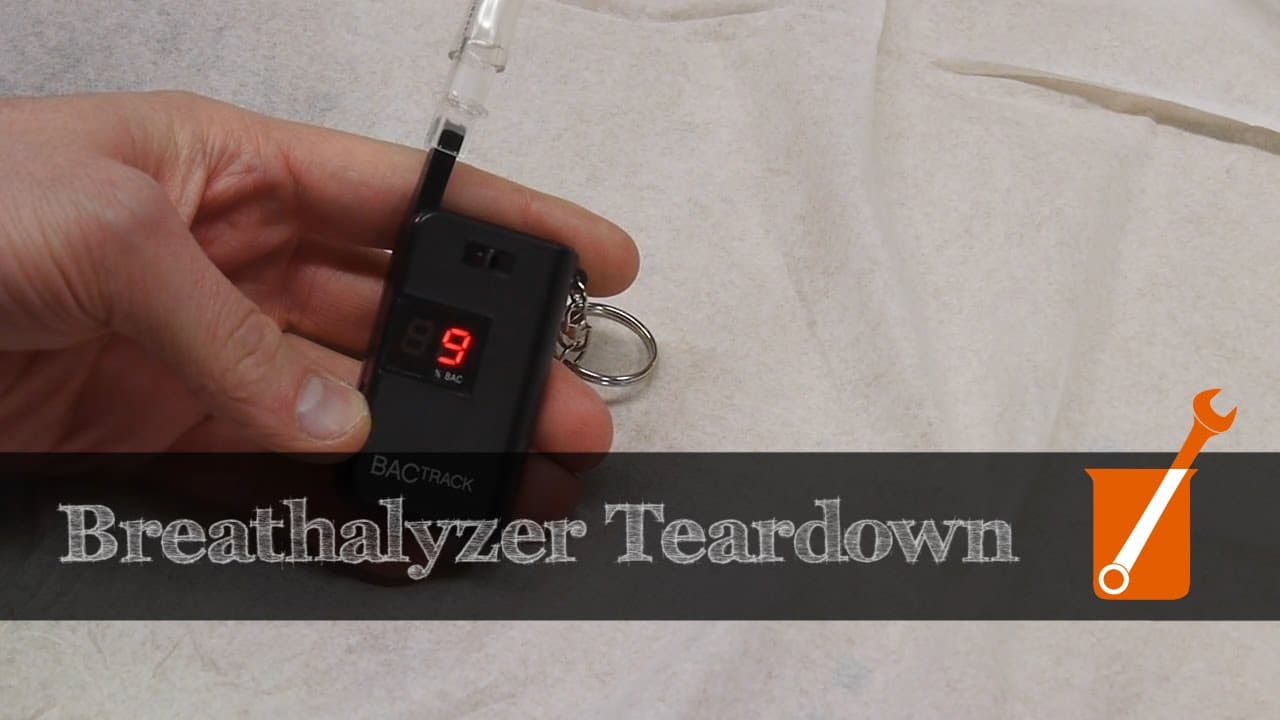
hey everyone someone recently gave me this little handheld breathalyzer and so I thought we'd take it apart today and see what makes it work and then later I'll build my own breathalyzer so it's got one button here and a display and a port that you breathe into and I'm going to press the button and it beeps and it has this little countdown routine ... Read More
Key Insights
- 😒 The handheld breathalyzer uses a simple circuit consisting of a microcontroller, display, and an alcohol sensor.
- 🎭 The alcohol sensor is likely an MQ303A model, which is equipped with a heater and measures changes in resistance caused by alcohol vapor.
- 🧑🏭 The breathalyzer's accuracy is influenced by factors such as oxygen concentration, humidity, and temperature.
- ❓ The device is calibrated to measure alcohol concentrations found in exhaled breath accurately.
- 🫢 The sensor can also detect other gases, such as butane and hydrogen, although they are not commonly found in breath.
- ☠️ Blood alcohol concentration can be estimated over time by considering the absorption and metabolization rates of alcohol in the body.
- 😘 The resistance of the sensor can be monitored to determine if breath is being properly blown across it, allowing the device to distinguish between valid and invalid readings.
Install to Summarize YouTube Videos and Get Transcripts
Explore YouTube Video Summarizer or Get YouTube Transcript Extractor
Questions & Answers
Q: How does the handheld breathalyzer warm up its sensor?
The breathalyzer uses a 15-second countdown routine to warm up the sensor physically, ensuring accurate measurements.
Q: How does the alcohol sensor work?
The sensor is made of tin dioxide, and when alcohol molecules react with oxygen on the surface, the resistance of the sensor changes. This change in resistance indicates the alcohol concentration in the breath.
Q: Why is the oxygen concentration important for accurate readings?
The oxygen concentration in the breath affects the performance of the alcohol sensor. It has been calibrated for atmospheric air with around 20% oxygen, so deviations may result in incorrect readings.
Q: What range of alcohol concentrations can the breathalyzer measure?
The breathalyzer is designed to measure alcohol concentrations from 10 to 1,000 ppm, which covers the typical range found in exhaled breath.
Summary & Key Takeaways
-
The handheld breathalyzer consists of a button, display, and a port to blow into. It warms up the sensor before measuring alcohol concentration.
-
The circuit board contains a microcontroller, display controller, and a boost converter powered by a single AAA battery.
-
The alcohol sensor is likely an MQ303A model, which is a variable resistor that changes based on alcohol vapor concentration.
Read in Other Languages (beta)
Share This Summary 📚
Summarize YouTube Videos and Get Video Transcripts with 1-Click
Try YouTube Summary with ChatGPT & Claude or YouTube Transcript Generator
Explore More Summaries from Applied Science 📚
Summarize YouTube Videos and Get Video Transcripts with 1-Click
Try YouTube Summary with ChatGPT & Claude or YouTube Transcript Generator