Why Do Some People Feel Safer Around Cats?
TL;DR
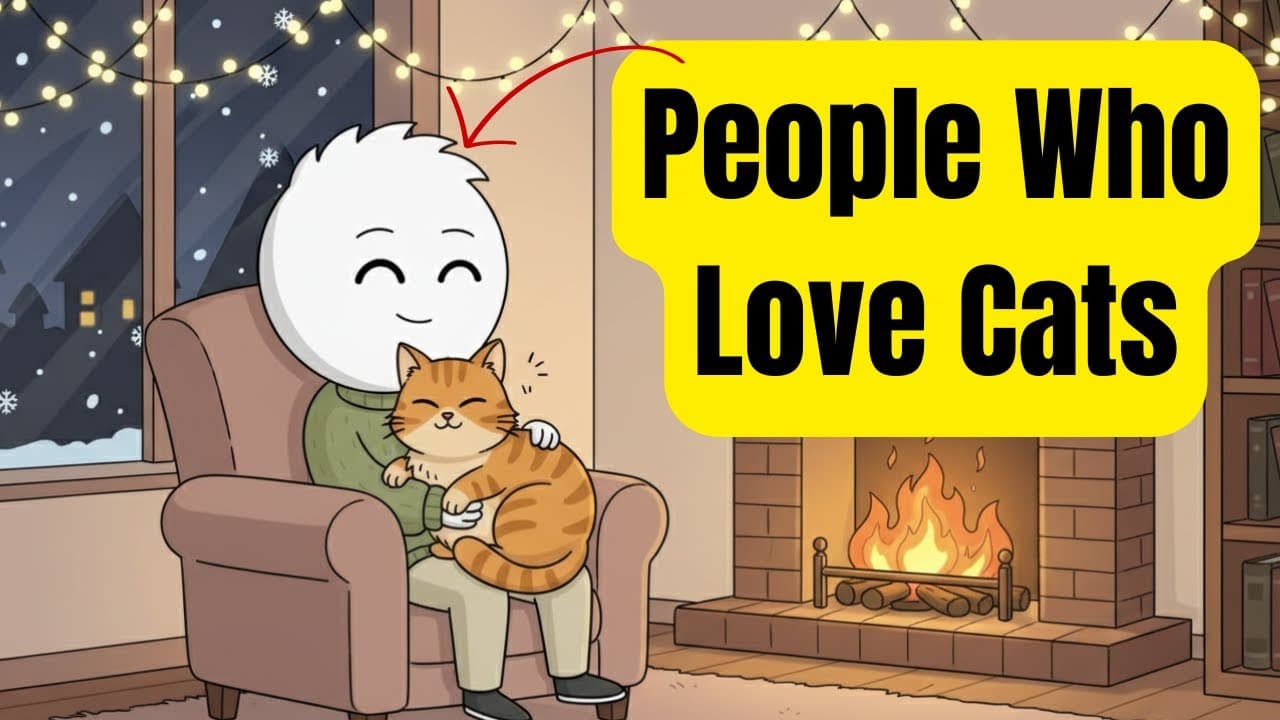
Cat lovers may prefer companionship that provides closeness without pressure, constant interaction, or emotional performance. Cats support this preference through quiet presence, subtle communication, respected boundaries, and rhythmic purring, which the transcript associates with reduced vigilance and greater calm. The attraction may also reflect introversion, openness, sensitivity to overstimulation, and a need for uninterrupted mental space.
Transcript
You know that feeling when your cat finally curls up next to you after ignoring you all day and suddenly the entire world just quiets down? Your breathing slows. Your thoughts stop racing. And for the first time since you woke up, you can actually relax. If you know exactly what I'm talking about, this video is going to make you feel so incredibly ... Read More
Key Insights
- Cat preference is framed as a nervous system response to quiet, predictability, and low-pressure companionship. People who spend their days anticipating demands or monitoring themselves may experience a cat's calm presence as an opportunity to reduce vigilance and rest without performing.
- Cats provide connection without intrusion by offering affection rather than imposing it. They can sit nearby or on a person's lap without expecting conversation, eye contact, reassurance, or matching emotional energy, and they can leave without requiring an explanation.
- Cat lovers are described as avoiding pressure rather than intimacy. They may want closeness that develops naturally, without urgency or repeated proof of attachment, which makes a cat's independent and selective approach to affection especially compatible with their preferred relationship style.
- Trust with cats is built through consent and careful attention to subtle signals. A tail movement, posture change, or shift in breathing can communicate comfort or discomfort, encouraging humans to base affection on attunement and respect rather than control.
- A cat's purr is described as a low-frequency rhythmic sound that signals safety to the nervous system. The transcript links this repetition with slower breathing, softened muscle tension, lower stress hormones, and a grounded state that falls between overwhelming noise and empty silence.
- Higher cognitive scores among cat lovers are presented as a correlation, not an effect caused by cats. Denise Costello's research at Carol University is said to associate cat preference with cognitive ability, openness to experience, introversion, and higher neuroticism.
- Cats protect the quiet conditions needed for sustained thought. Their ability to coexist without demanding ongoing engagement allows reading, writing, reflection, creativity, and problem solving to continue with fewer interruptions, which may help explain their appeal to writers, artists, and thinkers.
- Domestic cats activate caretaking impulses through baby-schema features such as relatively large eyes, rounded heads, small noses, and soft movements. This allows care to flow outward without requiring cheerfulness, reassurance, mood management, or constant emotional reciprocity from the caregiver.
Install to Summarize YouTube Videos and Get Transcripts
Explore YouTube Video Summarizer or Get YouTube Transcript Extractor
Questions & Answers
Q: Why do some people feel calmer around cats?
Some people feel calmer around cats because cats provide quiet, predictable companionship without demanding constant interaction or emotional performance. The transcript describes this as nervous system regulation through stillness. A cat can settle nearby without requiring conversation, reassurance, eye contact, or matched excitement, allowing breathing to slow, vigilance to decrease, and the body to rest without managing another being's emotional state.
Q: Why do cat lovers prefer low-pressure companionship?
Cat lovers may prefer low-pressure companionship because frequent emotional negotiation can be exhausting for sensitive, observant, or easily overstimulated people. Human relationships can involve expectations to respond quickly, explain feelings, provide reassurance, or match another person's energy. Cats offer closeness without those constant demands, creating a form of connection that unfolds naturally while preserving personal space, independence, and emotional boundaries.
Q: How do cats model consent and healthy boundaries?
Cats model consent by making affection selective rather than automatic. A person must notice signals such as a tail flick, posture shift, or change in breathing and respond appropriately. Trust is earned and maintained through attunement, not control. Because a cat does not assume access to someone and can leave without explanation, the relationship demonstrates that attachment can coexist with autonomy and respected boundaries.
Q: How does a cat's purr affect the nervous system?
A cat's purr is described as operating at low rhythmic frequencies that the nervous system responds to before comfort is consciously interpreted. According to the transcript, the repetitive sound can deepen breathing, soften muscle tension, lower stress hormones, and signal that no urgent action or vigilance is needed. It fills silence without becoming overwhelming, producing grounded calm rather than heightened excitement.
Q: Are cat lovers more intelligent than other people?
The transcript says research found higher cognitive test scores among cat lovers, but it explicitly rejects the idea that cats make people smarter. The proposed explanation is that certain characteristics cluster together. Cat lovers were associated with introversion, openness to experience, cognitive ability, and higher neuroticism. Introverted people may also spend more time reading, writing, reflecting, and pursuing solitary intellectual activities.
Q: Why are cats compatible with writers and deep thinkers?
Cats are compatible with writers and deep thinkers because they can share a space without repeatedly pulling attention outward. Reflection, creativity, problem solving, reading, and writing depend on sustained periods of mental quiet. A cat's presence can make a room feel occupied and comforting while leaving concentration intact, protecting the uninterrupted conditions under which thoughtful and creative work can continue.
Q: Why do humans feel protective toward cats?
The transcript attributes protective feelings toward cats to baby schema, a set of features that triggers caretaking impulses before conscious thought. Domestic cats display relatively large eyes, rounded heads, small noses, and soft movements. These qualities cause the brain to register infant-like vulnerability rather than merely seeing a solitary predator, producing a strong desire to nurture and protect the animal.
Q: What does loving cats suggest about emotional needs?
Loving cats may suggest a preference for subtle, calm connection that does not require constant output. The transcript portrays cat lovers as people who can value intimacy while resisting pressure, intrusion, or emotional overload. Cats allow nurturing to flow outward without demanding reassurance or monitoring moods, while their chosen affection offers companionship based on preference rather than dependency, control, or repeated loyalty tests.
Summary & Key Takeaways
-
Cat preference is presented as a reflection of nervous system regulation rather than simple personality. People who anticipate demands, monitor emotional environments, or become overstimulated may find cats calming because cats offer quiet companionship without requiring constant responses, reassurance, excitement, conversation, or management of another being's emotional state.
-
The cat-human bond is described as connection without intrusion. Cats offer affection selectively, leave without requiring justification, and communicate through subtle physical signals. Building trust therefore requires patience, consent, and attunement. This relationship can feel especially safe for people who value boundaries or have experienced boundary violations.
-
Cat lovers are associated in the cited research with stronger cognitive abilities, openness to experience, introversion, and higher neuroticism, but cats do not make people smarter. Instead, their quiet presence preserves uninterrupted attention. Their infant-like facial features also activate caretaking impulses, allowing nurturing without intense emotional demands or vulnerability overload.
Read in Other Languages (beta)
Share This Summary 📚
Summarize YouTube Videos and Get Video Transcripts with 1-Click
Try YouTube Summary with ChatGPT & Claude or YouTube Transcript Generator
Explore More Summaries from Psychology Simplified 📚






Summarize YouTube Videos and Get Video Transcripts with 1-Click
Try YouTube Summary with ChatGPT & Claude or YouTube Transcript Generator