How to Use Music for Better Video Storytelling
TL;DR
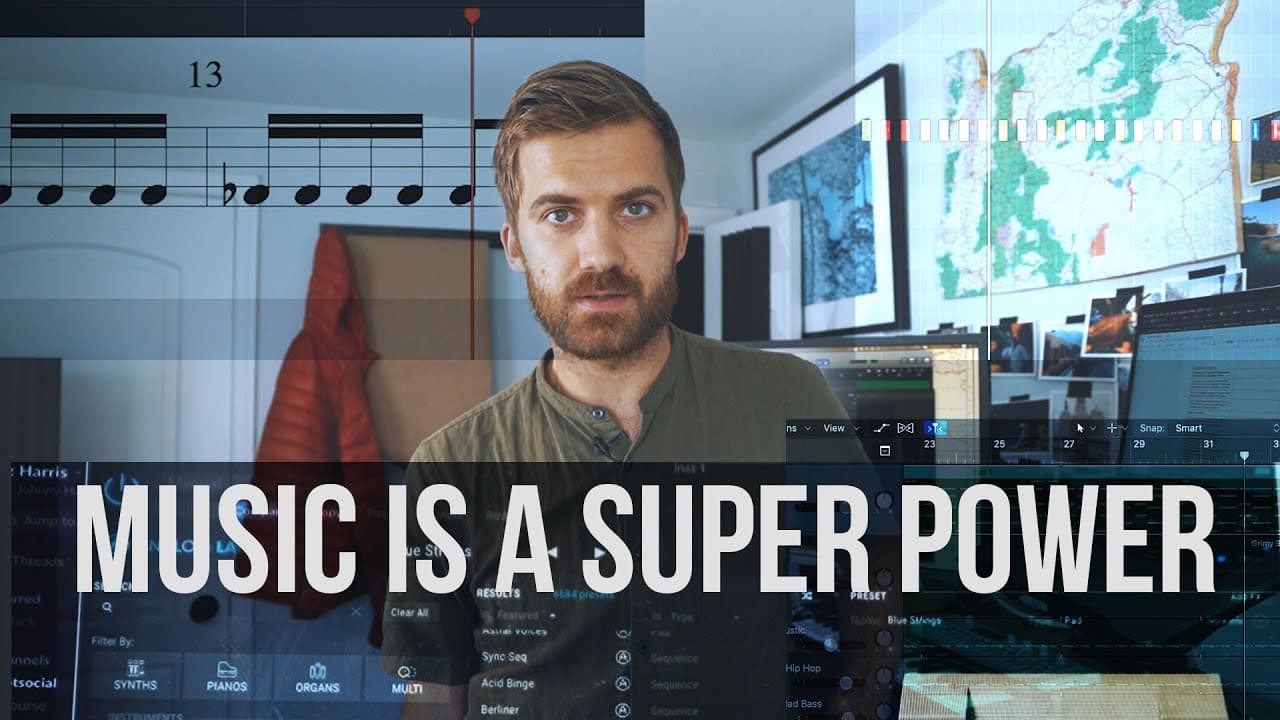
Use music by matching its emotional tone to what the story has genuinely earned. Choose thinking music for information, context, movement, and explanation, then reserve feeling music for personal moments or emotional climaxes. When a song sparks an idea, act on that inspiration even if the first result is imperfect, because creative judgment improves through repeated practice.
Transcript
I get asked this one question a bunch which is what inspires you to create stuff notice this has been a weird and hard question for me to answer because I don't really know what people mean by inspire is inspiration this mystical magical force in the universe that hits you and provokes you to want to make something new I don't really know what insp... Read More
Key Insights
- Inspiration is a quiet creative signal that reveals a possible work without explaining exactly how to build it. It requires discernment, sustained effort, and action, rather than the brief enthusiasm that can follow a motivational speech or self-help book.
- Music is a source of inspiration because it can help a creator visualize scenes and stories that do not yet exist. A track may suggest an emotional direction, structure, or sequence, even though the creator must still determine how to produce the finished work.
- Acting on inspiration is more important than making the first attempt perfect. Rejecting an idea because it seems insufficiently good or cool can stop creative growth, while following the impulse creates practical experience that improves judgment over time.
- Tone matching is the practice of selecting music whose emotional weight fits the story or scene. Highly dramatic music can feel excessive when paired with an ordinary event, as demonstrated by the filmmaker's early Peru travel sequence through the mountains.
- Emotional music must be earned by the narrative rather than used as a shortcut. Applying heart-stirring music before the story warrants it can cheapen the work and reduce the impact of similar music when a genuinely meaningful moment arrives.
- Thinking music supports attention, information, context, explanation, travel, and narrative movement. Beat-driven or emotionally neutral tracks often serve this purpose because they create energy without strongly directing viewers toward sadness, triumph, love, or contemplation.
- Feeling music supports personal subjects, emotional investment, contemplation, beauty, reunion, and climactic resolution. Ambient, cinematic, somber, peaceful, uplifting, or acoustic qualities can signal this role, but the surrounding story must justify the emotion.
- Music categories operate as a spectrum rather than a rigid binary. A creator can evaluate each track by asking whether the scene primarily communicates information or invites emotion, then use genre, mood, attributes, and waveform changes to refine the selection.
Install to Summarize YouTube Videos and Get Transcripts
Explore YouTube Video Summarizer or Get YouTube Transcript Extractor
Questions & Answers
Q: How can music inspire a filmmaker to create a story?
Music can help a filmmaker see a scene, sequence, or emotional direction that does not yet exist. It does not provide every production step, but it can spark the desire to build something around the imagined result. The filmmaker describes first experiencing this strongly during a 2013 trip to Peru, when a song heard while driving into the mountains prompted a travel-video sequence.
Q: What is the difference between inspiration and motivation?
Inspiration is presented as quieter and more demanding than a temporary burst of motivation. Excitement from a speech, book, or brief experience may disappear quickly, while inspiration reveals something worth making and asks the creator to wrestle with it, understand it, and act. It shows a possible result without supplying complete instructions for turning that possibility into finished work.
Q: Why should creators act on imperfect inspiration?
Creators should act because immediate self-criticism can block ideas before they have a chance to develop. An early result may use the wrong tone or lack technical refinement, but completing it begins a longer process of improving creative judgment. The Peru travel video was not considered perfect, yet following that initial musical impulse became the start of continued experimentation and improvement.
Q: What does tone matching mean in video storytelling?
Tone matching means choosing music whose emotional intensity and character fit the actual meaning of a scene. A routine travel moment may need lighter or more neutral music instead of a dramatic track that pulls heavily at viewers' emotions. Matching tone prevents the soundtrack from exaggerating the material and helps the audience respond to the story with appropriate emotional weight.
Q: Why can emotional music weaken a video?
Emotional music can weaken a video when it asks viewers to feel more than the story has justified. Using an intense track as an emotional shortcut can make a scene seem cheap or manipulative. It also reduces the creator's ability to use similar music effectively later, when the narrative reaches a personal revelation, meaningful resolution, or climax that genuinely deserves a stronger response.
Q: What is thinking music, and when should it be used?
Thinking music is relatively emotionally neutral music that helps viewers focus on information, context, movement, or explanation. Tracks built around beats, electronic textures, chill moods, or forward energy can support an explainer or travel sequence without pulling attention toward deep emotion. It is useful when the story is communicating facts, moving between places, or maintaining momentum rather than reaching a personal climax.
Q: What is feeling music, and when should it be used?
Feeling music is designed to encourage a stronger emotional response, such as contemplation, uplift, tenderness, triumph, or a sense of resolution. Ambient, cinematic, somber, peaceful, or uplifting tracks may serve this function. It works best with personal material or an emotional climax after the story has created investment, such as completing a difficult journey or returning home after a long absence.
Q: How can creators search for the right music for a scene?
Creators can begin by deciding whether the scene needs thinking music or feeling music, then narrow the search with genres, moods, and descriptive attributes. Beat-focused categories may reveal energetic thinking tracks, while ambient or cinematic categories may surface emotional selections. Waveforms can also suggest an approaching swell or resolution, helping the creator identify music that fits a planned narrative climax.
Summary & Key Takeaways
-
Inspiration is described as a quiet process of seeing something that does not yet exist, then beginning the long work of creating it. Music supports that process by helping a filmmaker imagine scenes and stories. The crucial first step is acting on the creative impulse instead of dismissing it as inadequate or uncool.
-
Music can guide what viewers think and feel, which makes it a powerful storytelling tool. That power becomes ineffective when intensely emotional music is attached to an ordinary scene that has not earned such treatment. Matching a track to the scene's actual tone preserves credibility and strengthens later moments that deserve emotional emphasis.
-
A practical framework divides music into thinking and feeling categories, though individual tracks can sit along a spectrum. Thinking music supports explanations, information, travel, and forward motion without demanding strong emotion. Feeling music supports personal material, contemplation, resolution, and emotional climaxes after the narrative has created sufficient investment.
Read in Other Languages (beta)
Share This Summary 📚
Summarize YouTube Videos and Get Video Transcripts with 1-Click
Try YouTube Summary with ChatGPT & Claude or YouTube Transcript Generator
Explore More Summaries from Johnny Harris 📚





Summarize YouTube Videos and Get Video Transcripts with 1-Click
Try YouTube Summary with ChatGPT & Claude or YouTube Transcript Generator