How Do Micronutrients Support Healthy Aging?
TL;DR
Intermittent challenges such as exercise, fasting, heat, cold, and plant compounds activate stress-response pathways that may support healthier aging. Sulforaphane can stimulate NRF2-related detoxification and glutathione production, while marine omega-3 fatty acids help regulate inflammation and are associated with cardiovascular health, cognitive health, and longer life expectancy.
Transcript
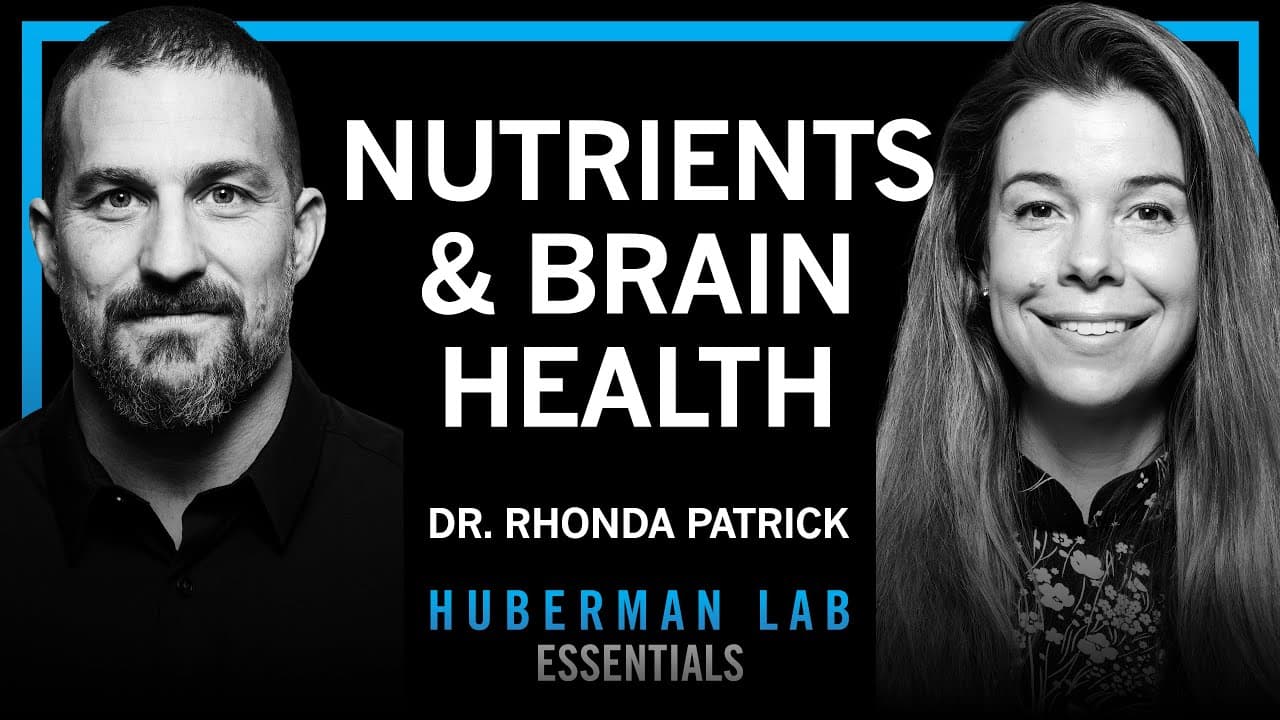
Welcome to Huberman Lab Essentials, [music] where we revisit past episodes for the most potent and actionable science-based tools for mental health, physical health, and performance. I'm Andrew Huberman and I'm a professor of neurobiology and opthalmology at Stanford School of Medicine. And now for my discussion with Dr. Rhonda Patrick. Rhonda, wel... Read More
Key Insights
- Hormesis is the activation of protective genetic pathways by manageable, intermittent challenges such as exercise, fasting, heat, cold, and plant compounds. These pathways can remain active beyond the original stressor and help the body manage normal metabolic, immune, and aging-related stress.
- Heat shock proteins are activated most robustly by heat, although cold and sulforaphane can also activate them. This overlap illustrates how distinct challenges can engage some of the same stress-response pathways, producing antioxidant, anti-inflammatory, repair, or cellular maintenance effects.
- Sulforaphane is a plant compound that activates NRF2, a pathway regulating genes involved in glutathione production and detoxification. The transcript links this response to processing potentially harmful exposures, including heterocyclic amines found in food, and supporting antioxidant activity in the brain, vascular system, and body.
- Broccoli sprouts contain up to 100 times more sulforaphane than broccoli, according to the discussion. Cooking broccoli reduces sulforaphane levels, but a cited study found that adding one gram of ground mustard seed powder to cooked broccoli increased its sulforaphane content fourfold.
- Marine omega-3 fatty acids include EPA and DHA, while ALA is another omega-3 fatty acid discussed. High-quality supplements may use triglyceride form, whereas ethyl ester products should be taken with food. Refrigeration is recommended because polyunsaturated omega-3 fatty acids are highly vulnerable to oxidation.
- Fish oil quality is determined by more than the bottle's stated concentration. The International Fish Oil Standards website provides third-party measurements of omega-3 concentration, contaminants, and oxidized fatty acids. The preferred total oxidation value in the discussion is below 10, and ideally below six.
- The omega-3 index is the omega-3 concentration in red blood cells and reflects longer-term status because red blood cells turn over about every 120 days. A baseline measurement and a follow-up after 120 days can show how supplementation changed an individual's omega-3 level.
- An omega-3 index of four percent or lower was associated with five years less life expectancy than an eight percent index in the observational research discussed. About two grams of daily supplementation was presented as a reasonable threshold for moving many low-status individuals toward eight percent.
Install to Summarize YouTube Videos and Get Transcripts
Explore YouTube Video Summarizer or Get YouTube Transcript Extractor
Questions & Answers
Q: What is hormesis and how may it support healthy aging?
Hormesis is the body's protective response to small, intermittent challenges. Exercise, fasting, heat, cold, and certain plant compounds activate genetic stress-response pathways that help the body manage the immediate challenge. Those pathways can remain active afterward, supporting defenses against ordinary metabolic, immune, and aging-related stress through effects such as antioxidant activity, reduced inflammation, autophagy, stem-cell production, and heat shock protein activation.
Q: How do heat and cold exposure affect stress-response pathways?
Heat and cold are intermittent environmental challenges that activate overlapping genetic stress-response pathways. Heat activates heat shock proteins more robustly, but cold can activate them too. These responses help the body tolerate the original temperature stress and may continue supporting its ability to handle normal metabolic and immune stress. The overlap resembles responses triggered by exercise, fasting, and certain plant compounds.
Q: How does sulforaphane support detoxification in the body?
Sulforaphane activates NRF2, a pathway that regulates numerous genes involved in cellular defense. These include genes supporting glutathione production and the detoxification of compounds encountered through food, such as heterocyclic amines. Glutathione is described as a major antioxidant in the brain, vascular system, and body, and human evidence discussed in the transcript indicates that sulforaphane-containing foods can increase brain glutathione.
Q: How can cooked broccoli provide more sulforaphane?
Cooking broccoli lowers its sulforaphane content, but the discussion describes a practical way to increase what remains available. A cited study found that adding one gram of ground mustard seed powder to cooked broccoli increased sulforaphane fourfold. Broccoli sprouts are another concentrated source, containing up to 100 times more sulforaphane than regular broccoli according to the transcript.
Q: What should someone look for in a fish oil supplement?
Fish oil should be evaluated for its actual EPA and DHA concentration, chemical form, contamination, and oxidation. Triglyceride-form products are presented as higher quality, while ethyl ester products are not necessarily bad but should be taken with food. Third-party results can identify mercury, PCBs, dioxins, and oxidized fats. The discussion prefers a total oxidation value below 10, ideally below six.
Q: Why should fish oil be stored in the refrigerator?
Fish oil contains polyunsaturated omega-3 fatty acids, which the discussion describes as extremely prone to oxidation. Refrigeration helps limit this deterioration after purchase. Oxidation can also be assessed through a total oxidation value, shortened to TOTOX. The preferred result given is under 10, with under six considered ideal, although finding products meeting every desired criterion can be difficult.
Q: What is the omega-3 index and when should it be tested?
The omega-3 index measures omega-3 levels inside red blood cells, making it a longer-term marker rather than a snapshot of recent intake. Red blood cells turn over about every 120 days. Someone establishing a baseline before supplementation should therefore wait 120 days before repeating the test, allowing enough time for the new intake pattern to be reflected in red-blood-cell composition.
Q: How much omega-3 intake is discussed for improving omega-3 status?
About two grams per day is presented as a reasonable and safe supplementation threshold, particularly for people who eat little fish and begin with an omega-3 index near four to five percent. The observational research discussed associated an index of four percent or lower with five years less life expectancy than an eight percent index. The transcript also mentions two to four grams of EPA daily when discussing potential benefits.
Summary & Key Takeaways
-
Hormesis describes how intermittent challenges activate genetic stress-response pathways. Exercise, fasting, heat, cold, and certain plant compounds create manageable stress that prepares the body to handle ordinary metabolic, immune, and aging-related pressures. The resulting responses may include antioxidant activity, reduced inflammation, autophagy, stem-cell production, and activation of heat shock proteins.
-
Sulforaphane, found in broccoli and especially concentrated in broccoli sprouts, activates NRF2 and genes involved in glutathione production and detoxification. Cooking lowers broccoli's sulforaphane content, but adding one gram of ground mustard seed powder to cooked broccoli increased sulforaphane fourfold in a cited study. Moringa can activate NRF2 through a similar pathway.
-
Marine omega-3 fatty acids, particularly EPA and DHA, are presented as powerful dietary regulators of inflammation. Supplement quality, chemical form, oxidation, and contamination matter. The discussion recommends third-party testing, refrigeration, and an intake threshold near two grams daily, while emphasizing the omega-3 index as a long-term red-blood-cell marker of status.
Read in Other Languages (beta)
Share This Summary 📚
Summarize YouTube Videos and Get Video Transcripts with 1-Click
Try YouTube Summary with ChatGPT & Claude or YouTube Transcript Generator
Explore More Summaries from Andrew Huberman 📚






Summarize YouTube Videos and Get Video Transcripts with 1-Click
Try YouTube Summary with ChatGPT & Claude or YouTube Transcript Generator