How to Talk About Vacations in Beginner English
TL;DR
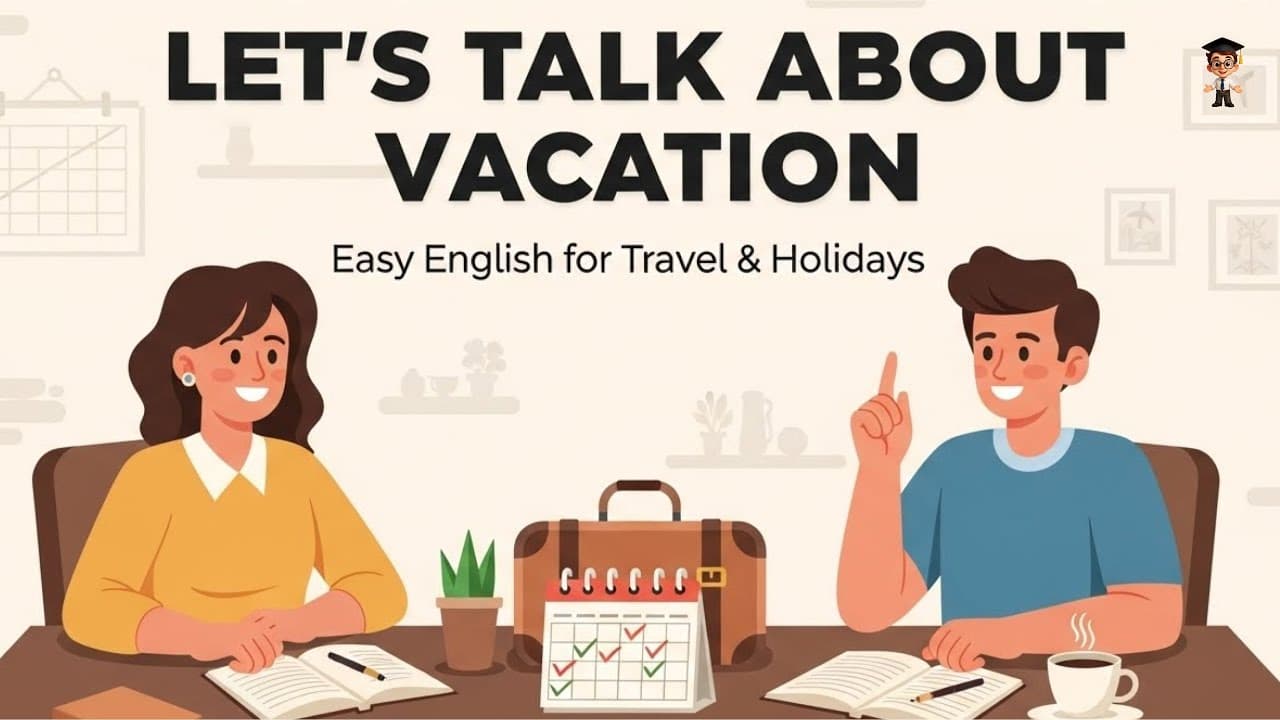
A vacation can involve relaxing at the beach, hiking in the mountains, exploring a city, or enjoying a staycation at home. Useful travel decisions include choosing transportation, making a packing list, controlling costs, and disconnecting from work. The conversation also introduces beginner English vocabulary for destinations, airplanes, road trips, suitcases, local food, photos, and vacation memories.
Transcript
[music] [music] Hello everyone and welcome back [music] to Mr. English channel where learning English is easy and fun. I'm Emily. >> Hello Emily. Hello to all our amazing listeners around the world. It is a beautiful day to practice English together. >> It really is Paul. I am feeling very energetic today. How are you feeling? >> I am feeling wonde... Read More
Key Insights
- Vacation preferences reflect different ways of relaxing. Paul chooses a warm beach where he can hear the ocean and take a nap, while Emily chooses the mountains for green trees, fresh air, hiking, and beautiful views from the top.
- City vacations combine education, sightseeing, and food. Paul likes visiting museums, learning about history, and looking at architecture, while both speakers enjoy trying local dishes, such as pasta in Italy or sushi in Japan.
- Air travel is fast but can be stressful. A traveler can reach another country in a few hours and enjoy seeing clouds from the window, but airports may involve long lines, many people, fixed schedules, and repeated checks for passports, phones, and tickets.
- Road trips provide more control over the journey. Travelers can play music, sing with friends, stop at a park, or pause when they are hungry. The tradeoff is time, because driving can take much longer than flying.
- A packing list helps prevent common travel problems. Emily brings too many sweaters, shoes, and books, making her suitcase heavy, while Paul packs lightly but once forgot his swimsuit and had to buy an expensive replacement at the hotel shop.
- A staycation is a vacation spent at home. It can include sleeping late, reading, watching a movie, visiting a local park, trying a nearby restaurant, or acting like a tourist in your own city without paying for a hotel or airplane.
- Disconnecting from work is essential to a restorative vacation. The speakers recommend turning off the phone, avoiding work email, giving the brain a break, spending time with family or friends, and appreciating silence when desired.
- Vacation photos preserve happy memories, but constant photography can reduce attention to the experience itself. Emily photographs views and food, yet sometimes puts the camera away so she can enjoy the moment through sights, sounds, smells, and physical sensations.
Install to Summarize YouTube Videos and Get Transcripts
Explore YouTube Video Summarizer or Get YouTube Transcript Extractor
Questions & Answers
Q: How can beginners talk about vacation preferences in English?
Beginners can state a preferred destination and give simple reasons. For example, Paul prefers the beach because he likes warm weather, blue water, ocean sounds, and relaxing with a cold drink. Emily prefers the mountains because she enjoys nature, green trees, fresh air, walking, hiking, and views from the top. Learners can follow the same pattern to describe their dream vacation.
Q: What types of vacations are discussed in the conversation?
The conversation presents beach, mountain, city, and staycation options. A beach vacation focuses on warm weather, sand, water, ocean sounds, rest, and naps. A mountain vacation includes nature, fresh air, walking, hiking, and views. A city trip offers museums, history, architecture, and food. A staycation provides relaxation at home or in the local area.
Q: What are the advantages and disadvantages of airplane travel?
An airplane is useful because it is fast and can take travelers to another country in a few hours. Looking through the window at the clouds can also be enjoyable. However, airports can feel stressful because of long lines and crowds. Travelers must follow a fixed schedule and keep track of important items, including their passport, phone, and ticket.
Q: Why might someone choose a road trip for vacation?
A road trip gives travelers freedom to control their schedule. They can listen to music, sing with friends, stop at an attractive park, or pause whenever they become hungry. Unlike airplane passengers, they can decide when and where to stop. The main disadvantage is that driving takes a long time, so reaching the destination may require many hours.
Q: How can travelers avoid common packing mistakes?
Travelers can make a packing list before leaving. The conversation shows two opposite problems: Emily takes too many sweaters, shoes, and books, which makes her suitcase too heavy, while Paul packs lightly and once forgot his swimsuit. A list can help travelers bring necessary items, including a swimsuit and passport, without filling the suitcase with too many unnecessary belongings.
Q: What is a staycation and how can it save money?
A staycation is a vacation spent at home instead of traveling elsewhere. It saves money because there is no hotel or airplane expense. Someone taking a staycation can sleep late, read a book, watch a movie, visit a local park, try a restaurant near home, or explore the city like a tourist while remaining comfortable in their own bed.
Q: Why should people disconnect from work during vacation?
Disconnecting means turning off the phone and avoiding work emails. The speakers say a real vacation requires stopping work so the brain can have a break. Time away can be used to talk with family, children, or friends, or simply to enjoy silence. This separation from work supports the central purpose of vacation, which is rest and free time.
Q: How can travelers balance taking photos with enjoying the moment?
Photos can preserve memories of happy experiences, views, and food. However, Emily sometimes puts her camera away because she wants to see the destination with her own eyes instead of only through the camera. Travelers can take selected pictures and then focus on the present by feeling the wind, smelling flowers, observing the surroundings, and enjoying the moment directly.
Summary & Key Takeaways
-
Emily and Paul compare three vacation styles using simple English. Paul prefers a relaxing beach with warm weather, blue water, ocean sounds, and a cold drink. Emily prefers mountains because she enjoys nature, fresh air, hiking, and beautiful views. They also discuss city trips for museums, history, architecture, and local food.
-
The conversation compares flying with taking a road trip. Airplanes reach another country in a few hours, but airports can involve long lines, crowds, schedules, tickets, and passports. Cars take longer, yet travelers can choose their music, stop at parks or for food, and create their own schedule along the way.
-
Packing and cost are important parts of vacation planning. Emily packs too many clothes, shoes, and books, while Paul packs lightly but once forgot his swimsuit. They recommend making a packing list. For a cheaper break, travelers can take a staycation, relax at home, explore their city, and disconnect from work.
-
The Q&A encourages learners to talk about dream destinations and vacation preferences in English. Beach, mountain, and city trips provide different experiences, while a staycation offers rest without hotel or airplane costs. Whatever the destination, the conversation emphasizes taking a real break, spending time with others, and enjoying memories without viewing every moment through a camera.
Read in Other Languages (beta)
Share This Summary 📚
Summarize YouTube Videos and Get Video Transcripts with 1-Click
Try YouTube Summary with ChatGPT & Claude or YouTube Transcript Generator
Explore More Summaries from Mr. English Channel 📚

Summarize YouTube Videos and Get Video Transcripts with 1-Click
Try YouTube Summary with ChatGPT & Claude or YouTube Transcript Generator