How to gain muscle fast with 2 workouts a week
TL;DR
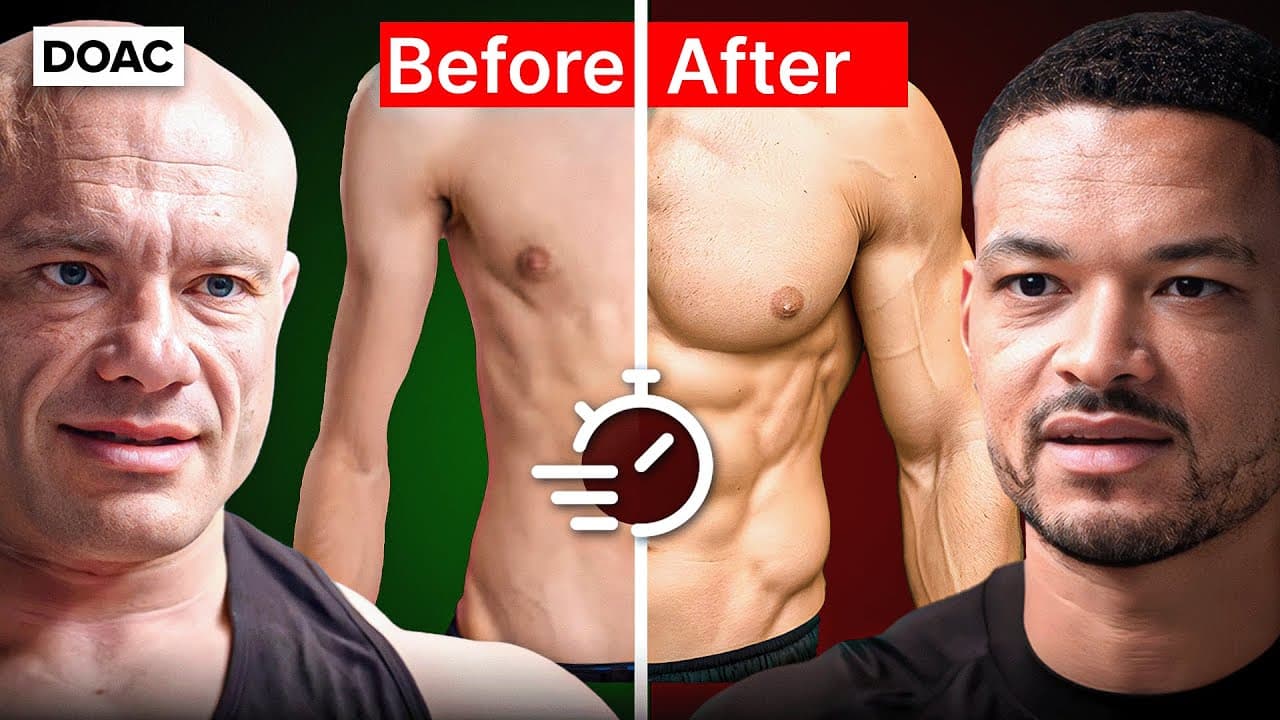
Two short workouts weekly can yield meaningful muscle gains when they are focused and progressive. Reps can range from 5 to 30 per set, as long as the set feels challenging by the end. Muscle growth mainly happens after training during rest and proper nutrition, not during the gym lift itself.
Transcript
You said there's two types of effective training. One of them is h can't say this better. One of them is hypertrophy. Very good. And the other one is periodization. Uh so periodization is the scientifically based organization of any kind of training that you want. Okay. Hypertrophy training is a type of training. It's just muscle growth training. I... Read More
Key Insights
- Hypertrophy is a type of training focused on muscle growth.
- Periodization is the scientific organization of training to maximize results and minimize injury.
- Specificity means training should align with the desired goal, such as bigger biceps.
- Overload requires real effort on sets where the last reps are challenging.
- Any rep range from roughly five to thirty can stimulate growth if effort is high.
- Muscle growth signaling happens after training during rest and nutrition, not in the gym.
- For beginners, two sessions per week with two to three sets per session can yield ongoing gains.
- Two to four weekly sessions per muscle group are generally effective and practical.
- More videos from this channel:
- More from this channel: The Diary Of A CEO Clips
Install to Summarize YouTube Videos and Get Transcripts
Explore YouTube Video Summarizer or Get YouTube Transcript Extractor
Questions & Answers
Q: How can I gain muscle with only 2 workouts per week
Gaining muscle with two workouts per week is possible if those sessions are focused, progressive, and well planned. Start by choosing compound movements that target multiple muscles, and ensure each set feels challenging by the end. Gradually increase load or reps over weeks, and limit sessions to a total workload that your body can recover from. Sleep, protein intake, and overall nutrition support the growth that begins in the gym.
Q: What rep range should I use for muscle growth
Muscle growth can occur with a wide range of reps, from five to thirty per set, as long as the set remains challenging and you approach fatigue with proper technique. The key is the intensity of effort, not the exact number of reps. Different individuals respond similarly to different rep schemes, so focus on what makes the final reps hard while maintaining form.
Q: Is hypertrophy training different from periodization
Yes, hypertrophy training is a type of training aimed at increasing muscle size, while periodization is a strategic framework for organizing training over time. Hypertrophy can be done in a session, but periodization plans how those sessions build toward peak performance and reduced injury risk, by cycling volume and intensity in a scientifically informed way.
Q: Do I grow muscle at the gym or after
Muscle growth signals are triggered by training in the gym, but actual growth occurs after training during rest and recovery. Your body ramps up protein synthesis and other processes hours to days after workouts, aided by adequate nutrition and sleep. The gym session provides the stimulus, while recovery delivers the growth.
Q: How often should I train each muscle group for best results
For best results, aim to train each major muscle group two to four times per week. Beginners can start with twice weekly sessions per muscle group, which yields meaningful gains, and adjust upward if recovery allows. The key is consistent training frequency that matches your recovery capacity while avoiding overtraining.
Q: What is the role of the warm up in muscle growth
A proper warm up prepares muscles for work and helps you perform sets with good technique, which is essential for achieving progressive overload. Wasting time on ineffective warm ups reduces available energy for productive sets. A focused warm up should prime the muscles and joints for the main lifts without delaying the work that drives growth.
Q: What does the term overload mean in weight training
Overload means making your muscles work harder over time so that performance improves. In practice, the sets should end with a noticeable challenge and a drop in performance if you push further. This progressive tension stimulates adaptation, leading to muscle growth as long as technique is preserved and recovery supports the increased demands.
Q: What is the concept of specificity in training
Specificity means your training should reflect your goals. If your goal is bigger arms, you should prioritize exercises and loading patterns that target the arms while still including supporting movements for overall balance. By aligning exercises with the desired outcome, you maximize the likelihood of meaningful gains in the intended muscle groups.
Summary & Key Takeaways
-
A concise, evidence-based approach shows that shorter, focused workouts can be highly effective for building muscle over time. The key is planning and progression, not endless gym hours. Beginners can achieve meaningful gains with minimal weekly volume.
-
Muscle growth is driven by tension detected in muscle cells, with additional effects from metabolites and pumping that may support growth. Recovery, protein intake, and sleep influence how much growth occurs after a workout.
-
The optimal frequency per muscle group tends to be two to four times weekly, with twice weekly as a practical minimum for beginners and possible adjustments for more advanced trainees based on response and recovery.
Read in Other Languages (beta)
Share This Summary 📚
Summarize YouTube Videos and Get Video Transcripts with 1-Click
Try YouTube Summary with ChatGPT & Claude or YouTube Transcript Generator
Explore More Summaries from The Diary Of A CEO Clips 📚





Summarize YouTube Videos and Get Video Transcripts with 1-Click
Try YouTube Summary with ChatGPT & Claude or YouTube Transcript Generator