How Do Alcohol and Cannabis Harm Your Brain?
TL;DR
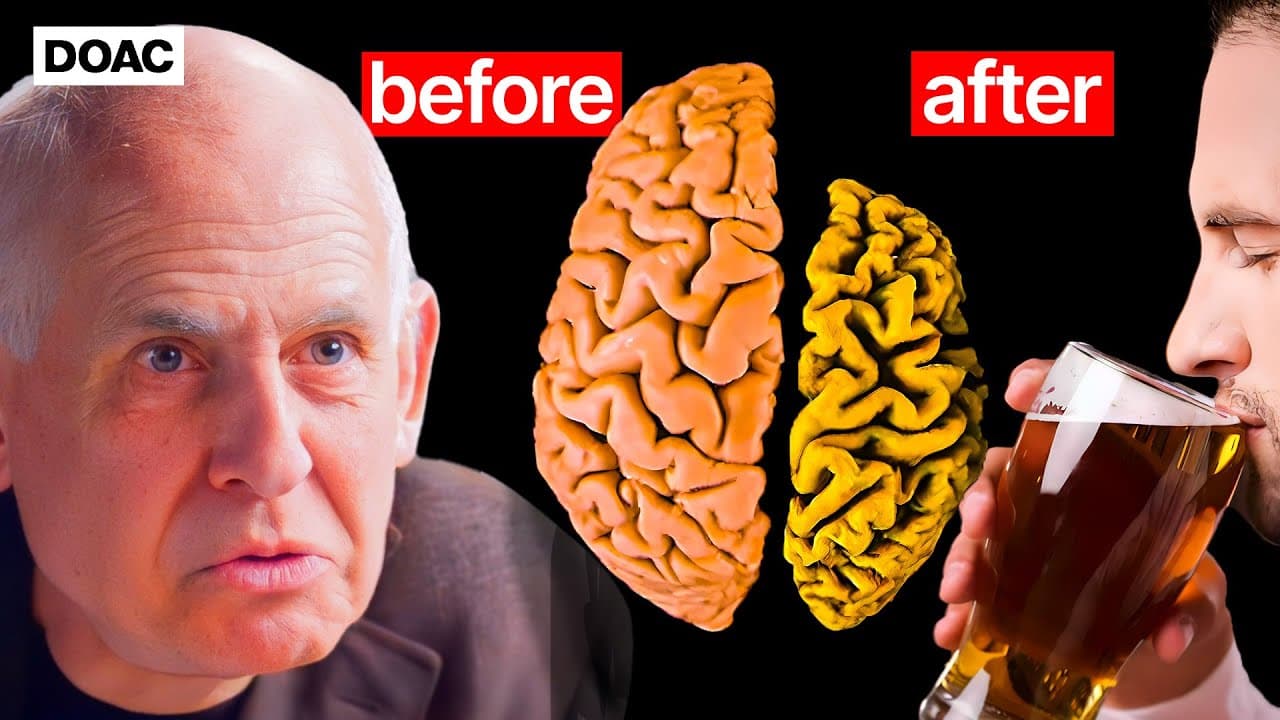
Alcohol damages brain structure and function even with moderate use, reducing white matter integrity and hippocampal activity, and increasing risk of Alzheimer’s-like changes with chronic use. Cannabis likewise lowers brain activity across the brain and reduces hippocampus size, especially affecting memory when used in adolescence or young adulthood. Reducing or avoiding these substances supports brain health.
Transcript
what evidence have we got that alcohol is bad for the brain and bad for the rest of our body especially in moderation well the S US Surgeon General just came out wanting to put cancer warning labels on all alcohol um that's sort of big evidence I mean three years ago the American Cancer Society came out against any alcohol because drinking any alco... Read More
Key Insights
- Alcohol reduces brain activity and can cause global decreases in function, not just short term impairment.
- White matter disruptions from alcohol act like potholes on brain highways, affecting communication between brain regions.
- The hippocampus growth and new stem cell production are hindered by drinking, impacting memory and spatial processing.
- Chronic alcohol use leads to brain aging and potential shrinkage, affecting multiple cognitive domains.
- Cannabis use decreases brain activity across many areas, including the hippocampus, impacting memory and learning.
- Heavy cannabis use in adolescents and young adults is linked with higher anxiety, depression, and suicide risk later.
- Education and prevention programs like Brain Thrive by 25 aim to reduce drug, alcohol, and tobacco use by teaching brain health.
- The discussion emphasizes that while some people claim medical benefits, the science shows real brain risks from alcohol and cannabis when used, especially during brain development.
- More videos from this channel:
- More from this channel: The Diary Of A CEO Clips
Install to Summarize YouTube Videos and Get Transcripts
Explore YouTube Video Summarizer or Get YouTube Transcript Extractor
Questions & Answers
Q: What evidence links alcohol to brain damage in the general population?
The evidence cited includes standards from health authorities and clinical observations showing alcohol is detrimental to brain function. There are reports of warnings about cancer risks associated with any alcohol and imaging observations from clinics where drinking is associated with younger appearing brains, global decreases in activity, and aging effects on brain tissue.
Q: How does alcohol affect brain structure and function according to the video?
Alcohol disrupts brain activity globally, causes the brain to shrink, and damages the white matter tracks that act as highways for neural communication. It can also impair the hippocampus, which is essential for memory, mood, and spatial processing, and it interferes with the production of new brain cells in that region.
Q: What is the role of the hippocampus in alcohol-related brain changes?
The hippocampus is critical for memory and spatial processing. Alcohol prevents the growth of new stem cells there, reducing the brain’s ability to form new memories and adapt, which leads to memory problems and mood issues as well as broader cognitive impairment over time.
Q: What does the video say about aging and brain size when drinking heavily?
Heavy or chronic drinking is described as causing the brain to age prematurely, with scans showing a smaller, shriveled brain and a wavy appearance in the cortex. This contrasts with a healthier brain that has full, symmetrical activity and larger size, underscoring the importance of brain tissue preservation.
Q: How does cannabis impact the brain according to the transcript?
Cannabis use is associated with lower brain activity across multiple regions, including a decrease in hippocampal activity. This reduction is linked to poorer memory and learning, and in teenagers and young adults there is an elevated risk of anxiety, depression, and suicide.
Q: What public health concerns are raised about marijuana legalization in the video?
The video argues that legalization does not reduce harm and may contribute to worsened mental health issues. It emphasizes that the science shows brain risks from cannabis, particularly for developing brains, and cautions against portraying marijuana as innocuous while also criticizing criminal penalties that may not be effective.
Q: What preventive strategies are suggested to protect brain health?
Prevention includes education about brain health through programs like Brain Thrive by 25, which aims to reduce drug, alcohol, and tobacco use by teaching kids to value and protect their brains. The speaker advocates healthier lifestyle choices, such as better diet, exercise, and mindfulness, to maintain optimal brain function.
Q: What is the speaker’s stance on social behavior and short-term gains from drinking?
The speaker notes that people may experience short-term relaxation or social benefits from drinking, but these come at a high long-term cost, including damaged judgment, increased risk of harmful decisions, and financial and relational consequences. He urges weighing short-term rewards against lasting brain health risks.
Summary & Key Takeaways
-
Alcohol use harms the brain by causing global activity decreases, shriveling the brain, and disrupting nerve fiber highways, leading to faster aging and poorer cognitive performance.
-
The hippocampus and white matter are especially affected, with impaired memory, mood, and judgment, and stem cell production in the hippocampus can be blocked by drinking.
-
Education and early intervention, such as Brain Thrive by 25 programs, aim to prevent brain damage by teaching kids to value and protect their brain and by promoting healthier behaviors.
Read in Other Languages (beta)
Share This Summary 📚
Summarize YouTube Videos and Get Video Transcripts with 1-Click
Try YouTube Summary with ChatGPT & Claude or YouTube Transcript Generator
Explore More Summaries from The Diary Of A CEO Clips 📚



Summarize YouTube Videos and Get Video Transcripts with 1-Click
Try YouTube Summary with ChatGPT & Claude or YouTube Transcript Generator