How Ray Dalio Uses Failure to Navigate Crises
TL;DR
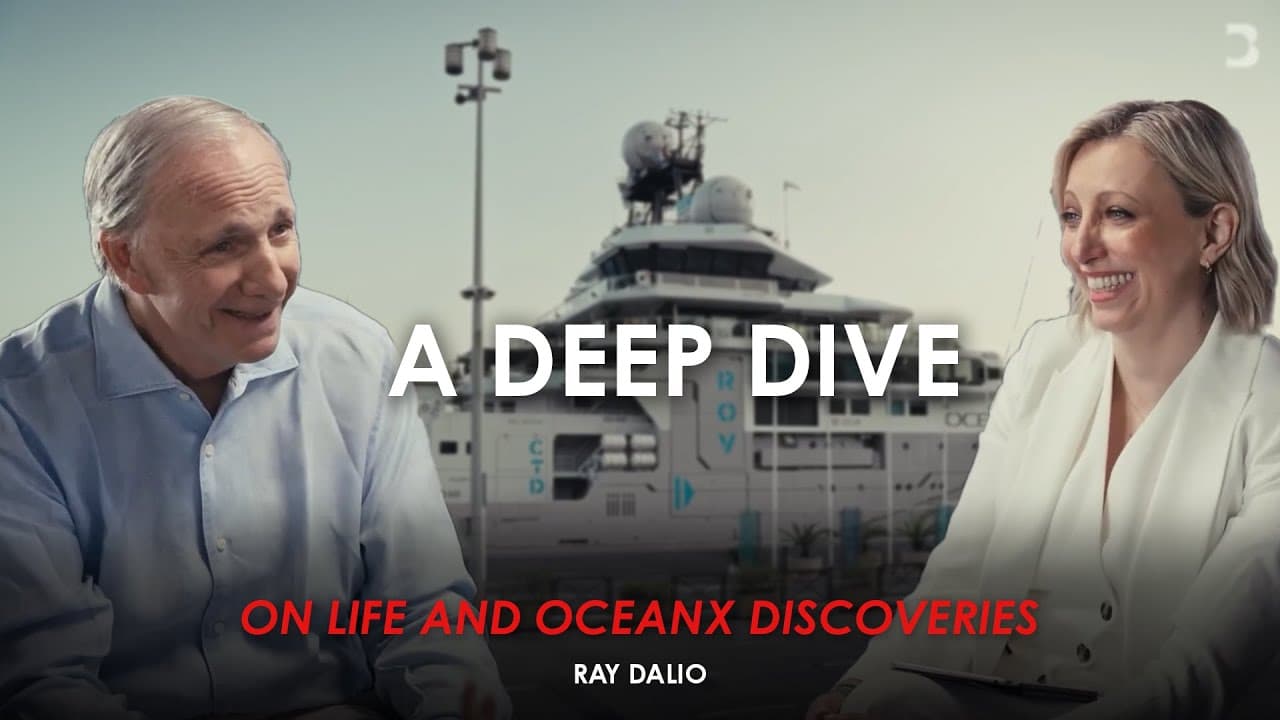
Ray Dalio says painful mistakes become valuable when they produce humility, open-mindedness, and better decision processes. After a disastrous market forecast nearly ruined him, he began stress-testing ideas with credible dissenters, later applying believability-weighted decision-making at Bridgewater while studying recurring debt cycles and supporting ocean research through OceanX.
Transcript
Ray, when you were building everything, what motivated you? Was it knowledge or money? It was really the game. I love the fact that I could be tested in the real world because I'm having these interactions and I love the fact that I'm scored every day. I could score how I'm doing to three decimal places. You know, showtime. Ray Dallio built one of ... Read More
Key Insights
- Dalio's earliest motivation was the challenge of the game, not simply money or accumulated knowledge. He valued being tested by real-world outcomes and receiving a measurable score every day, an approach that made markets compelling and shaped how he evaluated his own performance.
- Dalio began investing at age 12 after caddying for people who frequently discussed the stock market. He used his earnings to buy a company trading below $5 per share, and the investment tripled after an acquisition, giving him an initially misleading impression that market success was easy.
- Bridgewater began in 1975 after Dalio was fired following a physical altercation with his boss at a company party. Existing clients still wanted his advice, giving him the opportunity to establish the firm that he would lead for 47 years.
- Dalio's most damaging forecast became one of his most valuable learning experiences. After predicting economic failure near the stock market's bottom, he lost money for himself and clients, became financially distressed, and had to borrow $4,000 from his father to support his family.
- Humility became central to Dalio's decision-making after his failed forecast exposed the limits of his understanding. He began asking how he could know he was right and deliberately sought the smartest people who disagreed with him so they could stress-test his thinking.
- Idea meritocracy is Dalio's alternative to both autocratic and democratic leadership. Instead of assuming one leader has every answer or treating every opinion equally, Bridgewater weighted decisions according to demonstrated credibility in the specific area being considered.
- Radical transparency at Bridgewater required employees to provide honest and sometimes painful feedback. The Dot Collector recorded ratings of people's strengths and weaknesses in real time, while Dalio described direct criticism as tough love that should help teams confront problems rather than avoid them.
- Debt crises are recurring historical patterns that Dalio believes can be understood by studying earlier cycles. He warns that United States debt could become unmanageable and potentially lead to default if conditions remain unchanged, while emphasizing that similar problems have occurred repeatedly across history.
Install to Summarize YouTube Videos and Get Transcripts
Explore YouTube Video Summarizer or Get YouTube Transcript Extractor
Questions & Answers
Q: What motivated Ray Dalio to build Bridgewater?
Ray Dalio says his primary motivation was the game itself rather than money or knowledge alone. He enjoyed making decisions that would be tested in the real world and valued receiving a measurable score every day. Markets gave him a continuous cycle of forming views, observing outcomes, identifying mistakes, and improving how he handled uncertainty.
Q: How did Ray Dalio first become interested in investing?
Dalio became interested in investing while working as a caddie at age 12. The people he caddied for frequently discussed the stock market, so he invested his earnings in the only company he knew that traded below $5 per share. The struggling company was acquired, his money tripled, and the experience hooked him on markets.
Q: Why did Ray Dalio start Bridgewater in 1975?
Dalio started Bridgewater in 1975 after being fired from his job. At a New Year's Eve company party, he became drunk, got into a physical confrontation with his boss, and knocked him down. Despite losing his position, Dalio had clients who wanted to hire him for advice, providing the initial foundation for his new firm.
Q: What failure taught Ray Dalio humility?
Dalio publicly predicted that the economy was near failure, but his forecast came at what he later identified as the stock market's exact bottom. He had underestimated the effects of policy easing. After losing money for himself and clients, he became so broke that he borrowed $4,000 from his father to care for his family.
Q: What is believability-weighted decision-making?
Believability-weighted decision-making evaluates opinions according to each person's demonstrated strengths in the relevant area. At Bridgewater, people rated one another and the firm collected extensive information about their capabilities. Dalio used that evidence to distinguish where individuals were especially credible or less strong, instead of relying solely on authority, consensus, or equal voting.
Q: How did radical transparency work at Bridgewater?
Radical transparency required employees to give honest, open, and sometimes brutal assessments of one another. The Dot Collector allowed people to identify an attribute and assign a rating from 1 to 10, creating real-time information about strengths and weaknesses. Dalio believed this openness could improve work and relationships, although he acknowledged that it could also touch emotional nerves.
Q: Why does Ray Dalio describe pain as a messenger?
Dalio describes pain as a messenger because it reveals how the world works and indicates what someone must change to become more effective. His own financial collapse taught him to recognize weaknesses, question whether he was right, and invite disagreement. He argues that confidence can come from understanding limitations rather than pretending those limitations do not exist.
Q: What does Ray Dalio say about debt and global crisis?
Dalio says United States debt is approaching the point where it could become unmanageable and potentially result in default if conditions do not change. He also emphasizes that this is not a unique situation. Similar debt problems have appeared repeatedly in history, so studying past cycles can reveal lessons for understanding the present collective debt burden.
Summary & Key Takeaways
-
Dalio entered investing at age 12 after hearing golfers discuss stocks while he worked as a caddie. An early investment tripled following an acquisition, making markets feel like an engaging game. His interest eventually led him through Harvard Business School, commodities work, and the founding of Bridgewater in 1975 after losing his job.
-
A highly publicized and incorrect market forecast nearly destroyed Dalio financially. He lost money for himself and clients, then borrowed $4,000 from his father to support his family. The experience taught him humility, prompted him to question his certainty, and encouraged him to seek intelligent disagreement that could expose weaknesses in his reasoning.
-
At Bridgewater, Dalio pursued an idea meritocracy built on radical transparency and believability-weighted decisions. Employees evaluated one another through the Dot Collector, while leadership balanced direct criticism with confidence and shared purpose. After leaving Bridgewater, Dalio focused on sharing his principles, examining historical debt cycles, and supporting ocean exploration through OceanX.
Read in Other Languages (beta)
Share This Summary 📚
Summarize YouTube Videos and Get Video Transcripts with 1-Click
Try YouTube Summary with ChatGPT & Claude or YouTube Transcript Generator
Explore More Summaries from Principles by Ray Dalio 📚



Summarize YouTube Videos and Get Video Transcripts with 1-Click
Try YouTube Summary with ChatGPT & Claude or YouTube Transcript Generator