How Debt Fueled the 1929 Crash and Today’s Risks
TL;DR
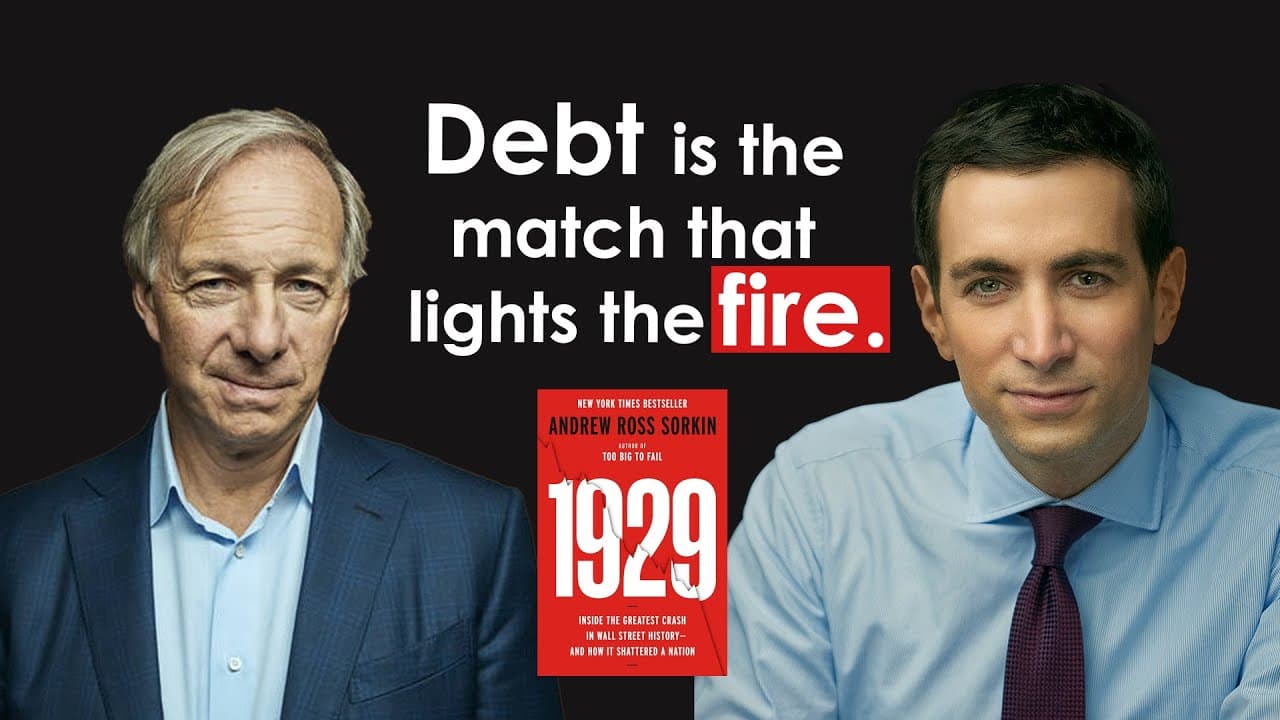
Debt and credit expansion pushed markets to the edge in the late 1920s, creating a fragile bubble backed by speculation and easy financing. The book links past and present, arguing that similar cause and effect patterns recur, with policy choices and human behavior shaping outcomes. Lessons emphasize recognizing debt driven booms and the need for prudent regulation.
Transcript
Hey Andrew. Um, hey Ray. Man, I just read your book and I think it is fantastic. Um, thank you. It is um, you know, a thoroughly entertaining story and, uh, you know, to me it's informative, right? Um I I I think that the story is kind of what you're into, but uh at the same time, I think as uh you've written a book on 2008 and now 1929, uh I think... Read More
Key Insights
- Debt and credit expansion create the fuel for asset price booms when optimism is high and financing is readily available.
- The most influential figures in the era helped push credit and leverage into everyday markets, making borrowing feel normal and essential for growth.
- Policy choices and public sentiment interact to either restrain or amplify speculative behavior, shaping the severity of downturns.
- Technological miracles act as catalysts for optimism, signaling progress and inviting investment even when fundamentals are weak.
- Leverage on margin and consumer credit magnify gains in good times but also amplify losses when markets turn, creating cascades of selling pressure.
- Historical crashes tend to share common ingredients: easy credit, rising asset prices, and a slow or hesitant regulatory response.
- Media and celebrity influence help normalize risk taking, making it harder for individuals to recognize danger signs early.
- Understanding that debt can be a double edged sword helps investors and policymakers balance growth with resilience against crashes.
Install to Summarize YouTube Videos and Get Transcripts
Explore YouTube Video Summarizer or Get YouTube Transcript Extractor
Questions & Answers
Q: A real search query question about the video (e.g. 'How to...', 'What is...', 'Why does...', 'When should...'). Question 1
What role did Charlie Mitchell play in the 1920s credit expansion and how did his actions influence the market dynamics described in the book? Charlie Mitchell ran National City Bank and was known as Sunshine Charlie. He helped promote easy lending practices that enabled margin buying and speculative investment. This pushed stock prices higher and encouraged more borrowing, creating a cycle of rising risk and dependence on credit for gains.
Q: Question 2
How does Carter Glass relate to regulation and the eventual separation of banks in the era described? Carter Glass was a senator who publicly warned about Mitchells and the dangers of excessive lending. He represented the push for more regulation and was seen as a Cassandra voice in the room, advocating for limits on reckless financial expansion to prevent a potential collapse.
Q: Question 3
Who is John Rasco in the discussion, and how did his actions mirror later financial developments? John Rasco ran General Motors and helped popularize consumer credit to drive sales, effectively broadening access to debt. He extended credit to purchase cars and appliances, which amplified borrowing and investment activity, influencing both finance and politics and foreshadowing broader leverage in the economy.
Q: Question 4
What technological miracles are highlighted as drivers of optimism in the 1920s, and how did they affect investment behavior? The interview notes electricity, cars like the Model T, radio, television, and appliances as major miracles. These innovations created a sense of rapid progress, encouraging investors to fund related stocks on credit, which amplified speculation and pushed valuations higher than fundamentals supported.
Q: Question 5
What pattern connects the 1929 crash to the 2008 crisis according to the conversation, and what is the core lesson drawn? The pattern is debt fueled booms followed by downturns when credit tightens or automation slows. The core lesson is that similar cause and effect relationships recur, with human behavior and policy choices shaping outcomes, underscoring the need for prudent oversight during booms.
Q: Question 6
How do the discussions describe the role of miracles and markets in shaping public perception of risk and wealth? Miracles like new technologies create heightened expectations and optimism, leading to widespread participation and leverage. Markets then become a stage for rapid gains, which obscures risk and makes downturns more abrupt when debt and credit conditions shift.
Q: Question 7
What does the book suggest about the balance between growth and regulation in preventing crashes? It suggests that regulation should curb reckless lending while preserving innovation. By understanding historical patterns, policymakers can implement measures that reduce excess credit without stifling productive investment, aiming for resilient growth rather than speculative bubbles.
Q: Question 8
Why does the conversation emphasize learning from history, and how can readers apply these lessons today? The dialogue argues that history rhymes, not repeats exactly, and that recognizing recurring patterns in debt, credit, and policy can inform better decisions. Readers can apply these lessons by scrutinizing credit conditions, market optimism, and regulatory signals before taking on leverage.
Summary & Key Takeaways
-
The narrative centers on how credit expansion, technological miracles, and optimistic speculation created a fragile stock market environment in the 1920s. It explains how individuals like Mitchell and Rasco used leverage to expand credit and drive growth, while policymakers struggled with regulation and public belief in perpetual wealth.
-
The discussion connects past and present by showing repeated patterns in debt, credit, and policy responses. It highlights the role of influential figures and institutions in shaping economic cycles, and it argues that understanding history can inform better decisions during today’s financial cycles.
-
The book and interview aim to teach readers to identify early warning signs of debt fueled booms, recognize the influence of credit on economic choices, and consider policy measures that could mitigate severe crashes while maintaining innovation and growth.
Read in Other Languages (beta)
Share This Summary 📚
Summarize YouTube Videos and Get Video Transcripts with 1-Click
Try YouTube Summary with ChatGPT & Claude or YouTube Transcript Generator
Explore More Summaries from Principles by Ray Dalio 📚

Summarize YouTube Videos and Get Video Transcripts with 1-Click
Try YouTube Summary with ChatGPT & Claude or YouTube Transcript Generator