How Does an A+ Trading Setup Filter Work?
TL;DR
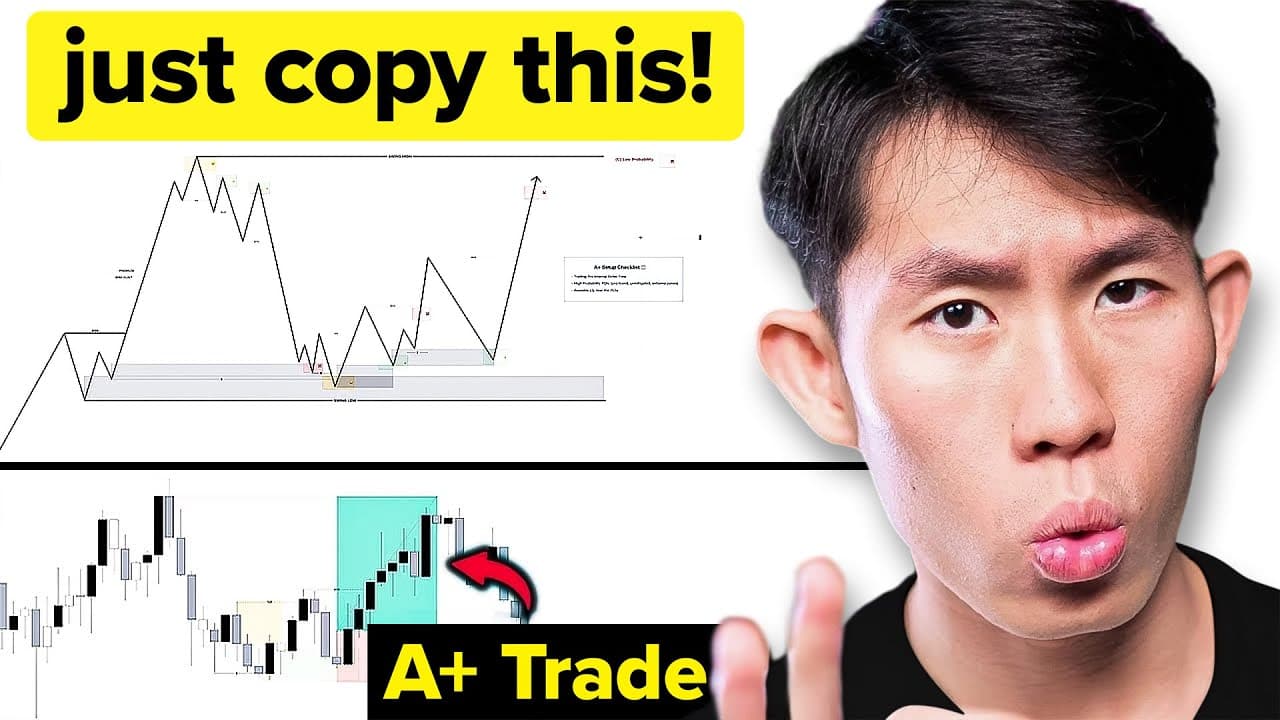
A trade only qualifies as A+ when it is taken in the direction of the internal order flow, at a point of interest aligned with the higher time frame, and near available liquidity waiting to be swept. Setups fought against the internal structure are medium or low probability. Filtering down to a single setup raised the trader's win rate and lowered emotional pressure.
Transcript
I got this my A+ market mechanics strategy. It's stupidly simple. It's mechanical and it made me over $100,000 last month without staring at charts all day or guessing every move. So, in this video, I'm going to show you exactly how this works and why most traders over complicate something which should be painfully obvious. Now, most traders fail b... Read More
Key Insights
- An A+ setup filter is not about catching every trade. It is about waiting for the cleanest setup that checks every single box, which is why the speaker reduced the system down to one setup instead of trading everything that looked acceptable.
- The main reason traders fail is a lack of definition. They trade every setup that looks good enough, spread across six to 10 currency pairs with zero focus, and cannot state what an A+ setup looks like when asked.
- A break of structure to the upside defines the working swing range. Identifying the swing low and swing high from that break tells you which range to focus on and where discount pricing sits for later long entries.
- An internal shift to bearish after a market shift does not mean the trend has reversed. It means price shifted bearish temporarily to facilitate a pullback within the higher time frame bullish structure, so sells become high probability only for that leg.
- Retail traders think in binary terms of win or lose. Professionals think in probabilities and preserve capital for the high probability scenarios, because the market is not a quiz with right answers but a game of controlled risk.
- Available liquidity below a low makes a demand zone entry weaker. Retail buyers place stop losses below higher lows, and that pooled liquidity is what professional traders wait to see swept before entering.
- The extreme demand zone is the last line of defense. It is created from the swing low that led to the break of structure, so that low must hold for price to remain bullish on the higher time frames.
- The A+ checklist has three parts: trade with the internal order flow, enter at a high priority point of interest aligned with the higher time frame such as an unmitigated or extreme zone, and require available liquidity near the zone to be swept first.
Install to Summarize YouTube Videos and Get Transcripts
Explore YouTube Video Summarizer or Get YouTube Transcript Extractor
Questions & Answers
Q: What makes a trading setup an A+ setup?
An A+ setup checks every box on the checklist rather than merely looking acceptable. First, the trade must go with the internal order flow, meaning longs when the internal structure is bullish and shorts when it is bearish. Second, entry must happen at a high priority point of interest aligned with the higher time frame order flow: demand zones in a bullish structure, supply zones in a bearish structure, plus unmitigated zones, extreme zones, and zones that swap liquidity. Third, there must be available liquidity near the zone that price can sweep before the move.
Q: Why do most traders fail at trading?
According to the speaker, most traders fail for three connected reasons. They trade every single setup that looks good enough rather than filtering for quality. They spread themselves across six to 10 different currency pairs with zero focus. Most importantly, they cannot even define what an actual A+ setup looks like, so they have no standard to measure a trade against. The speaker used to do the same thing, taking mediocre trades every day on the assumption that more trades equal more money, which was not true.
Q: How do you know when a pullback is starting?
A pullback begins when price takes out the last internal higher low, which the speaker calls a market shift. Before that, price mitigates a supply zone on the left hand side, bringing sellers into the market who push price down. Price then starts creating lower highs and lower lows. This flip in the internal structure from bullish to bearish does not mean the overall trend has officially reversed. It means price has shifted bearish temporarily to facilitate a pullback within the higher time frame bullish structure.
Q: What is the difference between high, medium, and low probability setups?
High probability scenarios are those where you trade with the internal structure and internal order flow, for example shorting supply zones after the internal structure has shifted bearish, or buying higher lows after it has shifted bullish. Medium probability means the location is strong but you are trading against the internal order flow, such as buying an extreme demand zone while internal order flow is still bearish. Low probability means trading against the internal order flow, or entering where untouched liquidity still sits below your entry, and these should be avoided at all cost.
Q: Why does available liquidity make a demand zone entry lower probability?
Retail traders who buy expecting a continuation place their stop losses below the higher lows nearby. Those clustered stops create available liquidity that professional traders target. If you buy at a demand zone in discount pricing while liquidity still sits below that low, price can drop through your entry to collect it first. That is why the setup is considered somewhat low probability despite being in discount pricing, and why the speaker waits for a liquidity sweep before entering the trade.
Q: What is an extreme demand zone and why does it matter?
The extreme demand zone is created from the swing low that led to the break of structure to the upside. The speaker describes it as the last line of defense, because that low has to hold for price to remain bullish on the higher time frames. When price comes down and mitigates this extreme point of interest, the setup is rated medium probability rather than low, since the location is significant even though the internal order flow has not yet shifted bullish and you would still be trading against it.
Q: When does it become high probability to look for longs again?
Longs become high probability after price mitigates the extreme point of interest and the internal order flow shifts bullish, which happens when price takes out the last lower high of the previous internal bearish order flow. That market shift signals the pullback is over and the internal structure now aligns with the higher time frame bullish structure. From there, the higher lows that form during the pullback after the shift are the entries, and shorting supply zones in that phase becomes low probability.
Q: Why should traders think in probabilities instead of wins and losses?
The speaker argues that retail traders think in black and white, treating each trade as either a win or a loss. That binary framing does not match how the market works. Professionals think in probabilities and hunt for the high probability A+ setups that give the best return for the risk taken. As the speaker puts it, the market is not a quiz with right answers, it is a game of controlled risk, and the point is preserving capital so it is available for the high probability scenarios.
Summary & Key Takeaways
-
Most traders fail because they take every setup that looks good enough, spread themselves across six to 10 currency pairs with no focus, and cannot define what an A+ setup actually is. The speaker traded the same way, taking mediocre trades daily on the belief that more trades meant more money, until filtering down to one setup changed the results.
-
The framework starts by defining the swing range from a bullish break of structure, marking the swing low and swing high. Price is bullish while higher lows form. When price mitigates a supply zone on the left, sellers can enter and push price down, shifting the internal structure bearish temporarily to facilitate a higher time frame pullback rather than reversing the trend.
-
Scenarios are ranked by odds. High probability means trading with the internal order flow at a high priority point of interest with liquidity nearby. Medium probability means a strong zone but against internal order flow. Low probability means trading against internal order flow or entering where untouched liquidity still sits below the entry.
Read in Other Languages (beta)
Share This Summary 📚
Summarize YouTube Videos and Get Video Transcripts with 1-Click
Try YouTube Summary with ChatGPT & Claude or YouTube Transcript Generator
Explore More Summaries from The Trading Geek 📚




Summarize YouTube Videos and Get Video Transcripts with 1-Click
Try YouTube Summary with ChatGPT & Claude or YouTube Transcript Generator