How Did Early Typesetters Adapt Before Modern Tech?
TL;DR
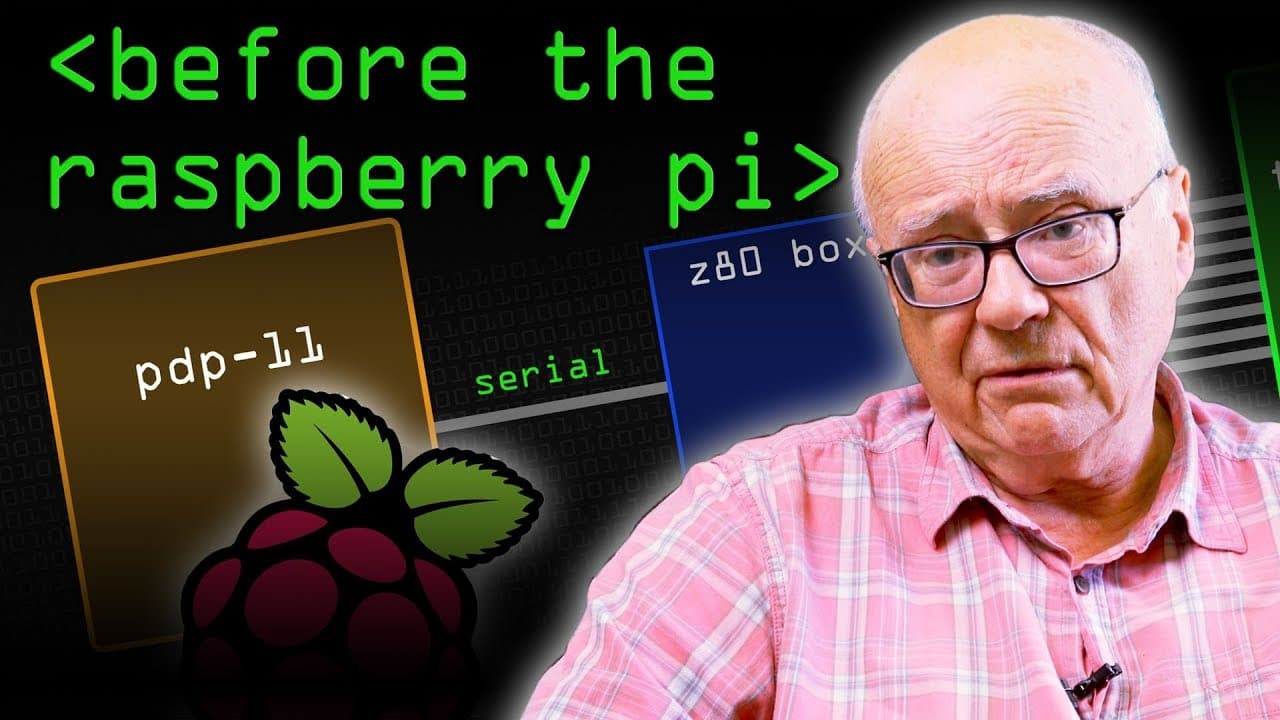
Before the rise of Raspberry Pi and Arduino, interfacing between typesetting technologies posed significant challenges. Developers had to compromise on quality due to expensive and slow early laser printers, while custom hardware and software solutions were essential for communication between disparate systems. Understanding customer needs for acceptable quality over perfection played a crucial role in navigating these obstacles.
Transcript
now with arduinos and raspberry pi's if a won't talk to b they jolly well will if you stick a raspberry pi in the middle of them just write a bit of software to convert that to that and of course such as the performance of this modern hardware now and such is the range of its networking capability that you can do huge amounts you're not compromisin... Read More
Key Insights
- 👶 Early adoption of new technologies can involve compromises in terms of quality and cost.
- 🎰 Connecting different typesetting machines and hardware often required custom interfaces and specialized software.
- 😘 Understanding customer needs and their willingness to accept lower quality can help drive technology advancements.
- 🚙 Parallel port interfaces had compatibility issues and were not as efficient as serial interfaces.
- 🔨 The development of compilers and software tools made interfacing easier and more accessible.
- 👋 The importance of good enough technology and meeting customer demands is crucial for innovation.
- ✋ Specialist industries can struggle when customers prioritize cost and efficiency over higher quality standards.
Install to Summarize YouTube Videos and Get Transcripts
Explore YouTube Video Summarizer or Get YouTube Transcript Extractor
Questions & Answers
Q: How did the adoption of early laser printers affect typesetting?
The early laser printers were expensive and offered a lower resolution compared to traditional typesetting methods. The compromise in quality and cost became a challenge for those trying to typeset documents.
Q: What issues were faced when trying to connect different typesetting machines?
Different typesetting machines had their own standards and communication protocols, making it difficult to connect them. One had to rely on parallel port interfaces, which were not standardized, leading to compatibility issues.
Q: How was the problem of interfacing hardware and typesetting machines solved?
A hardware engineer created a box with a Z80 chip to interface the machines and developed software using the Whitesmiths C compiler. This allowed for communication between the machines through the parallel port.
Q: Why did customers accept lower quality in typesetting?
Customers prioritized timely and cost-effective solutions over higher quality. The introduction of 300 dpi laser printers was seen as a miracle for producing exam papers efficiently, despite the lower resolution.
Summary & Key Takeaways
-
The content shares a story about the difficulties faced when trying to bridge the gap between different typesetting technologies in the past.
-
It explores the adoption of early laser printers and the compromises made in terms of quality and cost.
-
The content also discusses the challenges of parallel port interfaces and the development of specialized software to enable communication between different machines.
Read in Other Languages (beta)
Share This Summary 📚
Summarize YouTube Videos and Get Video Transcripts with 1-Click
Try YouTube Summary with ChatGPT & Claude or YouTube Transcript Generator
Explore More Summaries from Computerphile 📚




Summarize YouTube Videos and Get Video Transcripts with 1-Click
Try YouTube Summary with ChatGPT & Claude or YouTube Transcript Generator