How to Drive Change with Simon Sinek's Insights
TL;DR
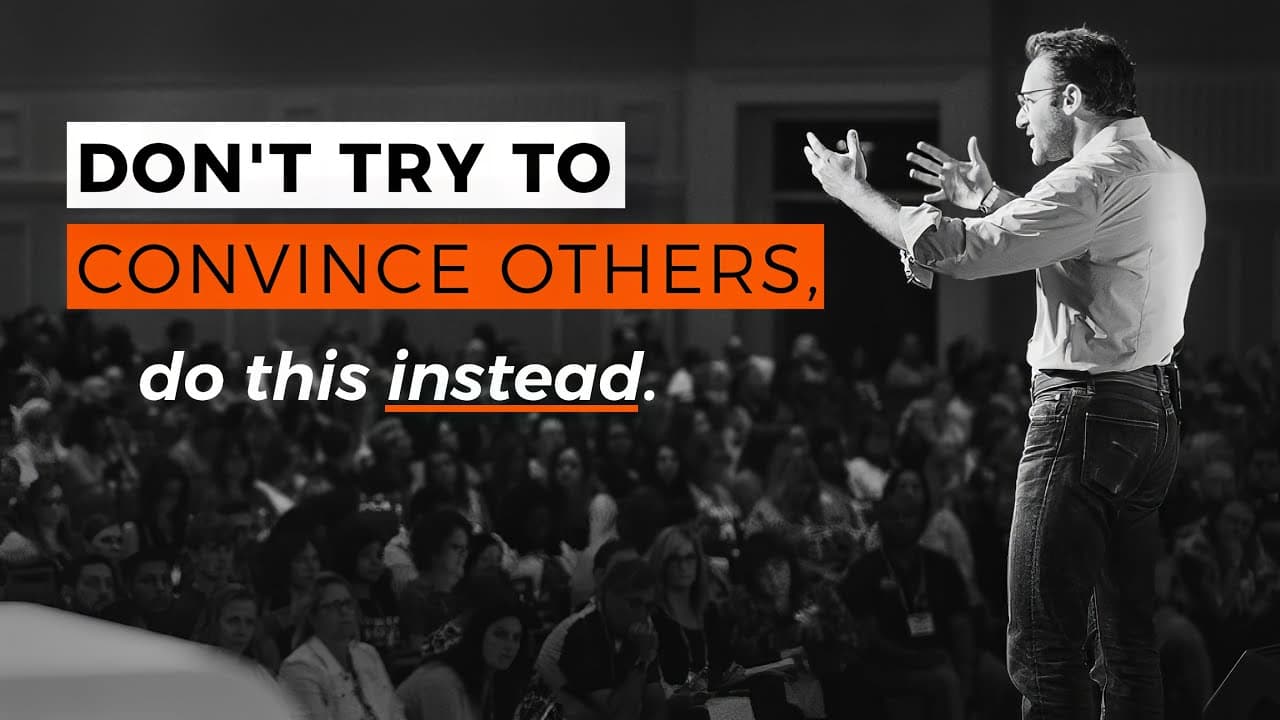
To create change, focus on early adopters who are open to new ideas. Simon Sinek emphasizes the Law of Diffusion of Innovation, which suggests that reaching a tipping point requires engaging the first 15-18% of the population. By starting with 'why' and appealing to emotions, you can effectively foster innovation and overcome resistance.
Transcript
people with new ideas whether they have neurodiversity or not are threatening to the status quo right and there's nothing wrong with the status quo per se the reason status quo exists is because things are kind of working right and the people who are the most defensive of the status quo are people who benefit from the status quo so if you come in a... Read More
Key Insights
- The Law of Diffusion of Innovation explains how new ideas spread within a population.
- Early adopters are crucial for reaching a tipping point in change adoption.
- Starting with 'why' helps engage early adopters by appealing to shared beliefs.
- Mass market success requires 15-18% market penetration to reach a tipping point.
- Early adopters are willing to take risks and experiment with new ideas.
- Avoid convincing those resistant to change; focus on those open to innovation.
- Creating small barriers can help identify genuine early adopters.
- Demand for new ideas can be generated by engaging early adopters effectively.
Install to Summarize YouTube Videos and Get Transcripts
Explore YouTube Video Summarizer or Get YouTube Transcript Extractor
Questions & Answers
Q: What is the Law of Diffusion of Innovation?
The Law of Diffusion of Innovation describes how new ideas spread within a population. It categorizes people into groups such as innovators, early adopters, early majority, late majority, and laggards. For an idea to achieve mass market success, it must reach a tipping point by engaging the first 15-18% of the population.
Q: How can early adopters help drive change?
Early adopters are crucial for driving change as they are more open to experimenting with new ideas. By engaging them, organizations can create momentum and reach a tipping point where the majority begins to adopt the innovation. Early adopters often share their positive experiences, helping to generate demand and overcome resistance.
Q: Why is it important to start with 'why' when promoting new ideas?
Starting with 'why' is important as it appeals to emotions and shared beliefs, making it easier to engage early adopters. By focusing on the purpose and vision behind an idea rather than just the features or benefits, organizations can build a stronger connection with those who are naturally inclined to support innovation.
Q: What challenges do innovators face when introducing new ideas?
Innovators often face challenges such as resistance from those who benefit from the status quo and skepticism from the majority. The risk of failure is high, and convincing those resistant to change can be a futile effort. Instead, focusing on early adopters who are open to experimentation can help overcome these challenges.
Q: How can organizations create demand for new ideas?
Organizations can create demand for new ideas by engaging early adopters who naturally embrace innovation. By allowing these individuals to experience and share their positive experiences, they can generate interest and demand among the broader population. This approach minimizes the need for traditional marketing or persuasion techniques.
Q: What role do small barriers play in identifying early adopters?
Small barriers help identify genuine early adopters by filtering out those who are not truly committed to trying new ideas. These barriers, such as application processes or voluntary participation, ensure that only those with a strong interest and willingness to experiment are involved, leading to more effective and enthusiastic adoption.
Q: Why should organizations avoid convincing skeptics when promoting change?
Organizations should avoid convincing skeptics when promoting change because it can be a time-consuming and often futile effort. Skeptics are typically resistant to new ideas, and focusing on them can lead to frustration and wasted resources. Instead, targeting early adopters who are naturally open to innovation is more effective in driving change.
Q: How did Simon Sinek apply these principles in real-life scenarios?
Simon Sinek applied these principles by focusing on early adopters in organizations, creating programs with small barriers to participation, and emphasizing the 'why' behind new initiatives. By doing so, he generated demand and enthusiasm without relying on traditional marketing. His approach led to successful adoption and spread of innovative ideas within organizations.
Summary & Key Takeaways
-
Simon Sinek discusses the importance of engaging early adopters to drive change. By focusing on the Law of Diffusion of Innovation, he highlights how appealing to emotions and starting with 'why' can effectively spread new ideas. This approach helps reach a tipping point, overcoming resistance and fostering innovation.
-
To implement change, Sinek advises against convincing skeptics and instead targeting those naturally open to new concepts. By creating small barriers and focusing on early adopters, organizations can generate demand and achieve widespread acceptance of innovative ideas.
-
Sinek shares real-life examples of how he applied these principles in organizations, emphasizing the role of early adopters in building momentum. By leveraging the Law of Diffusion, he demonstrates how to create demand for change without relying on traditional marketing or persuasion techniques.
Read in Other Languages (beta)
Share This Summary 📚
Summarize YouTube Videos and Get Video Transcripts with 1-Click
Try YouTube Summary with ChatGPT & Claude or YouTube Transcript Generator
Explore More Summaries from Simon Sinek 📚





Summarize YouTube Videos and Get Video Transcripts with 1-Click
Try YouTube Summary with ChatGPT & Claude or YouTube Transcript Generator