How Does Size Affect Animal Survival From Falls?
TL;DR
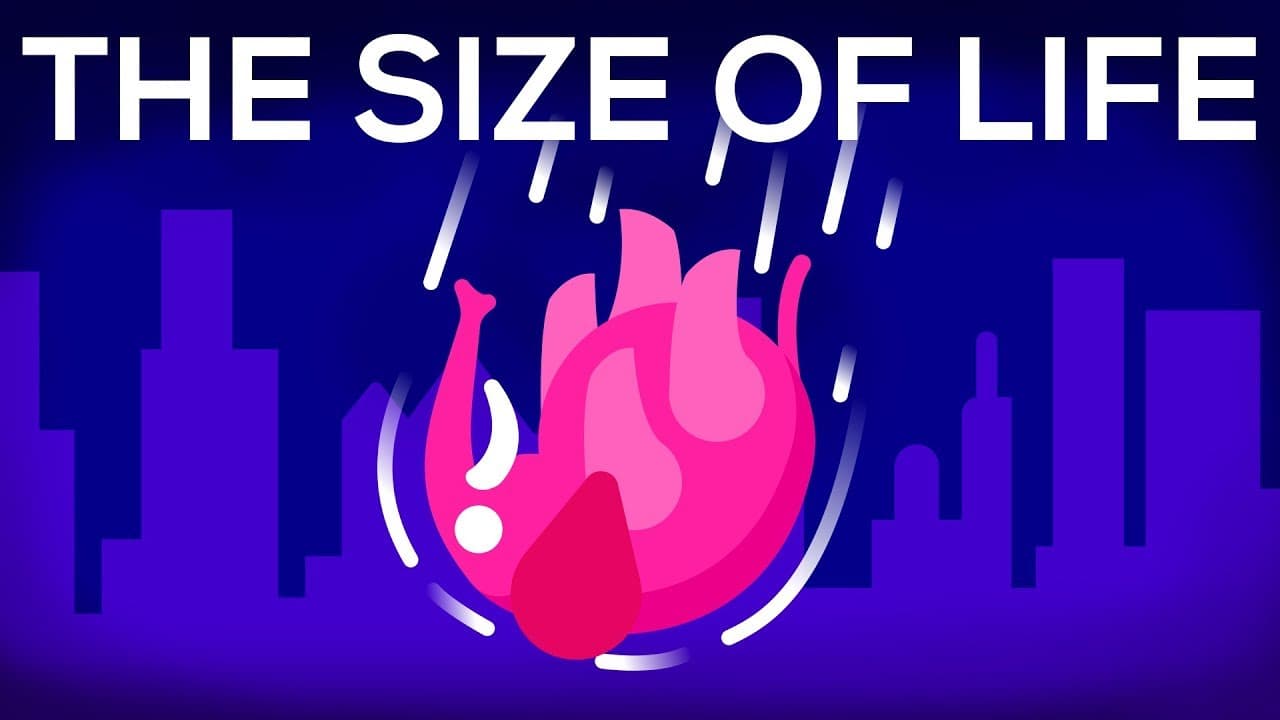
Size significantly influences how animals survive falls from heights. Smaller creatures, like mice, have a larger surface area relative to their mass, allowing them to withstand impacts better, while larger animals, such as elephants, experience devastating effects due to their low surface area-to-volume ratio. This scaling law demonstrates that physical laws vary with size, affecting survival strategies and adaptations in different species.
Transcript
Let's start this video by throwing a mouse, a dog, and an elephant from a skyscraper onto something soft. Let's say, a stack of mattresses. The mouse lands and is stunned for a moment, before it shakes itself off, and walks away pretty annoyed, because that's a very rude thing to do. The dog breaks all of its bones and dies in an unspectacular way,... Read More
Key Insights
- 👮 Size determines an animal's survivability through scaling laws, influencing their interactions with the environment.
- 💆 Smaller animals are more resilient to falls from great heights due to their larger surface area relative to mass.
- 💦 Insects have evolved adaptations like water-repellent exoskeletons and air-trapping hairs to overcome challenges posed by surface tension in water.
- 🥺 Evolution has led to diverse adaptations in animals of different sizes to thrive in their respective environments.
- 🥺 Animals at extreme sizes face unique physical challenges, leading to specialized adaptations for survival.
- 🤩 Surface tension plays a key role in the survival of insects, creating challenges that they have evolved specific adaptations to overcome.
- ♻️ The environment becomes increasingly strange and challenging for animals as they decrease in size, requiring unique adaptations for survival.
Install to Summarize YouTube Videos and Get Transcripts
Explore YouTube Video Summarizer or Get YouTube Transcript Extractor
Questions & Answers
Q: How does size impact the survival of animals in different environments?
Size plays a crucial role in determining how animals experience and interact with their surroundings. Larger animals face different challenges compared to smaller ones, affecting their survival strategies.
Q: Why are smaller animals like insects more resilient to falls from great heights?
Smaller animals experience less impact when they fall due to their larger surface area relative to their mass, which helps distribute the impact and reduce the force on their bodies.
Q: How do insects adapt to the challenges posed by surface tension in water?
Insects have evolved water-repellent exoskeletons and air-trapping hairs to overcome the strong surface tension of water, allowing them to survive and thrive in aquatic environments.
Q: How do the physical rules of the environment change for animals at different sizes?
Animals of varying sizes face unique physical challenges due to scaling laws, leading to different survival strategies and adaptations in their respective environments.
Summary & Key Takeaways
-
Size determines the survival of animals, with smaller creatures being less affected by gravity and falling from great heights.
-
Larger animals like elephants have proportionally small surface areas, leading to devastating impacts when they fall, while insects with large surface areas relative to their mass are protected by surface tension.
-
Evolution has led to adaptations in insects, like water-repellent exoskeletons and air-trapping hairs, enabling them to thrive in their unique environments.
Read in Other Languages (beta)
Share This Summary 📚
Summarize YouTube Videos and Get Video Transcripts with 1-Click
Try YouTube Summary with ChatGPT & Claude or YouTube Transcript Generator
Explore More Summaries from Kurzgesagt – In a Nutshell 📚





Summarize YouTube Videos and Get Video Transcripts with 1-Click
Try YouTube Summary with ChatGPT & Claude or YouTube Transcript Generator