How Do Wars End: Why Termination Is So Hard
TL;DR
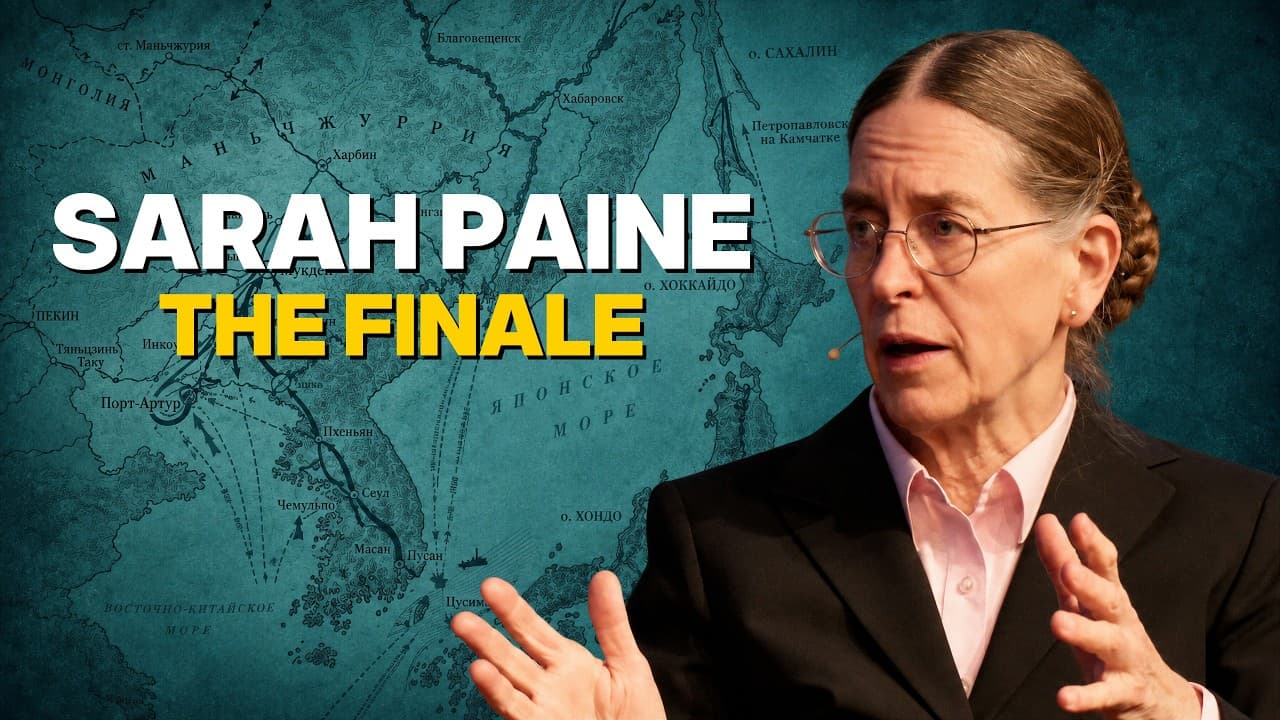
Ending wars is harder than starting them, and achieving the results you want is even more difficult. The Russo Japanese War is used as a model to show how limited objectives shape outcomes, why escalation can shift a regional war toward global conflict, and how insurgencies deny victory after conventional defeats.
Transcript
It's such a pleasure to be here with you all. I'm going to talk about war termination today. Good idea, right? End these things. Turns out it's really easy to get into wars. It's awfully difficult to get out of them. And it is even more difficult to get out of them what you wished you could have gotten out of them. So, I'm going to start by talking... Read More
Key Insights
- Wars are easy to start but hard to end due to strategic overreach and the difficulty of achieving desired settlements.
- Culminating point concepts measure when further attacks lose efficiency and increase risks, signaling potential overreach.
- Limited objectives define success in a war and often prevent regime change, shaping what a victory actually looks like.
- Port Arthur siege demonstrates how terrain, logistics, and artillery can determine war outcomes.
- Coalitions and third party interventions can abruptly alter the course of a war, preventing overextension.
- Victory denial and insurgencies illustrate how opposing sides can prolong conflict even after a conventional defeat.
- Death ground and Sun Tzu concepts are used to assess psychological and strategic pressure points in warfare.
- Regional wars risk evolving into global conflicts if escalation outpaces containment and diplomacy are insufficient.
Install to Summarize YouTube Videos and Get Transcripts
Explore YouTube Video Summarizer or Get YouTube Transcript Extractor
Questions & Answers
Q: How to tell if you are at the culminating point of attack in a campaign?
The culminating point of attack occurs when further battles would require more resources or risk than the expected gains justify. It is indicated by a stall in momentum, rising losses without proportional gains, and signs that the attacker cannot press on without unacceptable costs or counter moves. Recognizing this point helps avoid ruinous overreach.
Q: What makes a war end in a favorable way rather than simply winning battles?
A war ends favorably when the objectives defined at the start are achieved at acceptable costs, not merely by defeating enemies in combat. This requires clarity on what constitutes success, avoiding demand for evaporating goals like regime change, and securing a settlement that discourages future challenges while preserving essential interests.
Q: Why do regional wars sometimes become global according to the lecture?
Regional wars can escalate globally when actors perceive that local outcomes threaten broader strategic interests, leading to greater mobilization, alliance dynamics, and risk of larger state involvement. If escalation outpaces diplomatic channels, third party intervention can escalate the conflict into a wider war with higher stakes and broader consequences.
Q: How does insurgency affect victory after a conventional defeat?
Insurgency can deny victory by continuing to fight after traditional military success, undermining legitimacy, tying down resources, and eroding the political will to sustain the war. This creates a perpetual state of uncertainty where the apparent military winner remains pressed to address ongoing underground resistance and political instability.
Q: What is the Port Arthur example illustrating in terms of war termination?
Port Arthur illustrates how fortress siege dynamics and artillery reach can determine strategic outcomes. The Japanese effort to reduce the fortress demonstrates how terrain, supply lines, and naval threats influence the broader war objectives, showing that winning a battle can be a stepping stone toward achieving strategic goals.
Q: What is the role of limited objectives in the Russo-Japanese War example?
Limited objectives defined the conflict’s aims, focusing on removing Russian influence from Korea and Manchuria rather than changing regimes. This framing shaped decisions about resource use, risk, and negotiation leverage, and showed that limited goals can still produce significant territorial and strategic gains if pursued effectively.
Q: How can third party intervention alter a war’s trajectory?
Third party intervention introduces new capabilities, constraints, or guarantees that can shift strategic calculations. It can prevent collapse, prompt peace, or force a new settlement by changing relative power, costs, or timelines. The risk is that intervention can also escalate the conflict or create unintended consequences for the original protagonists.
Q: What lessons are drawn about ending wars in today’s context from Sun Tzu and Clausewitz?
Sun Tzu emphasizes death ground concepts and psychological pressure shaping choices under duress, while Clausewitz highlights culminating points and the dangers of overreaching. Together they suggest that successful termination requires understanding terrain, timing, and the cost of escalation, plus strategic restraint to avoid unnecessary ruin.
Summary & Key Takeaways
-
The lecture argues that war termination is complex and often protracted, with limited objectives guiding both sides and the risk of third party intervention altering outcomes.
-
It uses the Russo Japanese War to illustrate culminations points, attack and victory, and the strategic calculus of victory denial and insurgencies.
-
The discussion connects historical lessons to modern concerns about regional wars becoming global and the challenges of ending conflicts on favorable terms.
Read in Other Languages (beta)
Share This Summary 📚
Summarize YouTube Videos and Get Video Transcripts with 1-Click
Try YouTube Summary with ChatGPT & Claude or YouTube Transcript Generator
Explore More Summaries from Dwarkesh Patel 📚





Summarize YouTube Videos and Get Video Transcripts with 1-Click
Try YouTube Summary with ChatGPT & Claude or YouTube Transcript Generator