Stanford's Robotic Audi to Brave Pikes Peak Without Driver

Transcript
Read and summarize the transcript of this video on Glasp Reader (beta).
Install to Summarize YouTube Videos and Get Transcripts
Explore YouTube Video Summarizer or Get YouTube Transcript Extractor
Summary
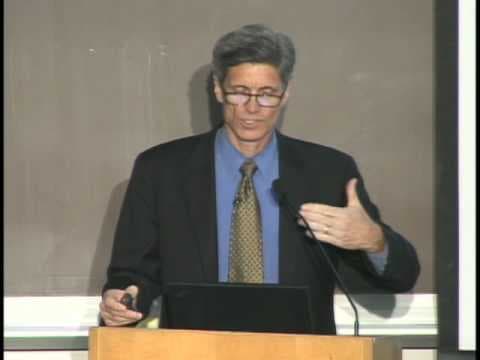
In this video, the speaker introduces Shelley, an autonomous Audi TTS, and discusses their experience taking it to the Salt Flats. They ran various tests to see if the car could track curves at its limit and achieved speeds of around 130 miles per hour. The team stored the necessary hardware for converting the car in the trunk, including computers and data acquisition equipment. They used GPS to map out the car's position and faced the challenge of Pikes Peak's variable terrain. The speaker explains that their lab focuses on vehicle dynamics and controls, with the goal of safely controlling cars at their handling limits.
Questions & Answers
Q: Who is the first woman to win the Pikes Peak Hill Climb?
The first woman to win the Pikes Peak Hill Climb is Michele Mouton.
Q: What was the highlight of the speaker's summer?
The highlight of the speaker's summer was taking the autonomous Audi TTS, named Shelley, to the Salt Flats.
Q: What tests did the team run at the Salt Flats?
The team ran a variety of tests to see if the car could track curves at its limit, pushing it up to speeds of around 130 miles per hour.
Q: What did the car do on the salt flats?
On the salt flats, the car etched the Audi ring by following a predetermined map and its initial position. It accelerated to the desired speed, traced the rings, and then slowed down and came to a stop.
Q: Where is most of the hardware needed to convert the car stored?
Most of the hardware needed to convert the car is stored in the trunk. This includes a stack of computers and data acquisition equipment, which is where all the algorithms for making the car race and drift are run.
Q: What is the main focus of the speaker's lab?
The main focus of the speaker's lab is vehicle dynamics and controls. They specialize in understanding how cars handle, with the goal of controlling them comfortably at their handling limits.
Q: What is the challenge of Pikes Peak?
Pikes Peak presents a challenge because it has highly variable terrain. Different layers and gravel are laid on different parts of the track, causing uncertainty about the capabilities of the tires and the car at any given point.
Q: What kind of accidents do they believe can be prevented by controlling the car at its limit?
The speaker mentions that most accidents occur at the handling limit of a car. By being able to control the car comfortably at these limits, they believe they can prevent such accidents.
Q: What is the role of GPS in the project?
GPS is used as a way to map out the car's position. It helps in tracking the car's movements and allows the team to accurately control its trajectory.
Q: Where can you find more information?
For more information, you can visit stanford.edu.
Takeaways
The team at Stanford University has developed an autonomous Audi TTS named Shelley and pushed its capabilities at the Salt Flats. By running tests and tracking curves at the car's limits, they aim to gain control and prevent accidents that typically occur when cars are pushed to their handling limits. The lab's expertise lies in vehicle dynamics and controls, with a strong emphasis on understanding how cars handle. Using GPS as a tool for mapping and controlling the car's position, they strive to navigate the highly variable terrain of Pikes Peak safely. To learn more about their work, visit stanford.edu.
Read in Other Languages (beta)
Share This Summary 📚
Summarize YouTube Videos and Get Video Transcripts with 1-Click
Try YouTube Summary with ChatGPT & Claude or YouTube Transcript Generator
Explore More Summaries from Stanford 📚



Summarize YouTube Videos and Get Video Transcripts with 1-Click
Try YouTube Summary with ChatGPT & Claude or YouTube Transcript Generator